
Families Demand Justice for Victims of 2017 Venezuelan Protests, Urge ICC to Expedite Maduro Inquiry
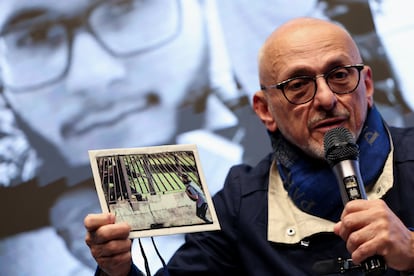
Madrid, Spain – January 19, 2026 – Nine years after young protestors were killed during widespread demonstrations against the Venezuelan government in 2017, families of the victims are intensifying their calls for justice. Gathering in Madrid this Wednesday, they shared poignant testimonies, photographs, and personal belongings of their loved ones, demanding the International Criminal Court (ICC) accelerate its investigation into alleged crimes against humanity committed under the administration of President Nicolás Maduro. Specifically, they are urging the ICC to issue an arrest warrant for Maduro himself, holding him accountable for the deaths of their children.
The families’ plea comes amidst a complex political landscape in Venezuela, marked by a recent, and controversial, shift in power. Reports indicate Maduro was captured during a military intervention in Caracas earlier this month , though the long-term implications of this event remain uncertain. Despite this change, the pursuit of justice for the victims of the 2017 protests remains a central demand.
The Echoes of 2017: A Nation in Crisis
The protests of 2017 erupted in response to a deepening political and economic crisis in Venezuela, fueled by decisions made by the Supreme Court that were widely seen as undermining democratic institutions [1]. As demonstrations swelled, security forces responded with increasing force, resulting in numerous deaths and injuries.
The families present in Madrid represent a cross-section of those impacted by the violence. They recounted harrowing stories of loss, frustration with the lack of accountability within Venezuela, and a desperate hope that the international community will intervene. The gathering, supported by Venezuelan Press, included legal counsel from Soranib Hernández Deffendini, Blas Jesús Imbroda Ortiz – an attorney accredited by the ICC – and Juan carlos Gutiérrez.
The ICC Investigation: “Venezuela I” and the Pursuit of Accountability
The ICC’s investigation, officially designated “Venezuela I,” was initiated in 2021, following a preliminary examination that began as early as 2006 [2]. The investigation focuses on allegations of crimes against humanity, including murder and extrajudicial killings, committed by Venezuelan security forces during the crackdown on protests [3].
The families are urging the ICC to include a recent submission detailing alleged systematic abuses within their investigation.They argue that the evidence – comprised of testimonies and reports – demonstrates a pattern of state-sponsored violence targeting protestors. They believe the targeting was purposeful, citing evidence suggesting security forces were instructed to aim for the face, neck, and chest – areas likely to cause fatal injuries.
“Venezuela has been in disaster for 27 years,” stated Isabel de Figueiredo, whose son, Diego Fernando Arellano de Figueiredo, was shot and killed while participating in protests at the age of 31. “I except that nothing has been done in Venezuela, but I don’t understand why ‘outside’ nothing has been done to seek justice.”
A “Failed State” and the Role of the International Community
Several speakers described Venezuela as a “failed state,” criticizing the international community for its perceived inaction in the face of widespread human rights abuses. Carlos Moreno, whose brother Paúl René Moreno Camacho, 24, was killed when struck by a vehicle during a protest, expressed frustration with the lack of condemnation from the global stage. “The world has simply turned its face away,” he lamented.
However, not all interventions were viewed favorably. Some expressed concern over the recent U.S.-led intervention in Caracas, with concerns raised about the potential for further instability and the imposition of external agendas. “Donald Trump has dispensed his own justice, within the limits of his morality, which is a very dangerous thing,” warned Moreno.
Pedro Quelis, uncle of 17-year-old David Quelis Aracas, who was shot and killed by police, highlighted the devastating ripple effects of the violence. He explained that his sister,David’s mother,took her own life shortly after her son’s death.“The weapons used and the areas of impact… are acts intended to cause death that demonstrate a pattern of state behavior,” added legal expert Juan Carlos Gutiérrez. “Maduro must pay for all thes murders.”
The Weight of Loss and the Demand for Justice
The emotional weight of the gathering was palpable. Israel and Mónica cañizales, parents of Armando Cañizales Carrillo, 18, emphasized that the shootings were not isolated incidents but part of a systematic plan. “The shots were part of a systematic plan: young people and shots to the face, neck, and chest,” they stated. Mónica Cañizales added, “We clearly want Venezuela, as a land, but we stopped loving it because of everything that happened. I gave my son’s life to a country. the minimum we ask for is justice. Not revenge, justice.”
David Vallenilla, father of David José Vallenilla Luis, 22, who was killed by a security agent during a protest, acknowledged receiving a partial victory with the 23-year sentence given to the officer involved. Though, he believes Maduro bears “co-responsibility” for his son’s death, questioning the official description that the weapon was improperly loaded.
the families’ collective grief and unwavering determination underscore the urgent need for accountability. The ICC investigation represents a crucial prospect to address the alleged crimes committed during the 2017 protests and to provide a measure of closure for the victims’ families.
Key Takeaways:
* Families of victims of the 2017 Venezuelan protests are demanding the ICC expedite its investigation into alleged crimes against humanity.
* The ICC investigation, “Venezuela I,” focuses on the actions of Venezuelan security forces during the crackdown on protests.
* Families are seeking an arrest warrant for President Nicolás maduro, holding him accountable for the deaths of protestors.
* Ther is a growing sense of frustration with the lack of international action and a concern that recent political developments may complicate the pursuit of justice.
* The families emphasize the systematic nature of the violence, alleging a pattern of state-sponsored repression.
