
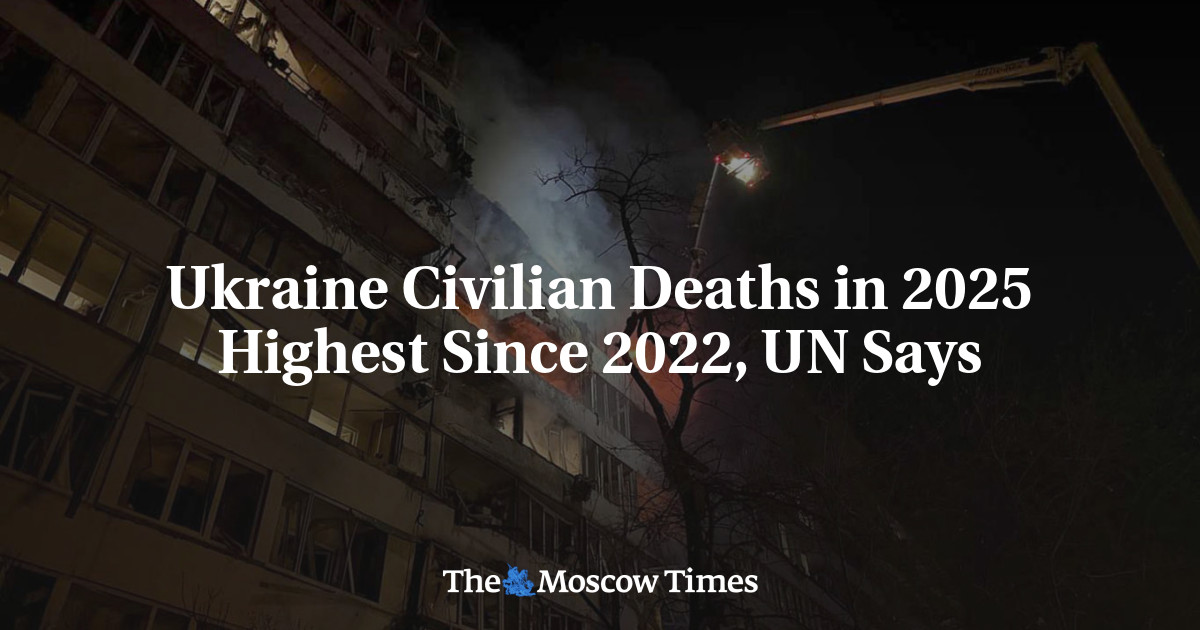
Ukraine War: Civilian Deaths Surge in 2025, Reaching Highest Level Since 2022
January 16, 2026 – The United Nations has reported a grim milestone in the ongoing conflict in Ukraine: 2025 witnessed the highest number of civilian deaths since the full-scale Russian invasion began in February 2022. The surge in casualties is directly linked to intensified fighting along the front lines and a marked increase in the use of long-range weaponry by Russian forces, exposing civilians across the country to unacceptable levels of risk.
A Deadly Escalation: The Numbers Tell a Stark Story
according to a recent report from the Office of the UN High Commissioner for Human Rights (OHCHR),at least 2,514 civilians were killed and 12,142 injured in Ukraine throughout 2025 [[1]]. This represents a staggering 31% increase in civilian casualties compared to 2024. The escalating violence underscores the devastating human cost of the protracted war and raises serious concerns about the protection of non-combatants.
Danielle Bell, head of the OHCHR’s monitoring mission in Ukraine, emphasized the key drivers behind this tragic rise. “Our monitoring shows that this rise was driven not only by intensified hostilities along the frontline, but also by the expanded use of long-range weapons, which exposed civilians across the country to heightened risk,” she stated in a press release accompanying the report [[2]]. Long-range weapons, including missiles and loitering munitions, accounted for 35% of all civilian casualties in 2025, resulting in 682 deaths and 4,443 injuries – a 65% increase in deaths and injuries compared to the previous year [[1]].
The Challenge of Accurate Accounting and the Unseen Toll
While the UN has verified nearly 15,000 civilian deaths since the start of the invasion, officials acknowledge that the actual number is “likely considerably higher” [[3]]. The ongoing hostilities and limited access to occupied territories, particularly areas like Mariupol which endured a brutal siege in the early stages of the war, hinder thorough investigations and accurate data collection. The true extent of the suffering remains largely unknown, hidden behind the fog of war.
Mariupol, a strategically crucial port city, serves as a stark example of the challenges in assessing civilian harm. Thousands are believed to have perished during the weeks-long siege by Russian forces, but verifying these numbers is impossible due to the ongoing occupation and lack of independent access.
Diplomatic Impasse and Escalating Battlefield Dynamics
The surge in civilian casualties coincides with a period of stalled diplomatic efforts to end the conflict. Recent U.S.-led attempts to broker a ceasefire and establish a framework for peace have faltered,with russia rejecting a draft plan that proposed the deployment of European troops to Ukraine after the war’s conclusion [[2]]. This diplomatic impasse suggests a prolonged conflict, with possibly devastating consequences for the civilian population.
Adding to the grim outlook, Russia has demonstrated increased battlefield success in 2025, surpassing gains made in any year since 2022. An analysis by the U.S.-based Institute for the Study of War, cited by AFP, indicates that Moscow has exploited advantages against Ukrainian forces facing shortages of ammunition and personnel [[3]]. This shift in momentum raises concerns about further escalation and increased risks for civilians.
The Wider Context: A Humanitarian Crisis Deepens
The escalating violence and rising civilian death toll are exacerbating an already dire humanitarian crisis in Ukraine. Millions of people have been displaced from their homes, seeking refuge in other parts of the country or abroad. Access to essential services, such as healthcare, water, and sanitation, remains limited in manny areas, particularly those close to the front lines. International aid organizations are struggling to meet the growing needs of the affected population.
Key Takeaways:
- Civilian deaths in Ukraine reached their highest level in 2025 as the start of the full-scale invasion in 2022.
- The increased use of long-range weapons by Russian forces is a major contributor to the rising casualty count.
- Accurate accounting of civilian deaths is hampered by ongoing hostilities and limited access to occupied territories.
- Diplomatic efforts to end the conflict remain stalled, raising concerns about a prolonged war.
- The humanitarian crisis in Ukraine is deepening, with millions displaced and in need of assistance.
The situation in Ukraine demands urgent attention from the international community. Increased efforts to protect civilians, facilitate humanitarian access, and pursue a peaceful resolution to the conflict are paramount. Without a concerted effort to de-escalate the violence and address the root causes of the crisis, the human cost of this war will continue to mount.
