
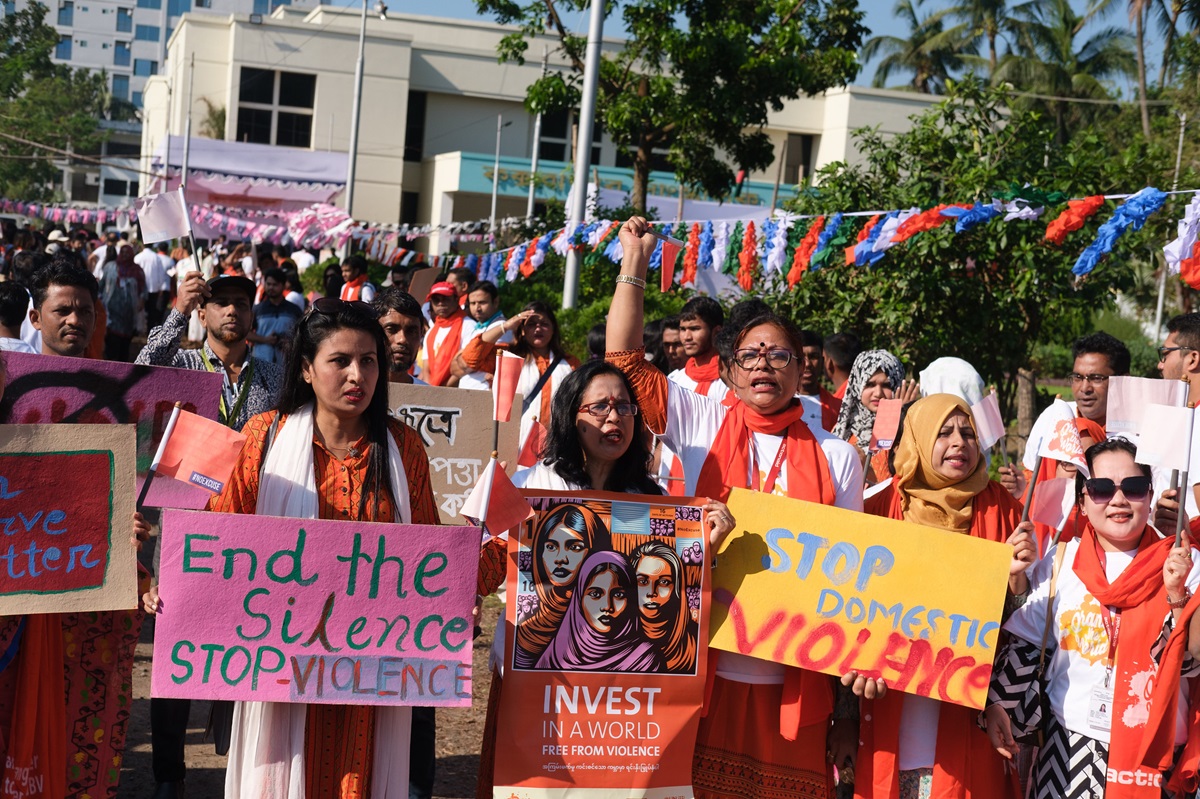
A Global Crisis Endures: Violence Against Women Remains Rampant Despite Decades of Advocacy
Published: 2026/01/09 22:12:11
Violence against women and girls remains one of the most pervasive and devastating human rights crises of our time. A new report from the World Health Organization (WHO) and UN partners paints a grim picture: despite decades of activism and awareness campaigns,progress has stalled. Nearly one in three women – an estimated 840 million globally – have experienced either intimate partner or sexual violence in their lifetime, a statistic that has remained stubbornly unchanged since 2000. The report, released ahead of the International Day for the Elimination of Violence Against Women and Girls on November 25th, underscores a critical need for renewed commitment, increased funding, and more effective strategies to address this global epidemic.
The Scale of the Problem: Shocking statistics and Underreporting
The statistics are stark. In the last 12 months alone, 316 million women aged 15 and older – 11% of the global female population in that age group – have been subjected to physical or sexual violence by an intimate partner. This represents a minimal decline of only 0.2% annually over the past two decades, highlighting the painfully slow pace of change. What’s more, the report reveals a previously under-documented reality: 263 million women have experienced non-partner sexual violence as the age of 15. Experts caution that this figure is likely a important underestimate due to the pervasive stigma and fear surrounding sexual assault, which prevents manny survivors from coming forward.
Dr. Tedros Adhanom Ghebreyesus, WHO Director-General, powerfully stated, “Violence against women is one of humanity’s oldest and most pervasive injustices, yet still one of the least acted upon. No society can call itself fair, safe or healthy while half its population lives in fear.” He emphasized that ending this violence is not merely a matter of policy, but a basic issue of dignity, equality, and human rights. Empowering women and girls, he asserted, is not optional but a prerequisite for peace, progress, and overall global health.
A crisis of Funding and Resources
The report doesn’t just highlight the scope of the problem; it also exposes a critical shortfall in resources dedicated to addressing it. Despite growing evidence of effective prevention strategies, funding for initiatives aimed at combating violence against women is dwindling. In 2022,a mere 0.2% of global development aid was allocated to programs focused on the prevention of violence against women, and this figure is projected to decline further in 2025. This funding gap coincides with a period of increasing risk for women and girls, driven by factors such as humanitarian emergencies, rapid technological changes, and widening socio-economic inequalities.
Lifelong Consequences and Disproportionate Impact
The consequences of violence against women are far-reaching and devastating. Survivors face a heightened risk of unintended pregnancies, sexually transmitted infections, and mental health issues like depression. Access to sexual and reproductive health services is crucial for providing survivors with the care they need, yet these services are frequently enough underfunded or inaccessible. The report emphasizes that violence against women is not an isolated incident but a lifelong risk, frequently enough beginning in adolescence. alarmingly, 12.5 million girls aged 15-19 – 16% of that age group – have experienced physical or sexual violence from an intimate partner in the past year alone.
The burden of this violence is not shared equally. Women in least-developed countries, conflict zones, and areas vulnerable to climate change are disproportionately affected. As an example, the Oceania region (excluding Australia and New Zealand) reports an alarming 38% prevalence of intimate partner violence in the past year – more than three times the global average of 11% [[3]]. This disparity underscores the intersectional nature of the problem and the need for targeted interventions in vulnerable communities.
the Need for Action and Accountability
While more countries are now collecting data to inform policies, significant gaps remain, particularly regarding non-partner sexual violence and the experiences of marginalized groups – including indigenous women, migrants, and women with disabilities. Data from fragile and humanitarian settings is also lacking, hindering effective response efforts. Though, the report highlights that progress is absolutely possible when political commitment is present.
Countries like Cambodia are demonstrating leadership by implementing national projects to update legislation, improve service delivery, and leverage digital solutions for prevention.Ecuador, Liberia, Trinidad and Tobago, and Uganda have all developed costed national action plans, signaling a growing commitment to addressing the issue. These initiatives, coupled with legislative and advocacy efforts, have contributed to increased domestic financing for violence prevention programs.
Key Recommendations for Accelerating Progress
To achieve meaningful change, the report calls for decisive action and increased funding in four key areas:
- Scale up evidence-based prevention programs: Investing in programs that address the root causes of violence and promote gender equality.
- Strengthen survivor-centered health, legal, and social services: Ensuring that survivors have access to comprehensive and compassionate support.
- Invest in data systems: Improving data collection and analysis to track progress and identify at-risk groups.
- Enforce laws and policies: Strengthening legal frameworks and ensuring that perpetrators are held accountable.
Accompanying the report is the second edition of the RESPECT Women framework, which provides updated guidance for violence prevention, including in humanitarian contexts. This framework emphasizes seven key strategies: Relationship skills strengthening, Empowerment of women and girls, Services ensured, Poverty reduced, Enabling environments, child and adolescent abuse prevention, and Transformed gender attitudes, beliefs and norms.
As Dr. Sima Bahous, Executive Director of UN Women, stated, “Ending violence against women and girls requires courage, commitment, and collective action. Advancing gender equality is how we build a more equal, safer world for everyone.” The time for silence and inaction is over. Leaders must commit to ending violence against women and girls now, not just with words, but with concrete action and sustained investment.
Expert Perspectives
Diene Keita, Executive director of UNFPA, emphasized the lasting harm inflicted by violence against women, noting that it is often compounded by discrimination and perpetuates cycles of abuse across generations. Catherine Russell, UNICEF executive Director, highlighted the alarming fact that many women first experience violence from a partner during adolescence, underscoring the need for early intervention and prevention programs.
The report serves as a stark reminder that violence against women is not just a women’s issue; it is indeed a societal issue that demands a collective response. Addressing this crisis requires a fundamental shift in attitudes, behaviors, and policies, as well as a significant increase in resources dedicated to prevention and support services.
Frequently Asked Questions (FAQ)
- What is femicide? Femicide is the intentional killing of a woman as of her gender. It is often committed by an intimate partner.
- What is intimate partner violence? Intimate partner violence (IPV) is a pattern of abusive behaviors used by one partner to gain or maintain power and control over another. It can include physical, sexual, emotional, economic, and psychological abuse.
- Why is violence against women underreported? Stigma, fear of retaliation, lack of trust in law enforcement, and cultural norms all contribute to underreporting.
- What can individuals do to help? Individuals can support organizations working to end violence against women, challenge harmful gender stereotypes, and speak out against abuse.
The challenge is immense, but not insurmountable. By prioritizing the safety, dignity, and empowerment of women and girls, we can create a more just, equitable, and peaceful world for all.
