
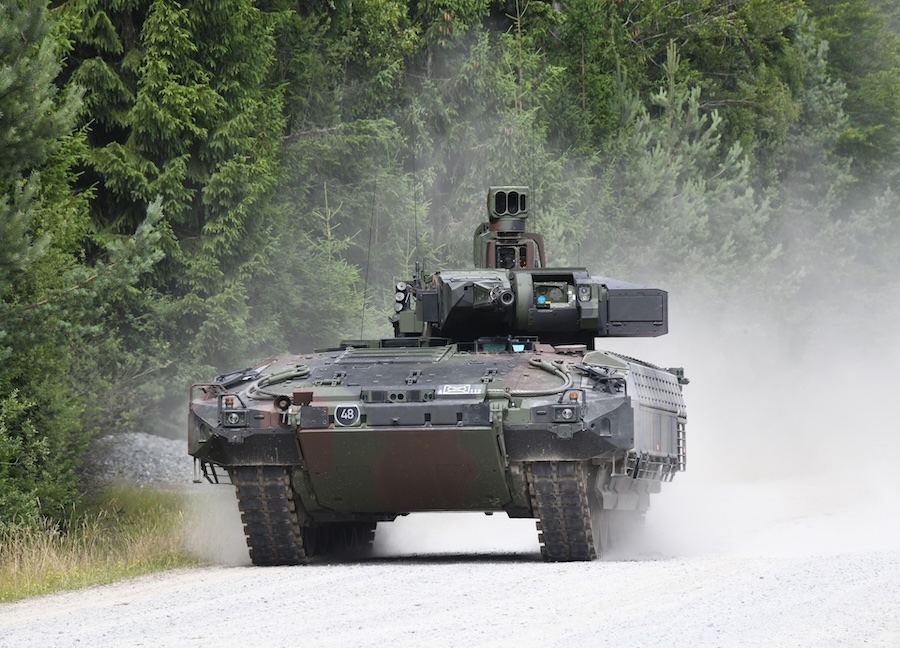
The German Bundeswehr’s Puma IFV programme is now at the center of a structural shift involving European defence modernisation and industrial consolidation. The immediate implication is a deeper alignment of Germany’s heavy‑armour capability with NATO’s high‑intensity combat requirements and a reinforcement of domestic defence‑industry champions.
the Strategic Context
Since the 2022‑23 security shock triggered by Russia’s invasion of Ukraine, NATO members have accelerated capability‑gap remediation, especially in armoured and network‑centred forces. Germany,the alliance’s largest conventional army,has committed to a multi‑year increase in defence spending,targeting a 2 % of GDP baseline and a focus on “high‑end” platforms that can operate in contested,digitised battle spaces. The Puma IFV,already regarded as one of the most advanced infantry fighting vehicles,sits at the nexus of three structural forces: (1) the push for European strategic autonomy that favours domestic procurement; (2) the NATO‑wide drive to field interoperable,network‑ready combat vehicles; and (3) the consolidation of the German defence industrial base around a few large firms (Rheinmetall,KNDS) to achieve economies of scale and sustain technological edge.
Core Analysis: Incentives & Constraints
Source Signals: The text confirms that a joint venture (Projekt System & Management GmbH) between Rheinmetall and KNDS will supply 200 Puma IFVs under a €4.2 billion amendment to an existing framework contract, effective January 2026, with first deliveries slated for mid‑2028. The amendment expands the original 50‑vehicle order, adds protection modules, storage containers, and a future S2 upgrade that will incorporate drone‑defence capability based on the Jackal turret. A parallel retrofit programme will bring 297 existing Pumas to the S1 standard by 2029, adding night‑vision, MELLS missiles and digital radios.
WTN Interpretation: Germany’s timing reflects a convergence of fiscal, strategic and industrial incentives. Politically,the Bundestag seeks to demonstrate tangible support for NATO’s “Readiness and Resilience” agenda while responding to domestic pressure for a credible deterrent posture. Economically, the joint‑venture structure locks in work for Rheinmetall and KNDS, preserving high‑skill jobs and sustaining a supply chain that the government views as a strategic asset.The inclusion of drone‑defence modules anticipates the growing threat of unmanned systems in European theatres,aligning the Puma with NATO’s “Future Combat Air‑Space” concepts. Constraints arise from Germany’s strict procurement oversight, the need to stay within the 2 % GDP ceiling, and the technical risk of integrating new turret systems into an existing platform without disrupting the 2028 delivery schedule. Additionally, EU competition rules and the broader push for cross‑national procurement could limit further domestic concentration.
WTN Strategic Insight
“Germany’s Puma expansion is less about buying more tanks than about cementing a European‑wide,network‑centric armour ecosystem that can counter both kinetic and unmanned threats.”
Future Outlook: Scenario Paths & Key Indicators
Baseline Path: If Germany’s defence budget remains on its current trajectory, the joint‑venture delivers the first 200 Pumas by mid‑2028, the S2 upgrade proceeds on schedule, and the retrofit programme reaches 2029 completion. This outcome reinforces NATO’s high‑intensity warfighting posture, deepens the domestic industrial base, and encourages allied procurement synchronisation around common standards.
Risk Path: If fiscal pressures intensify (e.g., a recession‑driven budget re‑allocation) or if technical integration challenges with the Jackal‑derived drone‑defence turret cause delays, the delivery timeline could slip beyond 2029. A slowdown would pressure Germany to seek interim capability gaps through foreign leasing or accelerated procurement of alternative platforms, perhaps fracturing the European industrial consolidation agenda.
- Indicator 1: Outcome of the German Bundestag’s defence‑budget review (scheduled Q2 2025) – any amendment to the 2 % GDP target or re‑allocation of funds to other programmes.
- Indicator 2: Publication of Rheinmetall’s and KNDS’s Q3 2025 earnings reports – focus on contract‑recognition milestones for the Puma programme and any disclosed cost‑overrun warnings.
- Indicator 3: NATO Allied Capability Development Group’s mid‑2025 update on European armoured modernisation – references to Puma integration or alternative platforms.
- Indicator 4: EU Defence Industrial Strategy consultation outcomes (expected late 2025) – any policy shift that could affect domestic‑only procurement preferences.
