
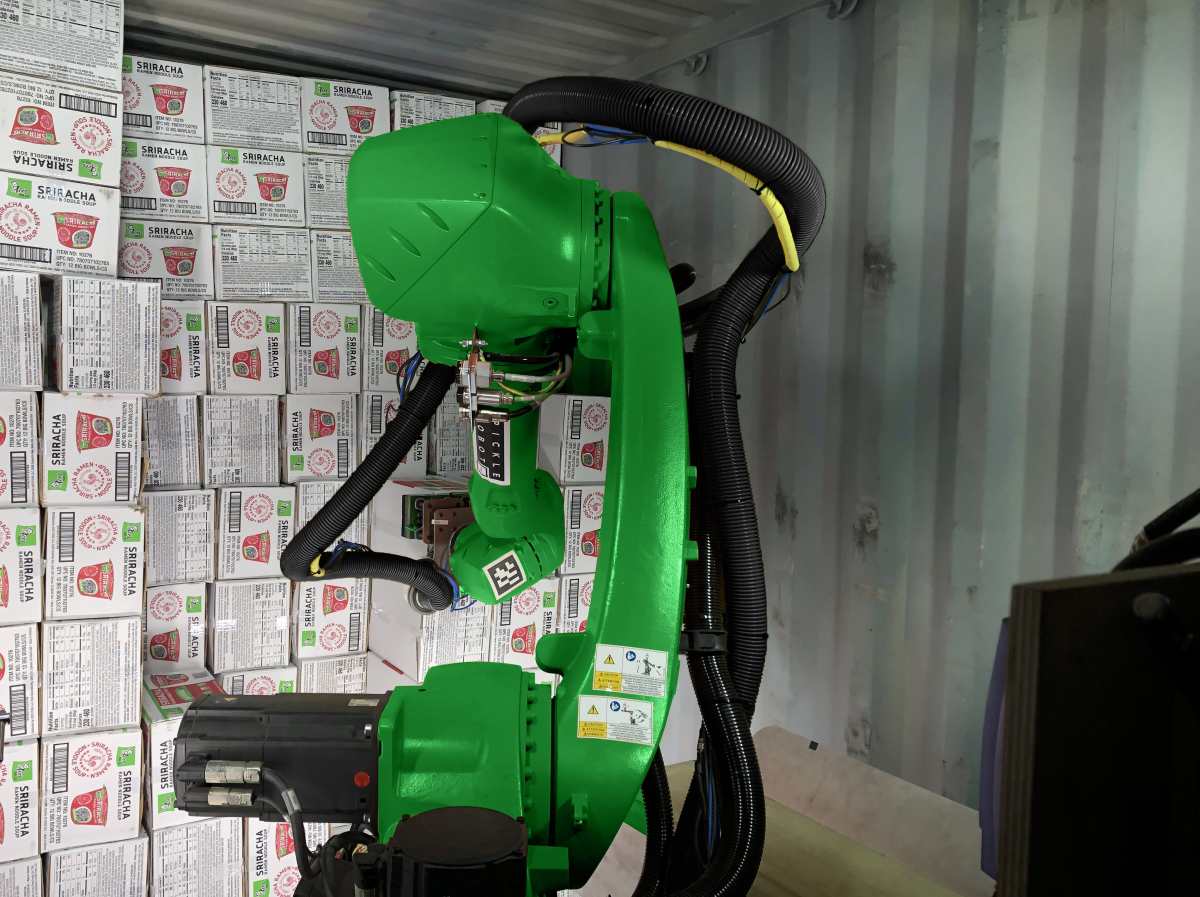
pickle Robot is now at teh center of a structural shift involving logistics automation and capital allocation in the supply‑chain sector. The immediate implication is a rapid scaling of autonomous unloading technology that could reshape cost structures for major carriers.
The Strategic Context
Over the past decade, the logistics industry has faced mounting pressure to improve throughput while containing labour costs, a trend accelerated by e‑commerce growth and volatile freight rates. Simultaneously, venture capital has increasingly targeted robotics and AI solutions that promise measurable productivity gains. Large carriers, in turn, have begun allocating capital toward proprietary automation to reduce reliance on third‑party labor markets and to lock in long‑term cost advantages.
Core analysis: Incentives & Constraints
Source Signals: Pickle Robot announced the appointment of Jeff Evanson as its first chief financial officer. Evanson previously led global investor relations and strategy at Tesla, where he helped raise debt and equity for vehicle launches and acquisitions. Pickle, founded in 2018 with roughly $100 million in venture funding, is expanding its partnership with UPS, which is reportedly investing $120 million to acquire 400 of Pickle’s robots for deployment beginning in late 2026.
WTN Interpretation: The CFO hire signals a transition from a venture‑backed growth phase to a capital‑raising and scaling phase. Evanson’s experience with high‑profile financing at Tesla provides Pickle with credibility to access debt markets and negotiate large‑scale contracts. UPS’s investment reflects a strategic move to internalize unloading capacity, reducing exposure to labor shortages and price volatility in the trucking sector. However, both firms face constraints: Pickle must demonstrate reliable performance at scale to justify the capital outlay, while UPS must integrate the robots without disrupting existing hub operations and must manage the financial impact of a $120 million commitment amid broader capital‑intensive initiatives.
WTN Strategic Insight
“The convergence of deep‑pocket carriers and venture‑scale robotics firms marks the next inflection point in supply‑chain economics, where capital efficiency will be measured in minutes saved per load rather than miles driven.”
Future Outlook: Scenario Paths & Key Indicators
baseline Path: if UPS proceeds with its planned rollout and Pickle successfully scales production, the partnership will validate autonomous unloading as a cost‑effective solution. This could trigger additional carrier contracts, spur further equity or debt financing for Pickle, and accelerate broader adoption of warehouse robotics across the logistics ecosystem.
Risk Path: If technical integration challenges or cost overruns emerge, UPS may delay or curtail the deployment, prompting a reassessment of capital commitments. A slowdown could pressure Pickle’s cash runway, forcing it to seek bridge financing at less favorable terms or to pivot toward smaller customers, thereby dampening the sector‑wide automation momentum.
- Indicator 1: Quarterly earnings releases from UPS and any disclosed capital‑expenditure updates related to automation projects (next 3‑6 months).
- Indicator 2: Public filings or press announcements from Pickle Robot regarding production milestones, financing rounds, or new carrier agreements within the next half‑year.
