
.
Toyota is now at the center of a structural shift involving automotive electrification and European carbon‑neutrality targets. The immediate implication is an accelerated diffusion of low‑cost hybrid technology across the continent’s mass‑market segment.
The Strategic Context
For two decades Toyota has anchored its European presence on compact, affordable models such as the Aygo. The broader industry faces a convergence of three structural forces: (1) the European Union’s tightening CO₂ fleet‑average standards, (2) a maturing battery‑electric vehicle (BEV) market that remains price‑sensitive in the sub‑€20,000 segment, and (3) a supply‑chain realignment toward local sourcing to mitigate geopolitical risk and logistics costs. Within this habitat, hybrid powertrains serve as a transitional technology that satisfies emissions mandates while leveraging existing internal‑combustion expertise. Toyota’s decision to launch the Aygo X Hybrid from its Czech plant aligns with the EU’s 2040 carbon‑neutrality goal and the company’s own 2030 plant‑level decarbonisation roadmap.
Core Analysis: Incentives & Constraints
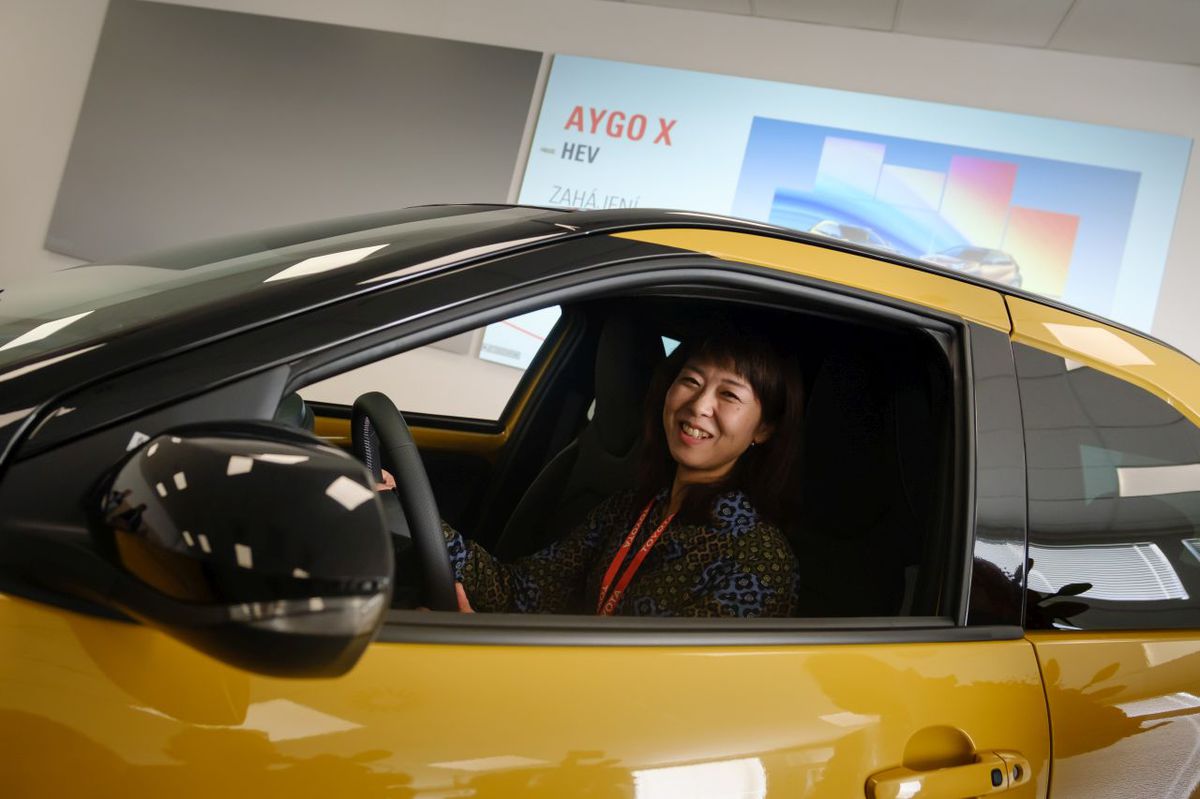
Source Signals: The proclamation confirms that production of the Aygo X Hybrid has begun at the Czech plant, that the model is positioned as the most affordable hybrid in Europe, and that 65 % of its parts are sourced locally. Toyota cites an 85 g CO₂/km WLTP figure and an 18 % lifetime carbon‑footprint reduction versus the prior generation. The plant is also being readied for future BEV production.
WTN Interpretation: Toyota’s incentives are threefold: (a) capture price‑sensitive urban buyers who cannot yet afford full bevs, (b) lock in market share before competitors flood the A‑segment with low‑cost electrified models, and (c) leverage its Czech manufacturing hub to meet EU content‑localisation expectations, thereby reducing exposure to trade barriers and currency volatility. Constraints include the need to amortise existing ICE‑focused tooling, the limited profitability margin of ultra‑low‑price cars, and the regulatory risk that future standards may shift decisively toward zero‑emission thresholds, possibly rendering hybrids less competitive. Toyota’s multi‑path drivetrain strategy-maintaining ICE,hybrid,and BEV options-provides versatility but also spreads R&D and capital allocation across divergent technologies.
WTN Strategic Insight
“Hybrid‑first strategies in the ultra‑budget segment act as a bridge that lets legacy automakers hedge against rapid policy shifts while preserving cash flow from high‑volume ICE platforms.”
Future Outlook: Scenario Paths & Key Indicators
Baseline Path: If EU emissions standards continue to tighten incrementally and consumer subsidies for BEVs remain modest,the aygo X Hybrid will secure a sizable share of the sub‑€20,000 market.Toyota will use the Czech plant’s upgraded processes to scale hybrid output,gradually introduce BEV variants,and maintain profitability through localized supply chains.
Risk Path: If the EU accelerates zero‑emission mandates (e.g., a 2035 ban on new ICE sales) or introduces substantial incentives for BEVs that erode the price advantage of hybrids, demand for the Aygo X Hybrid could contract sharply.Toyota may be forced to accelerate the transition of the Czech facility to full BEV production, incurring higher re‑tooling costs and exposing the company to supply‑chain bottlenecks in battery materials.
- Indicator 1: EU fleet‑average CO₂ compliance reports (quarterly) – watch for tightening targets that could pressure hybrid sales.
- Indicator 2: Announcement of national BEV purchase incentives or tax reforms in key markets (Germany, France, Spain) within the next six months.
