
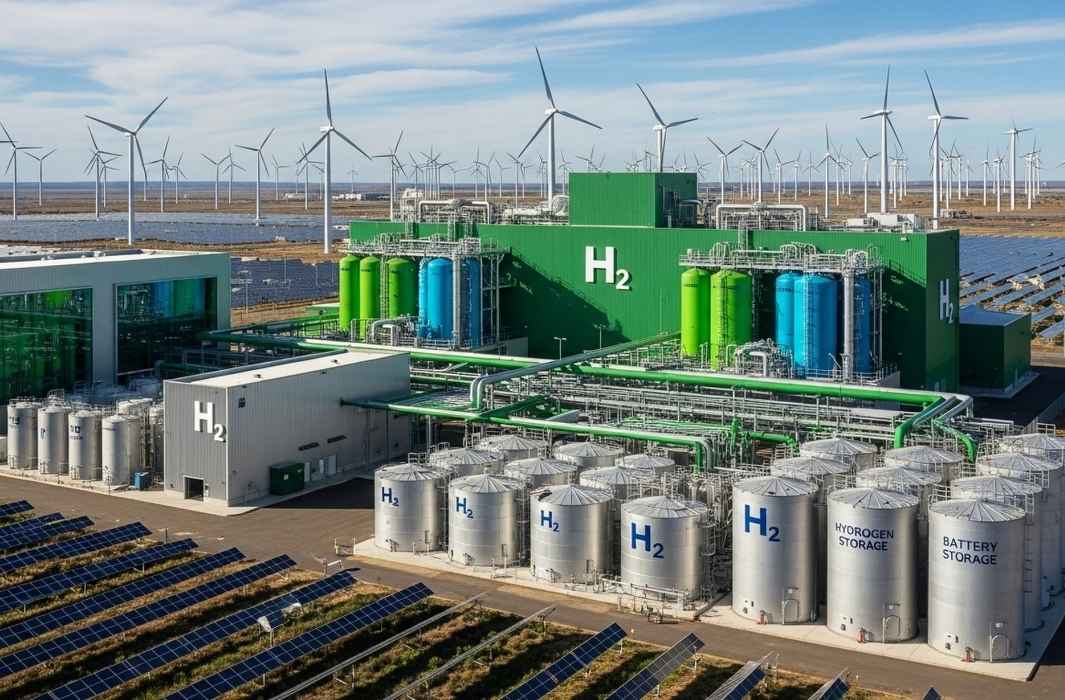
Amna Energy / Meranti Green Steel is now at the center of a structural shift involving green‑hydrogen‑enabled steel production. The immediate implication is the creation of a regional low‑carbon industrial hub that links Oman’s renewable power base to global steel supply chains.
the Strategic Context
Oman’s 2030 energy strategy targets a rapid expansion of renewable generation to diversify a hydrocarbon‑dependent economy and to capture emerging demand for clean inputs in heavy industry. Globally, steel producers are under pressure to cut CO₂ intensity as major buyers (automakers, construction firms, defence contractors) adopt carbon‑border adjustments and ESG procurement standards. The convergence of abundant solar‑wind resources, government‑backed land allocation in the Duqm Economic Zone, and the international push for green‑hydrogen‑based ironmaking creates a structural opening for a large‑scale, export‑oriented low‑carbon steel value chain.
Core Analysis: Incentives & Constraints
Source Signals: The memorandum of understanding confirms that Amna Energy (backed by Copenhagen Infrastructure, Blue Power Partners, and the Hind Bahwan Group) will develop a 320 km² site in Duqm to produce up to 200 kt of green hydrogen per year, powered by roughly 4.5 GW of renewable capacity. Meranti Green Steel plans a hot‑briquetted‑iron plant with 2.5 Mtpa capacity, relying on that hydrogen supply. The agreement is framed as a means to meet Omani clean‑hydrogen allocation targets, secure cost‑competitive low‑carbon steel for export, and integrate regulatory oversight by local gas and water utilities.
WTN Interpretation:
– Incentives.* Oman seeks to monetize its renewable potential, attract foreign direct investment, and diversify away from oil revenue volatility.By anchoring a hydrogen‑to‑steel chain, it creates a high‑value export product and a domestic industrial base that can generate skilled jobs. Meranti gains a secure, low‑cost hydrogen feedstock and a strategic foothold in the Gulf, positioning its steel for markets that will penalize carbon‑intensive imports. The consortium partners bring capital, project‑development expertise, and regional market knowledge, reducing execution risk for the Omani government.
– Constraints.* The economics of green hydrogen remain sensitive to renewable‑energy capital costs,electrolyzer efficiency,and carbon‑price differentials. Scaling to 200 kt/yr requires substantial financing and a reliable grid, while the HBI plant must achieve competitive unit costs versus conventional blast‑furnace steel. Oman’s regulatory environment,land‑use approvals,and water resource management could introduce delays. Global steel demand cycles and potential trade barriers (e.g., carbon border adjustments) add market risk.
WTN Strategic insight
“The convergence of cheap renewable power and carbon‑border policies is turning Gulf ports into the next frontier for green‑steel, where hydrogen becomes the new commodity that links energy transition to traditional heavy‑industry value chains.”
Future Outlook: Scenario Paths & key Indicators
baseline Path: Assuming renewable‑capacity procurement proceeds on schedule, electrolyzer contracts are awarded, and financing is secured, the hydrogen plant reaches 50 % of its 200 kt target within 18 months, enabling Meranti to commence HBI production at a modest scale. omani policy continues to support green‑hydrogen incentives, and global steel buyers maintain demand for low‑carbon products, allowing the Duqm hub to achieve break‑even by 2028 and become a regional export platform.
Risk Path: If renewable‑project financing stalls, or if electrolyzer cost reductions lag, hydrogen supply costs exceed market thresholds, making the HBI operation uncompetitive. Simultaneously, a slowdown in global steel demand or the imposition of stringent carbon‑border tariffs could depress export margins, leading to under‑utilization of the Duqm facility and potential renegotiation of the MoU.
- Indicator 1: Quarterly progress reports on the 4.5 GW renewable power procurement (e.g., power purchase agreements signed, construction milestones).
- Indicator 2: Announcement of electrolyzer supplier contracts and capital‑raising rounds for the hydrogen plant (track announced capacity and financing terms).
- indicator 3: Updates from Omani ministries on carbon‑border adjustment policies in key steel‑importing regions (EU, US, China) that effect price differentials for low‑carbon steel.
