
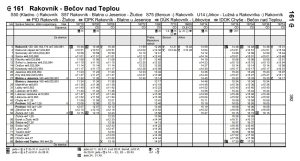
Czech railways (České dráhy) is now at the centre of a structural shift involving regional mobility integration. The immediate implication is a re‑balancing of passenger flows between Prague and peripheral towns, with potential ripple effects for local labor markets and tourism.
The Strategic Context
Since the early 2000s the czech Republic has pursued a policy of “regional connectivity” to counteract the demographic and economic pull of Prague on surrounding districts. EU cohesion funds and national budget allocations have steadily supported rail line upgrades,while the Prague Integrated Transport (PID) system has expanded its fare and service zones to incorporate outlying municipalities. This long‑term push reflects broader European trends: aging populations in Central Europe, the need to sustain smaller towns, and the strategic desire to keep freight and passenger traffic on rail rather than road, thereby reducing congestion and emissions.
Core Analysis: Incentives & Constraints
Source Signals: The schedule change effective 14 December creates a direct train (sp 1590) from Prague’s masaryk station to Bečov nad Teplou, covering 160 km in 3 h 57 min. It runs daily, uses existing line 120 (Prague‑Kladno‑Rakovník) and line 161 (Rakovník‑Bečov), and is operated with 814 regional units, indicating modest comfort levels.The service is unidirectional; a reverse direct train is not offered. complementary bus services (PID line 305,RegioJet,Flixbus) and a 2‑hour‑15‑minute car drive remain available.
WTN Interpretation: The introduction of a single daily direct service serves several strategic purposes. First, it tests demand on a low‑cost rolling stock platform without committing premium resources, aligning with budget constraints and the need to justify future investments.Second, by linking Prague directly to a peripheral town, the operator seeks to stimulate commuter and weekend tourism flows, supporting local economies that have struggled with out‑migration. Third, the unidirectional nature suggests operational constraints-track capacity, crew scheduling, and rolling‑stock availability-limit the feasibility of a full round‑trip service at this stage. the parallel bus and car options indicate that rail is being positioned as a complementary, not exclusive, mobility mode, preserving flexibility for passengers while maintaining a foothold in the regional transport market.
WTN Strategic insight
“A modest, single‑track rail link can act as a catalyst for peripheral revitalisation, but its strategic weight hinges on whether it becomes a permanent corridor or remains a seasonal curiosity.”
Future Outlook: Scenario Paths & Key Indicators
Baseline Path: If passenger uptake meets or exceeds modest expectations and operational reliability remains high, České dráhy will likely expand frequency, upgrade rolling stock, and consider a reverse direct service. This would deepen regional integration, support labor mobility, and attract modest private investment in adjacent tourism infrastructure.
Risk Path: If ridership stays low, or if cost overruns on rolling‑stock maintainance emerge, the service could be reduced or withdrawn, reinforcing reliance on road‑based transport. A withdrawal would signal limited fiscal space for peripheral rail projects and could accelerate demographic decline in the Bečov corridor.
- Indicator 1: Quarterly passenger load factor reports for train Sp 1590 (to be released by czech Railways). A sustained load factor above 50 % would trigger service expansion considerations.
- Indicator 2: PID’s quarterly budget allocation review for regional rail subsidies. An increase in earmarked funds for line 120/161 would indicate institutional support for scaling the service.
