
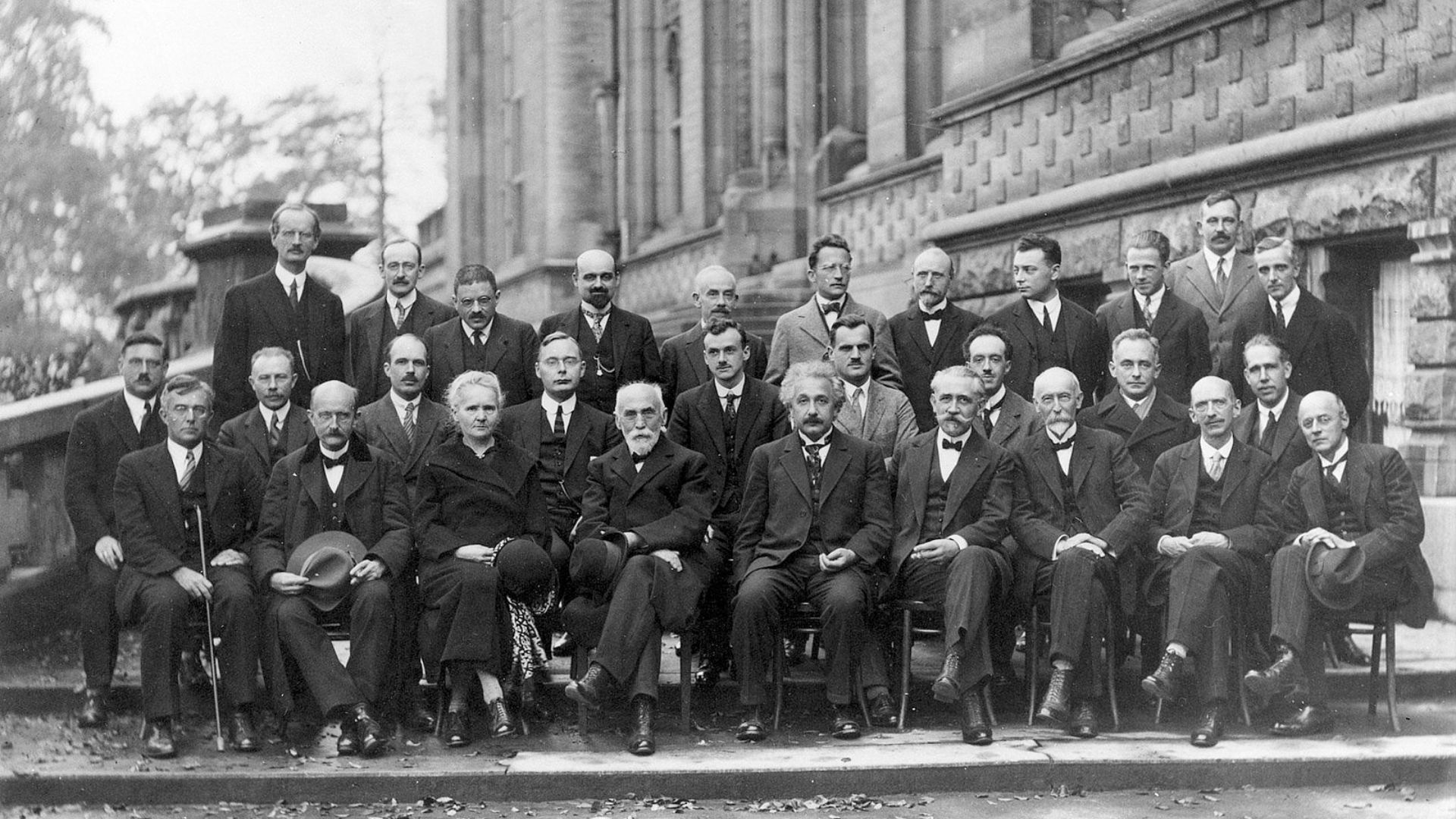
Single-Atom Experiment Confirms Bohr‘s Quantum Interpretation, Resolving Century-Old Debate with Einstein
Beijing, China - A team of Chinese physicists has delivered a definitive experimental result in the long-standing debate between Albert Einstein and Niels bohr regarding the fundamental nature of quantum mechanics. Published in Physical Review Letters, the experiment utilizes a single rubidium atom to demonstrate that determining a photon’s path inevitably disrupts its wave-like interference pattern, siding with Bohr’s interpretation and reinforcing core principles of quantum theory.
The research revisits the iconic double-slit experiment, where single photons exhibit both particle and wave behavior. Einstein had argued that it should be possible to determine a photon’s path without destroying its wave interference pattern. Bohr countered that the universe operates under inherent limitations, with certain properties being fundamentally incompatible for simultaneous measurement.
For nearly 100 years, a lack of sufficiently sensitive detection technology prevented a conclusive test. Pan’s team overcame this hurdle by trapping a single rubidium atom in laser light and cooling it to near absolute zero, effectively creating Einstein’s proposed “movable slit” detector.
The experiment revealed a critical relationship: when the atom was loosely held, it registered the photon’s trajectory, but the interference pattern vanished. Conversely,when the atom was tightly confined,preventing path detection,the interference pattern reappeared,precisely as Bohr predicted. As explained in an accompanying article by the American physical Society (APS), the team could “make the fringes more or less blurry, in line with theory” by adjusting the photons’ momentum uncertainty.
Reviewers hailed the work as “a important contribution to the foundations of quantum mechanics,” describing it as “lovely” and “a textbook realisation of a century-old thought experiment,” according to the South China Morning Post.
While the result doesn’t overturn established quantum mechanics, it provides an exceptionally clean platform for exploring its subtler aspects. The single-atom control allows physicists to study how quantum systems lose coherence and become entangled with their surroundings. The APS article notes the setup “has the potential to explore other, less established aspects of quantum mechanics,” including the interplay between entanglement and decoherence.
This improved understanding could have practical implications for developing more stable qubits, building ultra-precise sensors, and refining quantum interaction networks.
