
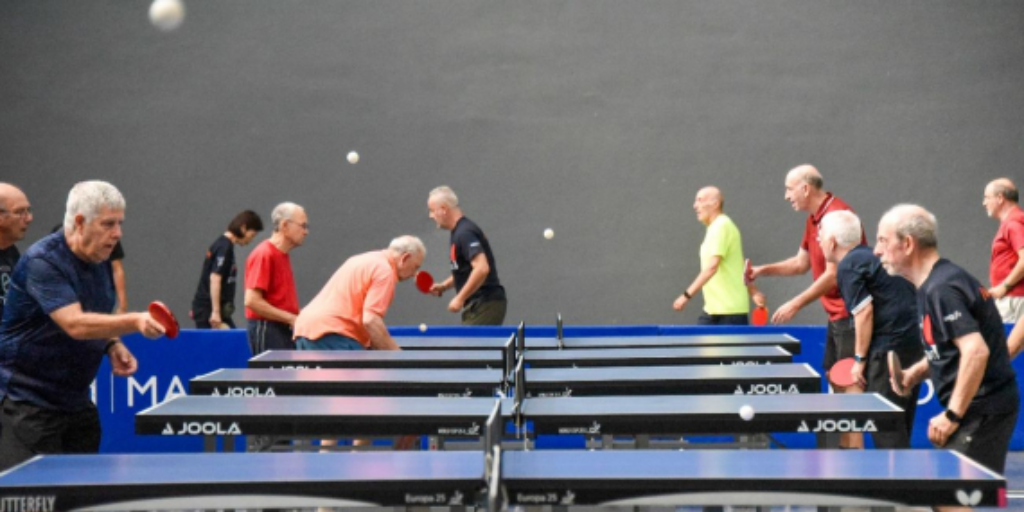
Table Tennis Offers hope and Activity for Parkinson’s Patients
table tennis is gaining recognition as a beneficial activity for individuals living with Parkinson’s disease, offering a unique way to address some of the condition’s core challenges. While not a strenuous sport at the amateur level, it actively engages crucial physical skills often impacted by Parkinson’s – balance, reflexes, mobility, and responsiveness to stimuli. The activity subtly encourages the brain to find choice pathways for muscle activation, bypassing areas affected by rigidity or slowness.
Recognizing these benefits,the Red Parkinson Foundation has initiated free table tennis classes,attracting a growing number of patients to locations like the Golden Triangle sports Centre in madrid,and clubs in Catalonia,notably L’Hospitalet.
These classes are tailored to individual needs, led by three coaches who begin with a complete warm-up focused on balance and joint mobility. Participants are then divided into groups, some focusing on physical and cognitive exercises, and others on adapted table tennis drills. Federico Drago, president and coach of the District 20 club, explains the approach: “We serve a group of 20-25 people, the majority men even though we would like more women to come. First we develop exercises that work for everyone, as each patient has their own situation and difficulty…”.
The emphasis isn’t necessarily on improving athletic performance, but on maintaining focus during exercise. Coaches incorporate variations like using both hands, targeting specific areas on the table, and utilizing differently colored balls to keep players engaged and stimulate both physical and cognitive function. “Table tennis is a game that can be very repetitive…but here we are not trying so much to improve, but rather to ensure that the player/patient remains focused on executing the exercise,” drago states.
The benefits extend beyond the physical. Jose Antonio Alonso, President of the Red Parkinson Foundation, highlights the psychological impact: “Sometimes it involves depression and loneliness; going to these training sessions is like therapy and gives extraordinary results physically and mentally.” He explains that the symptoms of Parkinson’s - limited mobility, tremors, and a feeling of being “useless” – can lead to isolation and depression. “You don’t move, you limp, you have a tremor, it’s frustrating, it’s embarrassing, you feel useless and you prefer to stay home to avoid that stigma.”
Alonso notes that the concentration required to follow the ball in a game of table tennis provides a valuable mental and physical workout, and that some participants have shown significant improvement within just three months. He concludes, “Table tennis can win a few points for Parkinson’s.”
