
Italy Urges Unified European AI Framework as Adoption Rises & Public Calls for Regulation Grow
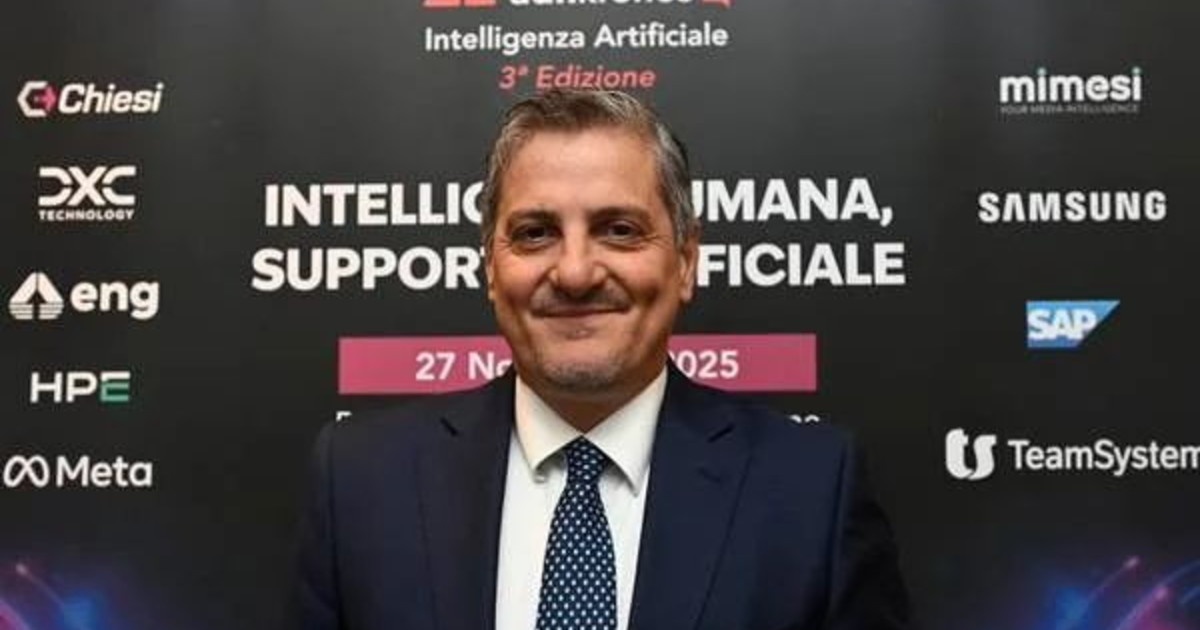
Rome,November 27,2025 – As artificial intelligence adoption accelerates globally,Italy is pushing for a comprehensive European regulatory framework to avoid falling behind the United States,China,and India. The call for unified action came during the third edition of “Human Intelligence, Artificial Support” held at the adnkronos headquarters in Rome, bringing together institutions and companies to address the rapidly evolving landscape.
Undersecretary to the Presidency of the Council Alberto Barachini emphasized the need for a broader European approach,stating that a national law alone would be insufficient to govern the digital conversion. He highlighted the urgency of defining request areas, contrasting the advanced AI services already deployed in the US – like driverless taxis - with ongoing debates in Italy regarding the pace of implementation.
The Ministry of Enterprise and Made in Italy (Mimit) outlined three key initiatives: technological transfer, training, and business support. A new funding call for SMEs, launching in January, aims to engage younger generations in utilizing new technologies. However, a significant digital gap remains, with 70.2% of Italian small and medium-sized enterprises still at a low level of digitalization, compared to a similar initiative reaching 350,000 companies in Spain.
Positive developments are already underway through Italy’s National Recovery and Resilience Plan (Pnrr). DXC Technology’s Nicola Mangia detailed the company’s collaboration with the Ministries of Surroundings and culture, creating an environmental monitoring system and a programme for digitizing Italian cultural heritage – a project that has garnered international attention. “My international colleagues were fascinated to see how we are carrying forward the digitalization of Italian cultural heritage,” Mangia explained.
On the european front, MEP Brando Benifei anticipates new technical standards for the AI Act by 2027, with the European Commission prepared to establish them if necessary. Laura Jugel, from the EU Commission, announced a simplifying package for a single European sandbox, expected to be implemented in member countries starting in august.
Growing acceptance of AI is reflected in Italian universities, where usage reaches 83%, increasing to 85% during master’s programs and 87% for doctoral studies. Public skepticism is also waning, with 90% of Italians now calling for more rules, while the percentage of those feeling inadequately informed has decreased from 52% last year to 48%.
Alberto Tripi, advisor to Confindustria, underscored Italy’s potential, stating, “We Italians have more creativity than others and we must use it” to effectively channel innovation within a common regulatory system.
