
Trump Administration moves to End TPS for Haitian Immigrants
The Trump administration is set to terminate Temporary Protected Status (TPS) for approximately tens of thousands of Haitian immigrants, with the protection officially ending on February 3, 2026.The U.S. Citizenship and Immigration Services (USCIS) announced the decision on its website, stating that those currently benefiting from TPS must depart the United states by that date if they do not have an alternative legal pathway to remain.
According to a USCIS press release, Secretary of Homeland Security Kristi Noem has determined that Haiti no longer meets the legal requirements for TPS designation. This conclusion comes despite acknowledging the ongoing, deeply challenging conditions within the nation. The official notice, published in the Federal Register, asserts that no “exceptional and temporary conditions” currently prevent Haitian nationals from safely returning home.
However,the rationale extends beyond a simple assessment of safety. The DHS explicitly states that even if such conditions were found to exist, allowing Haitians to remain under TPS is “contrary to the national interest of the United States.”
This decision marks a reversal from the Biden administration’s 2024 extension of TPS for Haitian citizens. President Biden had cited a confluence of crises – economic hardship, political instability, escalating gang violence, and public health concerns - as justification for continued protection, extending the program until February 3, 2026.
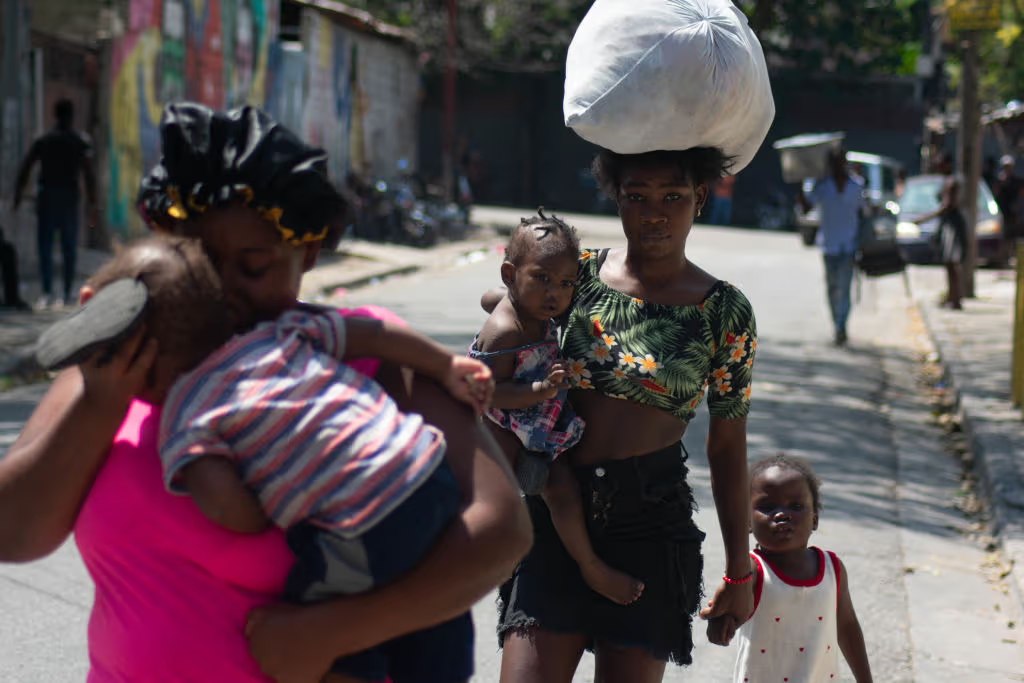
Haiti, already the poorest country in Latin America, has been gripped by a surge in violence perpetrated by powerful organized gangs. These groups engage in widespread criminal activity including looting, murder, sexual assault, and kidnapping, all within a context of profound political turmoil. The situation dramatically worsened in March 2024 when a prominent gang leader threatened a descent into “civil war and genocide” if Prime Minister Ariel Henry did not resign. Henry afterward stepped down, paving the way for the formation of a transitional council.
The International Organization for Migration (IOM) reported in November 2024 that over 1.4 million Haitians had been internally displaced, with 93% of these movements directly attributed to escalating violence.
The DHS acknowledges this volatile surroundings, referencing a late-august briefing by the U.S. ambassador to the United Nations, which highlighted continued concerns about rising violence and the expanding influence of gangs. Despite this, the administration claims “there are parts of the country to which you can return.”
Interestingly, the DHS’s assessment of Haiti’s ungovernability aligns with conclusions previously reached by the Biden administration. Though, the current justification for ending TPS differs. While the Biden administration cited the crisis as a reason to maintain protection, the DHS now argues that a lack of access to reliable law enforcement and security information “severely limits the ability of the United States goverment to review and veto Haitians with Temporary Protected Status,” effectively hindering the program’s oversight.
