
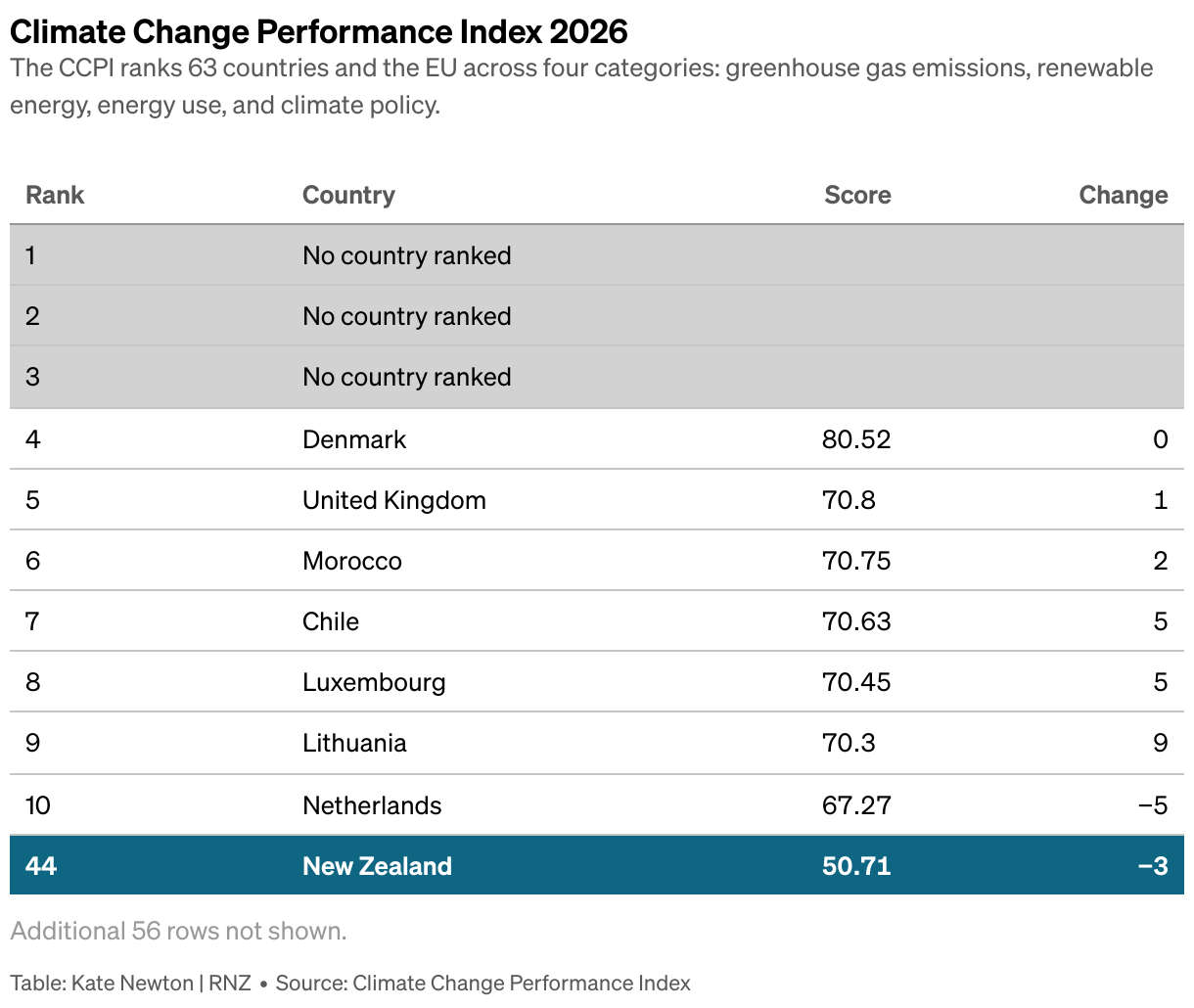
New Zealand’s Climate Ranking Declines, Earns “Fossil of the Day” at COP30
New Zealand’s commitment to climate action is facing scrutiny as the nation has fallen in the latest Climate Change Performance Index, prompting criticism at the ongoing COP30 climate summit in Brazil. Climate activists awarded new Zealand the “Fossil of the Day” award, citing recent policy shifts as evidence of backsliding.
The report highlights a rollback of the ban on new offshore oil and gas fuel exploration as a key factor in the declining ranking, shifting focus away from renewable energy sources. Despite generating over 80% of it’s electricity from renewables – described as a “spark of hope” – progress on further developing renewable supply has stalled.
David Tong, a new Zealander campaigning for Oil Change International, noted the report’s assessment predates recent policy changes. “New Zealand could expect an even worse rating, if the Climate Change Performance Index were re-assessed today,” he said, adding that significant changes have occurred in the last four weeks alone. These changes will be reflected in next year’s report.
This week, the government announced it would further loosen clean car standards, a move likely to worsen the country’s standing.
Climate Change Minister Simon Watts, currently attending COP in Brazil, declined to comment on the report directly, stating he had not yet received a copy. He affirmed New Zealand’s commitment to its climate targets, stating, “The latest projections released last month show we are on track for the first two emissions budgets and could hit carbon net zero as early as 2042.”
Watts acknowledged the unique challenges New Zealand faces, noting the country’s reliance on renewable electricity alongside significant methane emissions from agriculture. “We’re blessed with abundant renewable energy…but simultaneously occurring over half our emissions come from methane, which is far harder to abate without shutting down farms and sending that production offshore.”
The declining ranking has drawn strong criticism from environmental organizations. Kayla Kingdon-Bebb, chief executive of World Wildlife Fund NZ, described the results as “pretty depressing and rather shameful.” She warned that New Zealand risks damaging its “very credible role” in the Pacific region, where leaders have repeatedly urged Australia and New Zealand to prioritize meaningful climate action and refrain from restarting offshore oil and gas exploration.
Kingdon-Bebb emphasized the broader consequences of the policy changes, stating they are “setting up future generations of Kiwis to shoulder a relatively unconscionable burden, in terms of the cost of dealing to future climate-related weather.”
