
Rising Drone Threat Prompts Calls for Expanded Counter-Drone Capabilities
Unauthorized drone flights are increasingly posing a security risk too U.S. military installations, the border, and large civilian events, prompting lawmakers to push for expanded authority to detect, track, and disable these potentially threatening aircraft. Concerns are particularly heightened as the U.S. prepares to host major international sporting events like the Olympics and the World Cup next year.
Currently, only roughly half of U.S. military installations are designated as “covered” sites, authorized to intercept drones deemed security threats, according to testimony from Gen.Gregory M. Guillot, commander of U.S. northern Command and North American Aerospace defense Command (NORAD), before the senate Armed Services Committee in Febuary. While several federal agencies – including the departments of Defense, Homeland Security, Energy, and Justice – have authority over drone detection and mitigation, state and local law enforcement agencies largely lack the power to intervene, even when drones threaten civilian locations like airports or stadiums.
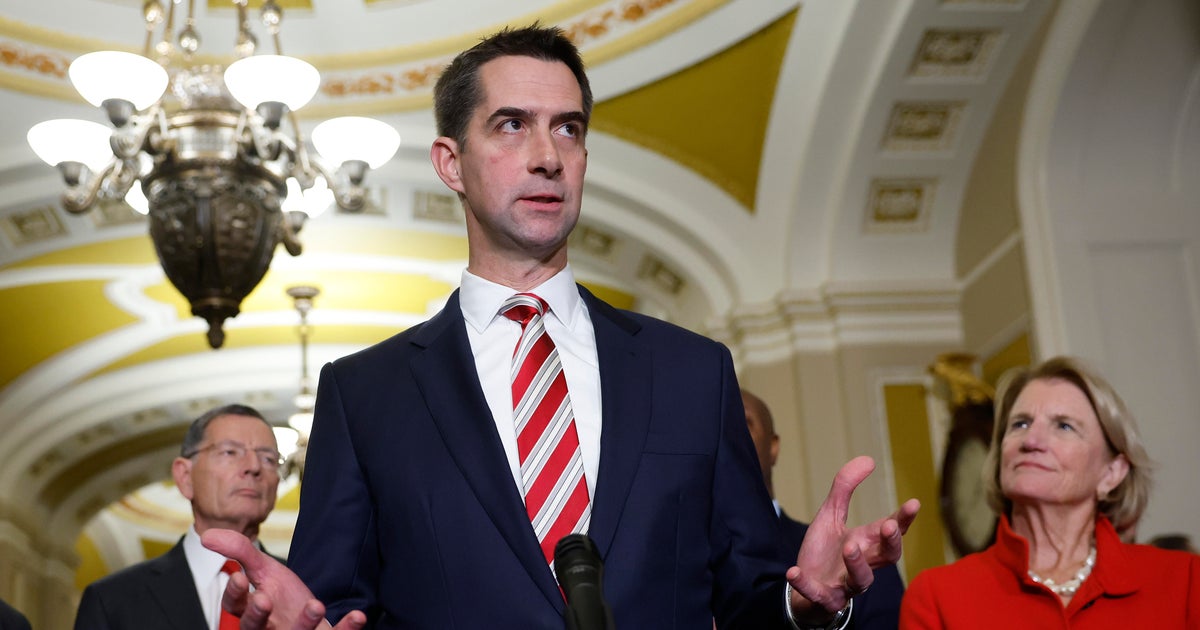
Senator Tom Cotton is leading the charge to address these vulnerabilities, pointing to a growing number of drone incursions over major sporting venues. A security official within the sports industry confirmed to CBS News that the threat from drone overflights is “real and it’s increasing.” While the majority of incidents involve unintentional or careless drone operators violating temporary flight restrictions, a concerning number demonstrate aggressive evasion of detection - estimated at around a dozen cases annually.
Despite no publicly confirmed instances of a mass-casualty event or weaponized drone attack at a U.S. sporting event, officials fear the increasing frequency of incursions makes such scenarios more plausible. “Thankfully, just by luck, we haven’t had something bad happen,” one official stated anonymously, referencing the potential for accidents or deliberate attacks.
To close existing enforcement gaps, Senator Cotton, alongside bipartisan co-sponsors, is supporting two legislative measures.the DEFENSE Act, co-sponsored by Senator Jacky Rosen of Nevada, would grant trained state and local law enforcement the ability to detect, track, and disable hostile drones at large public gatherings. The COUNTER Act, co-sponsored by Senator Kirsten Gillibrand of New York, aims to broaden the definition of a “covered site,” allowing more U.S. military bases to actively monitor and neutralize drone threats.
Senator Cotton has warned that inaction by Congress could lead to a reactive response following a catastrophic event, rather than proactive planning. He also highlighted the urgency of making current airspace protection authorities permanent, as existing funding is only secured through January 30th – just a week before the Super Bowl. Permanent authority would allow the Department of Homeland Security, in coordination with other federal agencies, to better plan and train for airspace protection.
