
Universe Cooling,Star Formation Declining,New Data Reveals
Recent analysis of data from the European Space Agency’s (ESA) Euclid and Herschel telescopes indicates a long-term cooling trend in the universe and a corresponding slowdown in star formation. A team of 175 international scientists confirmed this decline by meticulously measuring the temperature of stardust across 2.6 million galaxies.
The research, currently awaiting peer review in Astronomy and Astrophysics, focused on analyzing infrared radiation to determine stardust temperatures. Results show an average cooling of 10 Kelvin (approximately -263 to -273 degrees celsius) across these galaxies over the past 10 billion years. Even this relatively small temperature decrease signals a significant reduction in the rate at which new stars are being born.
“The universe will only get colder and deader from now on,” explains cosmologist Douglas Scott of the University of British Columbia, a co-author of the study. “The amount of dust in galaxies, and its temperature, has been decreasing for billions of years, indicating we’ve already passed the peak period of star formation.”
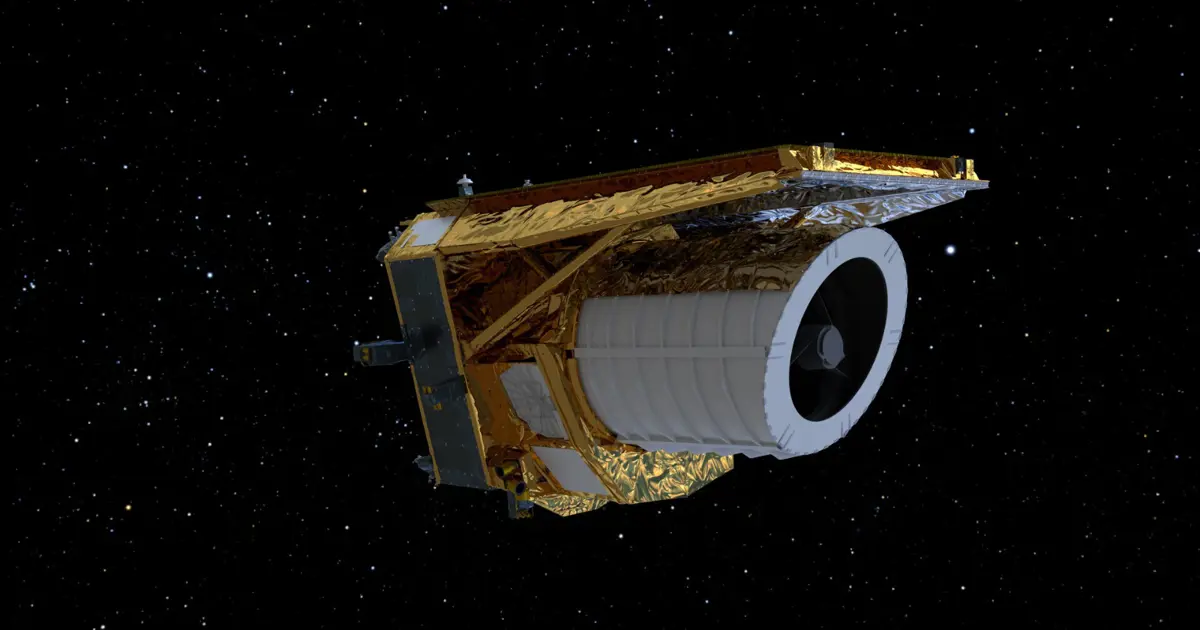
The study leverages the capabilities of both Euclid and Herschel.Euclid, which released its first data set in March showcasing 26 million galaxies extending over 10.5 billion light-years, observed galaxies in visible and near-infrared light. This was combined with archival data from Herschel, which observed in far-infrared, allowing scientists to comprehensively measure stardust temperatures.
Lead author Ryley Hill notes the scale of the data set was crucial, stating, “Having such a large sample of galaxies allowed us to make the most statistically reliable calculations ever.”
Stardust is a vital component of star formation,acting as the raw material for new stars when gravitational forces cause gas and dust clouds to collapse and initiate nuclear fusion. Though, galaxies can lose the necessary gas and dust through processes like mergers, black hole activity, and gas ejection, effectively halting star birth – a process known as “quenching.”
The findings suggest the universe is entering a long-term “fading” phase, though this doesn’t imply an immediate cessation of star formation. Our own Sun, and the Milky Way galaxy, will continue forming stars for billions of years.Even after stars cease to be born, structures like black holes are expected to persist for trillions of years.
This research represents a significant step towards understanding the evolution of the universe and the eventual fate of star formation within it, utilizing a massive dataset to paint a clearer picture of cosmic cooling.
