
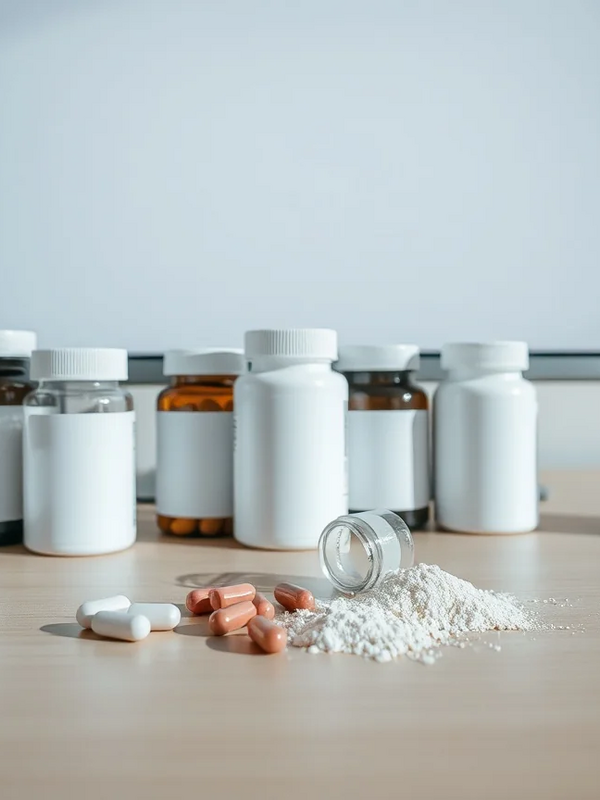
Teh Hidden Risks of Dietary Supplements: A Growing Concern for Public Health
The booming market for vitamins, minerals, and other dietary supplements offers promises of enhanced health, but a concerning lack of regulation is leaving consumers vulnerable to serious risks. Long-term oversupply of these supplements can lead to kidney damage, particularly with fat-soluble vitamins A, D, E, and K, which accumulate in the body due to the inability to easily excrete excess amounts.
Children are especially susceptible to harm.Dosage guidelines on packaging are typically geared towards adults, and parents frequently underestimate the quantities that could prove toxic for their children.
A System Without Safeguards
The core of the problem lies in a significant legal loophole. Unlike pharmaceuticals, nutritional supplements do not undergo an approval process. Manufacturers are only required to register their products with the Federal Office of Consumer Protection and Food Safety (BVL) - a simple registration that includes no safety evaluation.
This lack of oversight fosters a dangerous misconception. A recent study by the Federal Association of Consumer Organizations (vzbv) revealed that nearly half of all consumers incorrectly believe these products are state-tested for safety. Moreover,Germany currently lacks mandatory maximum quantities for vitamins and minerals. while manufacturers may adhere to non-binding recommendations from the BfR (federal Institute for Risk Assessment), they are under no legal obligation to do so.
Deceptive Marketing and Untrustworthy Sources
The issue is compounded by increasingly sophisticated and misleading marketing tactics.Consumer advice centers recently warned of a new scam involving fake celebrity endorsements on social media. Well-known personalities are having their images misused to promote questionable products without their consent, creating a false sense of trust.
Aggressive advertising frequently claims healing effects that are not legally permitted. These campaigns are particularly effective on social media platforms, where a recent BfR survey found that users who rely on these channels for information tend to consume more supplements and are less critical of their purported benefits.
Dangerous Interactions with Medications
A frequently overlooked danger is the potential for drug interactions. Ingredients in dietary supplements can unpredictably alter the effectiveness of prescribed medications. Examples include:
* St. John’s wort diminishing the efficacy of the contraceptive pill.
* Vitamin K interfering with the action of anticoagulants (blood thinners).
* Calcium perhaps blocking the absorption of certain antibiotics.
Because manufacturers are not required to disclose potential interactions, many patients unknowingly expose themselves to significant health risks.
Protecting Yourself: A Consumer’s Guide
Until legal reforms are implemented, the onus of safety falls on the consumer. Experts recommend the following precautions:
* Seek medical advice: Consult a healthcare professional to determine your actual needs before starting any supplement regimen.
* check for interactions: specifically if you are taking prescription medications, verify potential interactions with a doctor or pharmacist.
* Question advertising claims: Maintain a critical mindset, especially when encountering offers on social media.
* Stay informed about recalls: Regularly check for product recalls at lebensmittelwarning.de.
* Choose reputable pharmacies: Opt for purchasing supplements from local pharmacies rather than unknown online retailers.
Ultimately, a balanced diet remains the cornerstone of good health and cannot be adequately replaced by pills and powders.
While discussions regarding uniform maximum quantities are underway at the EU level,a final decision remains pending. For now, the multi-billion dollar supplement market largely operates without adequate safeguards, demanding continued vigilance from consumers.
[Advertisement]
P.S. Concerned about vitamin overdoses or hidden ingredients? The free laboratory values self-check provides practical information about which blood values you should have checked, how to interpret results and which measures make sense – the 25-page PDF report comes directly by email.Check lab values yourself now https://info.gesundheitswissen-aktuell.de/laborwerte-selbstcheck/?af=KOOP_G_TG_DNV_YES_LABORWERTE-SELBSTCHECK_X-CWAHN-BGPID_671459
