
EU’s New Entry-Exit System: A Digital Foundation for Border Management and Future policy
The european Union is implementing a new entry and exit system (EES) at its external borders, initially appearing as a shift away from traditional passport stamps for non-EU citizens. Though, the EU Commission frames this as a crucial step towards establishing a more robust and integrated migration and asylum policy.
Starting this Sunday, the EES will be rolled out gradually across the 29 countries within the Schengen area – the 25 EU member states, plus Iceland, Liechtenstein, Norway, and Switzerland. Düsseldorf Airport in Germany is the first location to activate the system. The full implementation, covering all external border crossing points, is scheduled for April 10, 2026, at which point passport stamps for non-EU nationals are expected to be discontinued.
How the System works:
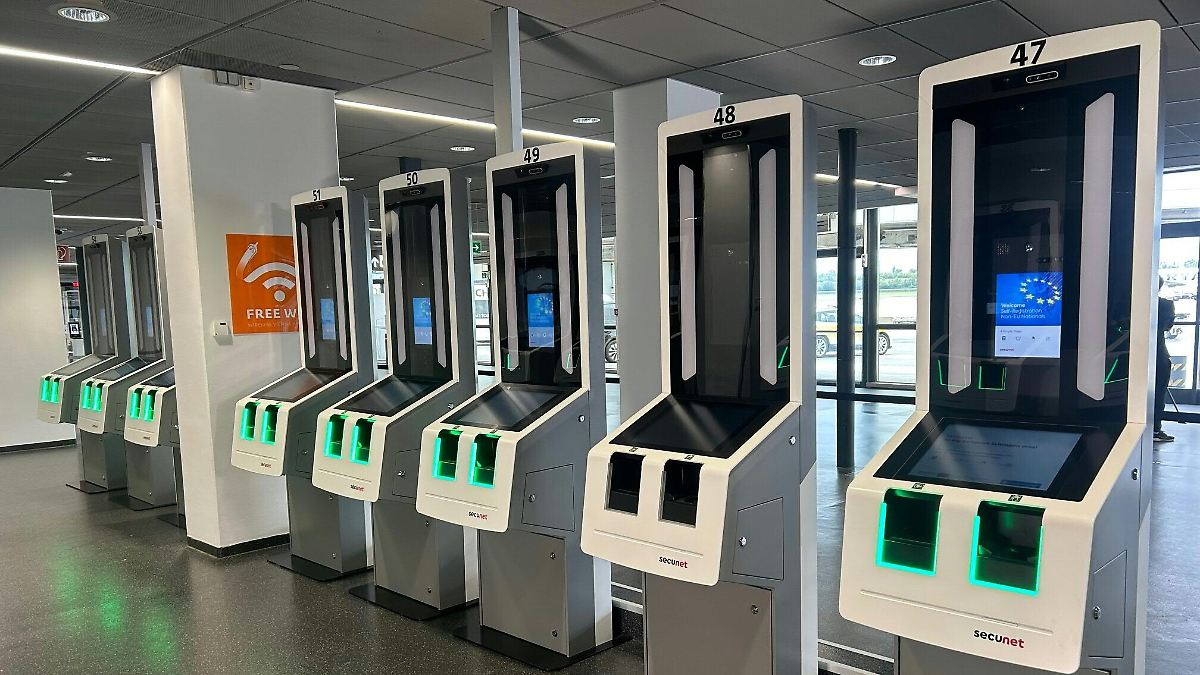
the EES will require non-EU citizens to register electronically at dedicated counters, providing biometric data – fingerprints and facial images – which will be stored in a central database. Entry and exit dates will also be recorded. To streamline the process, travelers can pre-submit data via a mobile app or self-service kiosks. Exceptions apply to individuals with EU residence cards and family members of EU citizens.
Further rollout in Germany will include Frankfurt and Munich airports, followed by a phased integration at all remaining airports and maritime borders. The system will also impact rail travelers, such as those using the Eurostar service connecting London to European cities.
The EU’s Stated Objectives:
The EU asserts the EES will enhance security by aiding in the identification of criminals and combating identity theft. The system aims to provide accurate data on individuals who overstay their permitted stay.
EU Commissioner Magnus Brunner has described the EES as the ”digital backbone” for a new, unified European migration and asylum policy, modernizing the management of external borders.
Future Developments:
The EES represents the first phase of a broader border management overhaul. By the final quarter of 2026, the EU plans to introduce the European Travel Details and Authorisation System (ETIAS). This will require citizens of over 50 countries currently exempt from visa requirements – including the USA, Canada, the UK, Brazil, the UAE, Israel, and South Korea - to obtain a paid travel authorization before entering the EU. This ETIAS authorization is subject to security checks and can be denied. Similar systems are already in place in the United Kingdom and the United States.
