
Earth’s Mantle May Be Undergoing a Dramatic Shift,Triggering Gravity Anomalies
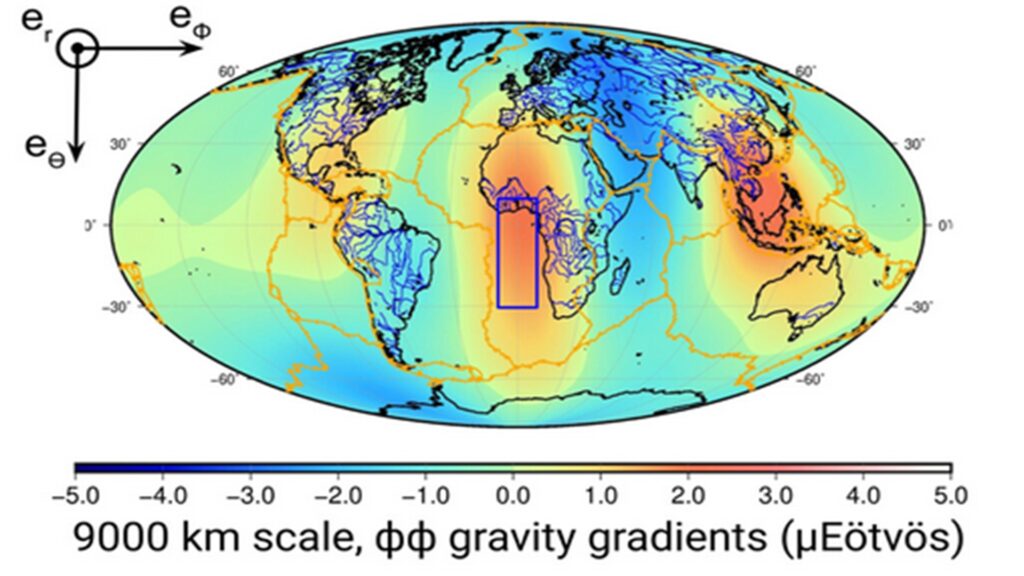
Twenty years ago,scientists detected a puzzling anomaly in Earth’s gravity field. New research suggests this event wasn’t a random fluctuation, but a sign of a massive, ongoing conversion deep within the planet’s mantle – a shift possibly leading to the formation of a new “ocean” of super-hot, dense material at the core-mantle boundary.
this subterranean process, occurring roughly 1,800 miles below the surface, centers on the mineral perovskite. Researchers believe immense pressure is causing perovskite to morph into a different crystalline structure, post-perovskite, releasing a substantial amount of energy and causing material to abruptly shift. This change could explain the gravity fluctuations observed around 2003 and may indicate similar events are regularly occurring beneath our feet. Understanding these dynamics is crucial for modeling Earth’s internal processes, including plate tectonics and the generation of the planet’s magnetic field.
The initial gravity anomaly was detected through subtle variations in the Earth’s gravitational pull. Scientists are now leveraging data from the GRACE-FO satellite mission – designed to precisely measure these gravitational changes - to monitor for recurring patterns and confirm the perovskite transformation hypothesis. according to a report by Numerama, the research team hopes subsequent GRACE-FO data will reveal whether these phenomena are common occurrences within the Earth’s mantle.
The mantle, comprising roughly 84% of Earth’s volume, is primarily composed of silicate minerals, with perovskite being a dominant component. The transformation to post-perovskite is driven by the extreme pressure at the mantle-core boundary. This transition isn’t simply a change in form; it’s a release of energy that can trigger large-scale movements of material, influencing the planet’s deep interior.
