
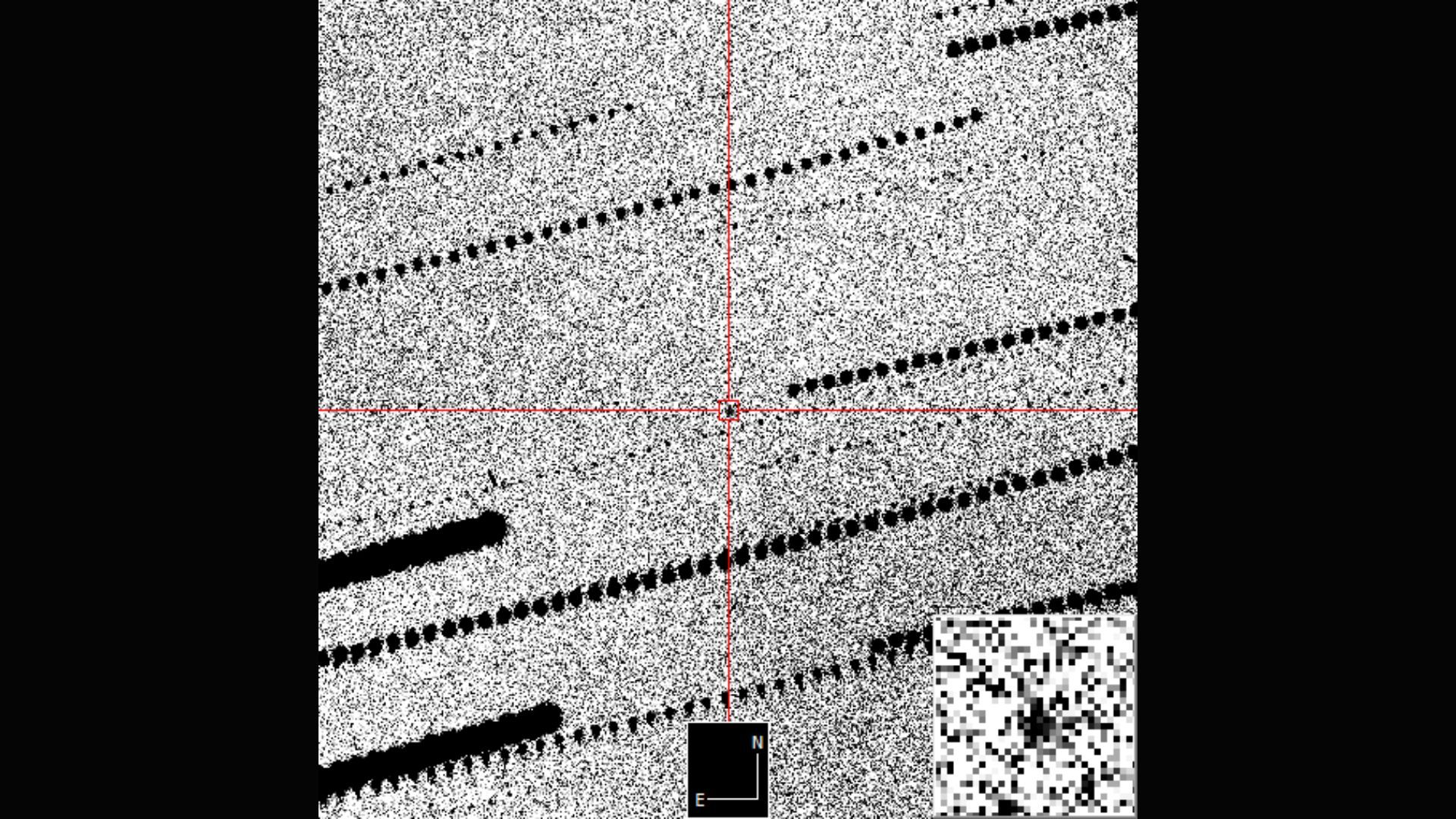
Near-Earth Asteroid Zooms Past Antarctica - Photo of the Day, October 8, 2025
A recently discovered near-Earth asteroid, designated 2025 TF, made an exceptionally close approach to Earth today, October 8, 2025, passing within roughly 16,000 miles (25,750 kilometers) of Antarctica. While posing no threat of impact, the flyby serves as a potent reminder of the constant stream of space rocks sharing our orbital neighborhood and the ongoing efforts to track them. A stunning image captured during the event is today’s featured photo.
The asteroid, estimated to be between 6 and 13 feet (2 to 4 meters) across, was initially detected hours after its closest approach by the Catalina sky Survey, operated by the University of Arizona. This close encounter underscores the challenges of detecting smaller asteroids, which are harder to spot due to their size and speed.Following the initial finding, the European Space Agency’s Planetary Defense Office quickly coordinated follow-up observations from Australia, utilizing telescopes within the Las Cumbres Observatory network to refine the asteroid’s trajectory.
This event highlights the critical work of global astronomical surveys dedicated to identifying and monitoring near-Earth objects (NEOs).These surveys employ refined telescopes and tracking algorithms to catalog asteroids and comets,calculating their orbits to assess any potential impact risks. The planetary Defense Office, and similar organizations worldwide, are developing and evaluating strategies for planetary defense, should a larger, potentially hazardous asteroid be discovered on a collision course with Earth. These strategies include kinetic impactors – essentially “bumping” an asteroid off course – and gravity tractors, which use a spacecraft’s gravitational pull to subtly alter an asteroid’s path over time.
Asteroid 2025 TF’s undetected passage, despite its proximity, emphasizes the dynamic nature of our solar system and the need for continued vigilance. Astronomers are constantly refining their detection capabilities and improving our understanding of the NEO population, ensuring that future close encounters are anticipated and assessed well in advance. Further details on near-earth asteroids and planetary defense initiatives can be found online.
