
“Living Fossil” Fish Rediscovered in Museum collections After 150 Years
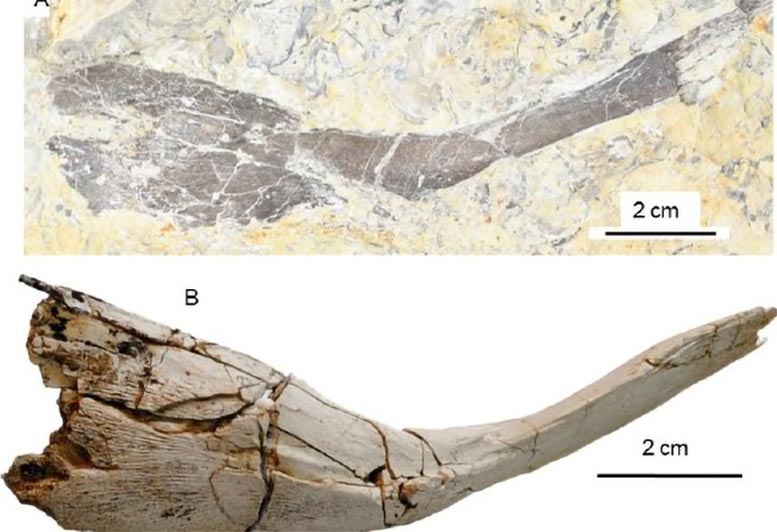
BRISTOL, UK - A team of paleontologists has announced the rediscovery of a significant population of coelacanth fossils – often called “living fossils” due to their ancient lineage – hidden in museum collections for over 150 years. Previously misidentified as belonging to lizards, mammals, and other creatures, the specimens represent a far greater presence of coelacanths in the British Triassic period than previously known, jumping from four prior reports to over fifty.The findings, published September 7, 2025, in the Journal of Vertebrate Paleontology, shed new light on ancient ecosystems and the evolutionary history of these remarkable fish.
The fossils, primarily belonging to the extinct Mawsoniidae group but closely related to modern coelacanths, were located in museum storage and even on public display. “It is indeed remarkable that some of these specimens had been sat in museum storage facilities, and even on public display, as the late 1800s, and have seemingly been disregarded or identified as bones of lizards, mammals, and everything in-between,” explained lead researcher Jacob Quinn of the University of Bristol. Quinn confirmed the identifications through X-ray scans of the specimens.
Coelacanths are lobe-finned fish with a fossil record stretching back 400 million years. Thought to have gone extinct 66 million years ago, a living coelacanth was discovered off the coast of south Africa in 1938, sparking renewed scientific interest. The newly identified British Triassic fossils offer insights into the diversity and distribution of these ancient fish during a crucial period in Earth’s history.
Co-author Pablo Toriño, a coelacanth expert based in Uruguay, noted the variety within the fossil collection.”Although the material we identify occurs as isolated specimens, we can see that they come from individuals of varying ages, sizes, and species, some of them up to one metre long, suggesting a complex community at the time.”
The fossils originate from the Bristol and Mendip Hills area, which during the Triassic period was a shallow tropical archipelago. Researchers believe these coelacanths were opportunistic predators,likely feeding on small marine reptiles like Pachystropheus – ironically,fossils of which were often confused with those of the coelacanths themselves.
“Like modern-day coelacanths, these large fishes were likely opportunistic predators, lurking around the seafloor and eating anything they encountered,” said co-supervisor Dr. David Whiteside.
Reference: Quinn, J.G.,Whiteside,D.I., Toriño, P., Matheau-Raven, E.R., & Benton, M.J. (2025). Coelacanthiform fishes of the British Rhaetian. Journal of Vertebrate Paleontology.DOI: 10.1080/02724634.2025.2520921
