
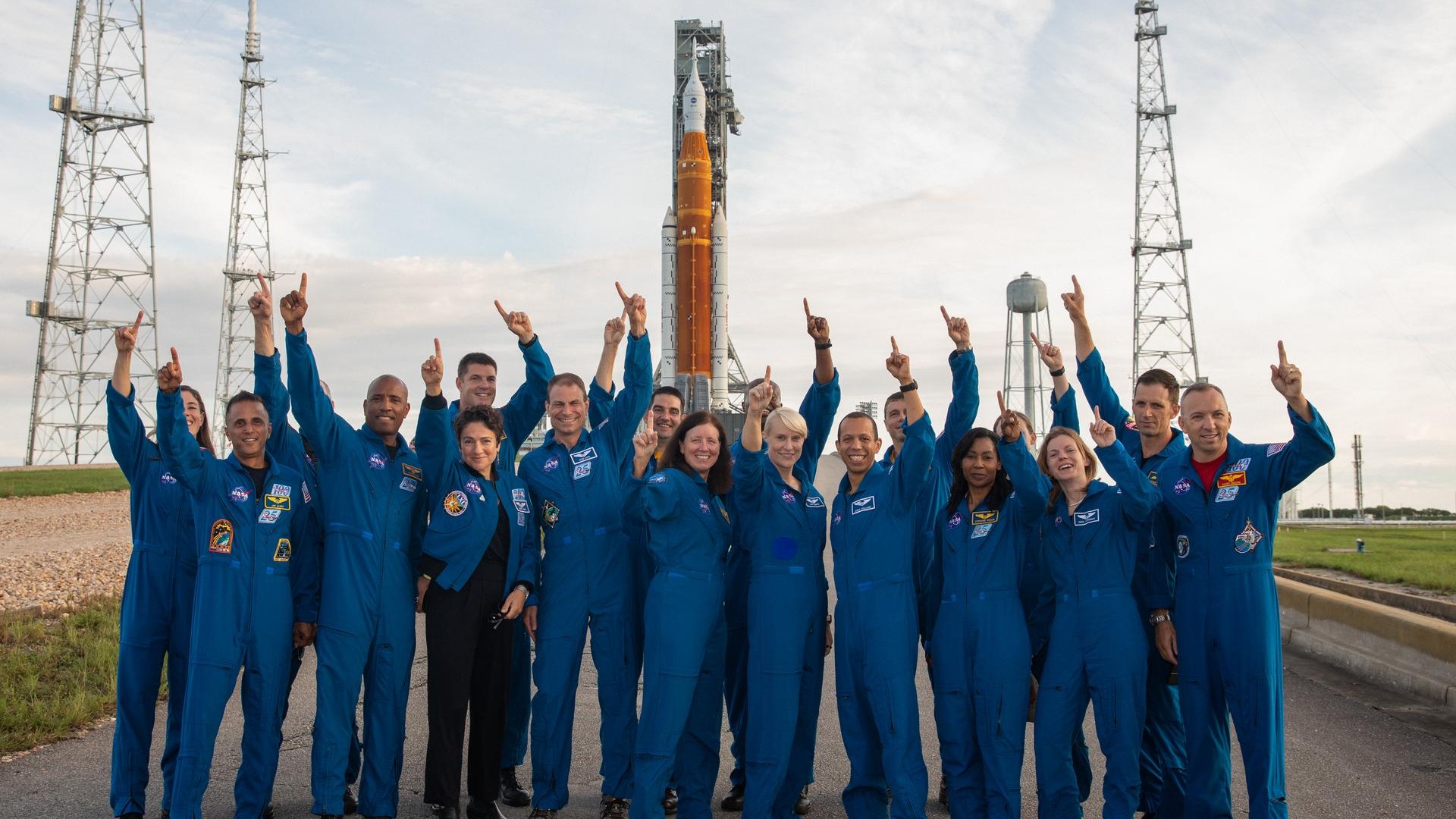
NASA announces Artemis 2 Crew, Setting Stage for Historic Lunar Flyby
WASHINGTON D.C. - NASA today unveiled the four astronauts who will embark on Artemis 2, the first crewed mission of the Artemis program, paving the way for a return to the Moon. The mission, slated for a late 2024 launch, will perform a lunar flyby, testing critical systems before future lunar landings. This marks a important step in NASAS long-term goal of establishing a sustainable human presence on the Moon and eventually, Mars.
The crew comprises Commander Reid Wiseman,Pilot Victor Glover,Mission Specialist Christina Koch,and Canadian Space Agency (CSA) astronaut and Mission Specialist Jeremy Hansen. This selection is historic on multiple fronts: Glover will be the first African American astronaut to travel to the Moon,Koch will be the first woman,and Hansen will be the first Canadian to participate in a lunar mission.
The Artemis program represents a renewed commitment to lunar exploration, building upon the legacy of the Apollo missions. Unlike the Apollo program’s direct landings, Artemis aims for a sustained presence, utilizing the Moon as a proving ground for technologies and strategies needed for deeper space exploration. The program is structured around three main phases: Artemis 1, an uncrewed test flight completed in late 2022; Artemis 2, the upcoming crewed flyby; and Artemis 3, planned for 2025 or 2026, which will land astronauts near the lunar south pole.
The lunar south pole is of particular interest to scientists due to the presence of water ice in permanently shadowed craters. This ice could potentially be used as a resource for drinking water,breathable air,rocket propellant,and other necessities,reducing the cost and complexity of long-duration missions.
The Artemis 2 mission will last approximately 10 days, taking the crew on a trajectory around the Moon and back to Earth. The Orion spacecraft, built by Lockheed Martin, will be propelled by the Space Launch System (SLS) rocket, NASA’s powerful new heavy-lift launch vehicle. The mission will rigorously test Orion’s life support systems and capabilities in the harsh environment of deep space.
Briefing Schedule for Artemis 2:
NASA has scheduled a series of briefings to provide further details about the mission:
Tuesday, Sept. 23:
11 a.m. EDT (10 a.m. local time, 1500 GMT): Mission overview briefing wiht:
Lakiesha Hawkins, acting deputy associate administrator, Exploration Systems Growth Mission Directorate, NASA Headquarters
Charlie Blackwell-Thompson, Artemis launch director, NASA’s Kennedy Space Center in Florida
Judd Frieling, lead Artemis 2 ascent flight director, NASA Johnson Space Center
Jeff Radigan, lead Artemis 2 flight director, NASA Johnson Space Center
Rick henfling, lead artemis 2 entry flight director, NASA Johnson Space Center
Daniel Florez, test director, Exploration Ground Systems, NASA Kennedy space Center
1 p.m. EDT (12 p.m. local time, 1700 GMT): Artemis 2 science and technology briefing with:
Matt Ramsey, Artemis 2 mission manager, NASA Headquarters
Debbie Korth, deputy Orion Program manager, NASA Johnson Space Center
Jacob Bleacher, manager, Science, Technology Utilization, and Integration, Exploration Systems Development mission Directorate, NASA Headquarters
Mark Clampin, acting deputy associate administrator, Science Mission Directorate, NASA Headquarters
Wednesday, Sept. 24:
10 a.m. EDT (12 p.m. local time, 1400 GMT): Artemis 2 crew news conference featuring:
reid Wiseman, commander
Victor Glover, pilot
Christina Koch, mission specialist
* Jeremy Hansen, mission specialist
The Artemis program is an international collaboration, with contributions from space agencies across the globe, including the European Space Agency (ESA), the Japan Aerospace exploration Agency (JAXA), and the Canadian Space Agency. This collaborative approach underscores the shared ambition of exploring the cosmos and expanding humanity’s reach beyond Earth.
