
Colombia Reels from Coordinated attacks as Violence surges
Table of Contents
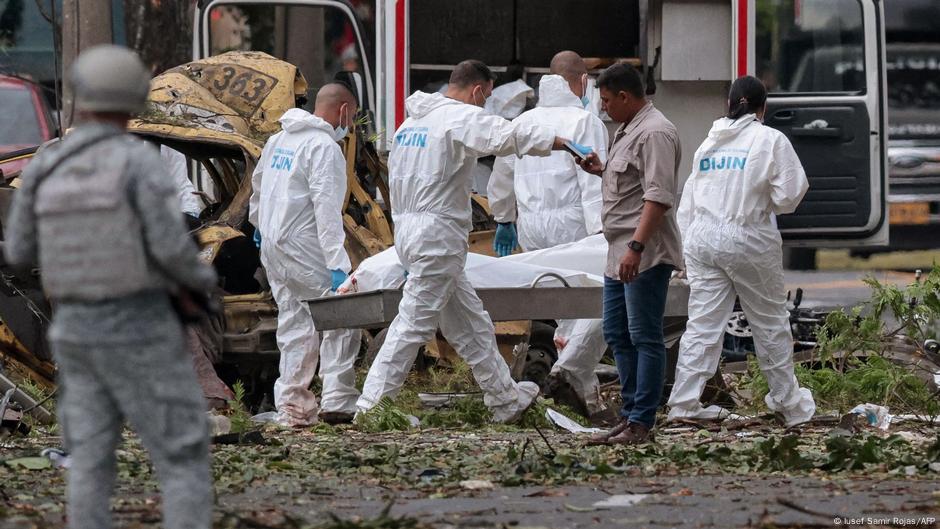
Cali, Colombia – A suspected truck bomb detonated Thursday afternoon near a military base in Cali, Colombia’s third-largest city, claiming at least five lives and injuring dozens more. This attack occurred hours after a police helicopter was downed in Antioquia, resulting in the deaths of 12 officers. These incidents underscore a dramatic escalation of violence in Colombia, less than a decade after the historic 2016 peace agreement with the Revolutionary Armed Forces of Colombia (FARC).
Bombing in Cali and Helicopter Downed in Antioquia
the explosion in Cali struck a road adjacent to a military aviation school, according to the city’s mayor’s office. Concurrently, in the department of Antioquia, a police Black Hawk helicopter was shot down while en route to eradicate coca leaf crops in the rural Amalfi area. Antioquia Governor Andres Julian reported via X (formerly Twitter) that a drone was responsible for the attack.
Initial reports indicated difficulties in evacuating the injured and recovering the bodies from the helicopter crash site due to the challenging mountainous terrain. Spanish news agency EFE confirmed these delays.
Did You Know? …
Colombia shares borders with five countries: Panama, Venezuela, Brazil, Peru, and Ecuador, making it a key transit point for illicit activities.
FARC Dissidents Claim Obligation
Colombian President Gustavo Petro and Defense Minister Pedro Sanchez have attributed both attacks to factions of the FARC that did not demobilize as part of the 2016 peace process. president Petro labeled the helicopter attack an “act of war” perpetrated by the 36th Front of the Estado mayor Central (EMC), a prominent FARC splinter group operating in northeastern Antioquia. The EMC has increasingly engaged in criminal enterprises, notably narcotics trafficking.
Defense Minister Sanchez initially pointed to the Clan del Golfo cartel as responsible for the helicopter downing but later clarified, citing “recent information” from the police, that the EMC was indeed responsible. He further identified the Mordisco narco-cartel, another FARC splinter group, as being behind the Cali bombing, characterizing it as a “desperate reaction to the loss of control over drug trafficking” in the region.
Rising violence and the Drug Trade
Colombia is experiencing a significant resurgence in armed conflict, fueled in part by the lucrative drug trade. Coca leaf cultivation has reached record levels, with 253,000 hectares under cultivation in 2023, according to the latest report from the UN office on Drugs and Crime [UNODC]. This increase directly correlates with rising violence as armed groups compete for control of production and trafficking routes.
Pro Tip: …
Understanding the historical context of the FARC conflict is crucial to grasping the current security situation in Colombia.
What long-term strategies can Colombia implement to address the root causes of this renewed violence? And how will these attacks impact the country’s ongoing peace efforts?
| Incident | Date | Location | Casualties | Responsible Group (Alleged) |
|---|---|---|---|---|
| Truck Bombing | August 21, 2025 | Cali, Colombia | 5+ killed, Dozens injured | Mordisco Narco-cartel (FARC splinter) |
| Police Helicopter downed | August 21, 2025 | Antioquia, Colombia | 12 officers killed, Several injured | Estado Mayor Central (EMC) - 36th Front (FARC splinter) |
Colombia’s Complex Security Landscape
The current surge in violence is not an isolated event. Colombia has a long history of internal armed conflict, stemming from political and economic inequalities, land disputes, and the drug trade. The 2016 peace agreement with the FARC was a landmark achievement, but its implementation has been fraught with challenges. The emergence of FARC splinter groups,along with other armed actors like the Clan del Golfo,has created a complex and volatile security landscape. The ongoing struggle for control of coca-growing regions and trafficking routes continues to drive violence and instability.
Frequently Asked Questions About the Violence in Colombia
- What is the FARC? The Revolutionary Armed Forces of Colombia was a Marxist guerrilla group that waged a decades-long conflict against the Colombian government.
- What is the Clan del Golfo? A powerful drug cartel that emerged after the demobilization of paramilitary groups in Colombia.
- Why is coca cultivation increasing in Colombia? Factors include increased demand for cocaine,weak state presence in rural areas,and economic incentives for farmers.
- What is the colombian government doing to address the violence? The government is implementing a thorough security strategy that includes military operations, social programs, and efforts to promote option progress in coca-growing regions.
- What is the impact of the violence on the Colombian people? The violence has a devastating impact on communities, causing displacement, loss of life, and hindering economic development.
We encourage you to share this crucial news with your networks, join the conversation in the comments below, and subscribe to World Today News for the latest updates on global events.
