
Historic Peace Deal Signed: Armenia and Azerbaijan End Decades of Conflict with US-Brokered Agreement
Table of Contents
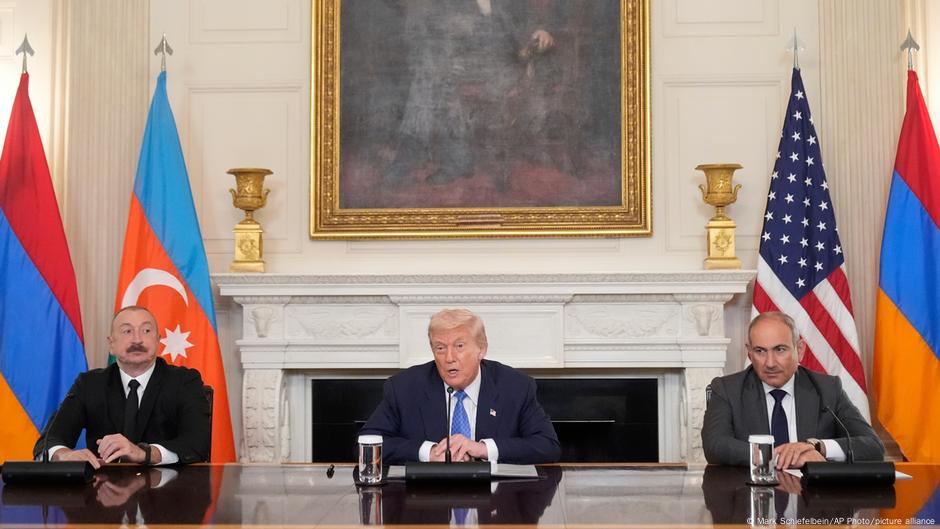
Washington D.C. – In a landmark achievement,Armenia and Azerbaijan formally signed a peace agreement today,August 8,2025,at the White House,bringing an end to nearly four decades of conflict in the volatile South Caucasus region.The agreement, brokered by US President Donald Trump, outlines a roadmap for lasting peace, encompassing the cessation of hostilities, the establishment of diplomatic relations, and mutual recognition of sovereignty and territorial integrity.
“armenia and Azerbaijan commit to stop all fighting forever, open trade, travel and diplomatic relations, and respect the sovereignty and territorial integrity of the other,” President Trump announced, standing alongside Armenian prime Minister Nikol Pashinyan and Azerbaijani President ilham Aliyev. The signing marks a pivotal moment, possibly reshaping the geopolitical landscape of the region.
The agreement is based on a joint statement laying the groundwork for a comprehensive peace treaty, according to White House officials. Trump expressed confidence in the long-term success of the accord, quipping, “They will have a very good relationship.And if not, call me and fix it.”
Beyond the cessation of hostilities, the agreement includes significant economic components.Bilateral agreements were also signed focusing on economic cooperation, energy advancement, and infrastructure projects, signaling a commitment to fostering regional stability through economic integration.
The “Trump Route”: A Key Component of the Peace Deal
A central element of the agreement is the establishment of a 43-kilometer corridor, dubbed the “Trump Route for International Peace and Prosperity” (Tripp), traversing Armenian territory. Formerly known as the Zangezur corridor, this route will connect Azerbaijan with its exclave of Nakhchivan, facilitating unobstructed commercial traffic.
While Armenia will retain legal control of the territory, the United States has secured development rights over this strategically important route. this arrangement grants the US a significant role in the region’s future economic development and transportation networks.
Decades of Conflict: A Historical Overview
The roots of the Armenia-Azerbaijan conflict trace back to the late 1980s, when Nagorno-Karabakh – a region within Azerbaijan with a predominantly Armenian population – sought independence with Armenian support.This sparked the First Nagorno-Karabakh War, followed by decades of simmering tensions and sporadic clashes.
Peace negotiations began in 1994, following a ceasefire after the first war, but numerous attempts to reach a lasting resolution proved unsuccessful for nearly three decades. The Second Nagorno-Karabakh War in 2020, which concluded in September of this year, prompted a renewed push for peace talks.
The current agreement represents a breakthrough after years of failed negotiations and escalating violence. It builds upon the momentum generated by the recent conflict and reflects a shared desire for a peaceful future.
Key Details Not Previously Reported:
US Investment Pledge: Sources indicate the US has pledged a ample investment package to support infrastructure development along the “Trump Route,” estimated at $500 million over the next five years.
International Monitoring force: Discussions are underway regarding the deployment of a small, neutral international monitoring force to oversee the implementation of the agreement and ensure compliance with the ceasefire.
* Humanitarian Aid: The agreement includes provisions for the exchange of prisoners of war and the facilitation of humanitarian aid to affected populations.
