
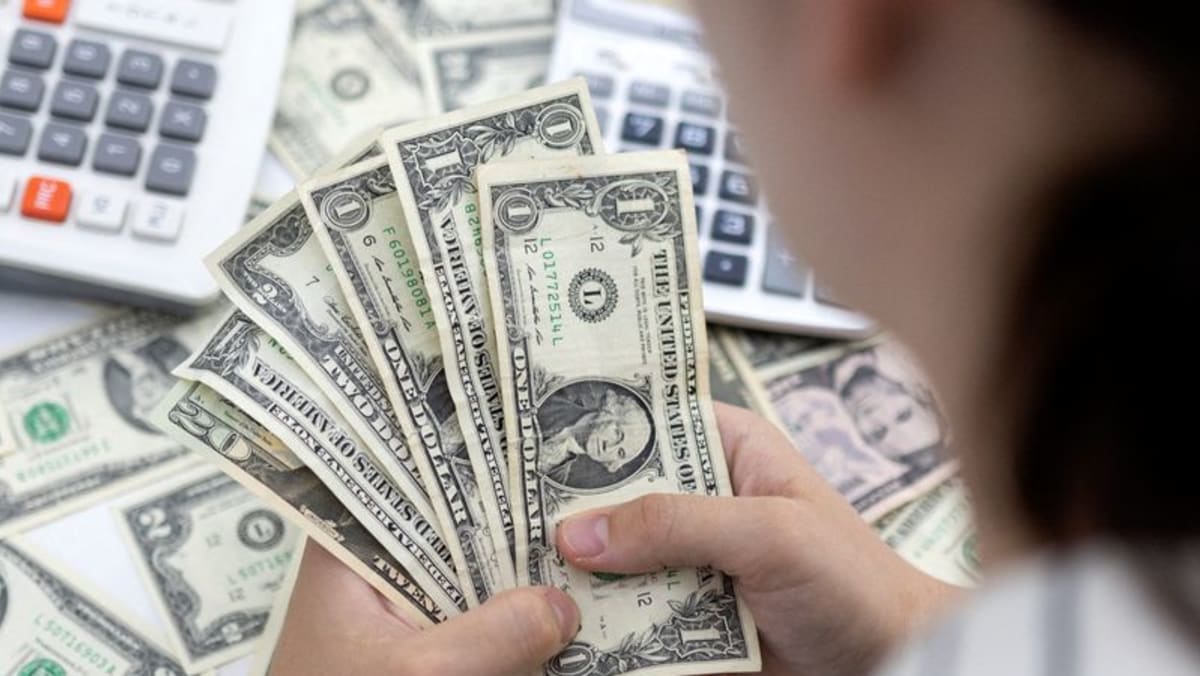
Dollar Faces Weekly Decline Amidst Rate Cut Speculation and Fed Nominee Uncertainty
Economic Weakness Fuels Expectations of Lower Interest Rates
The U.S. dollar experienced a slight uptick Friday but is poised for a weekly loss. This trend is driven by deteriorating economic indicators that are leading traders to anticipate further interest rate reductions by the Federal Reserve this year.
Economic Data Signals Slowdown
Recent economic reports have painted a picture of a cooling U.S. economy. The July jobs report revealed weaker-than-expected job creation, with previous months’ gains also significantly revised downward. Further data on the housing market and the services sector have also pointed towards an economic deceleration.
Fed Nominees Under Scrutiny
President **Donald Trump**’s nominations to the Federal Reserve are also a key factor influencing market sentiment. **Trump** announced his intention to nominate **Stephen Miran**, Chairman of the Council of Economic Advisers, for a temporary vacancy on the Fed’s board. Meanwhile, **Christopher Waller**, a current Fed Governor who supported a previous rate cut, is reportedly a leading candidate for the next Fed chair position when **Jerome Powell**’s term concludes in May.
“It loads the FOMC with people who presumably are a little bit more favorable to lower interest rates.”
—Shaun Osborne, Chief FX Strategist at Scotiabank
The perception is that the Federal Reserve is leaning towards cutting rates sooner and perhaps more aggressively than previously anticipated. Traders now assign an 89% probability to a rate cut at the Fed’s September meeting, with expectations of 58 basis points in cuts by year-end.
Market Sentiment and Global Concerns
Despite the dollar’s intraday gain, analysts at Bank of America observed that a short U.S. dollar position remains a favored trade among fund managers. This sentiment is attributed to expectations of diminishing U.S. economic exceptionalism and concerns about Federal Reserve independence and U.S. fiscal policy. However, growing global growth worries could challenge this outlook.
Looking ahead, consumer price data for July, due Tuesday, will be closely watched for any signs of resurgent inflation due to tariffs. The Federal Reserve must now weigh the risks to its inflation and employment targets when deciding on potential interest rate adjustments.
International Developments Influence Markets
International developments are also capturing market attention. Traders are monitoring potential peace talks between Russia and Ukraine, with reports suggesting a possible deal to halt the conflict that would acknowledge Russia’s territorial gains. This, coupled with the Bank of Japan debating potential interest rate hikes, creates a dynamic global financial landscape.
In other currency markets, sterling saw a modest increase, reaching a two-week high. Despite the Bank of England’s recent interest rate cut, the narrow vote indicated a lack of strong conviction in its easing stance.
Meanwhile, Bitcoin experienced a downturn. President **Trump** recently signed an executive order that could broaden access to alternative assets, including cryptocurrencies, within 401(k) retirement accounts, potentially opening up significant retirement savings to these investment vehicles.
