
reclaiming Narratives: An Exhibition Confronts IndonesiaS Colonial Past and Charts a Path to Inclusion
An exhibition currently on display is powerfully confronting Indonesia‘s complex history with its Chinese-Indonesian population and the lasting impact of Dutch colonialism. Through diverse artistic mediums, the show aims to challenge dominant narratives, acknowledge past injustices, and foster a more inclusive future.
The exhibition directly addresses the historical marginalization of Chinese-Indonesians. Artist Eldwin emphasizes their integral role in Indonesian society, stating simply, “Chinese-Indonesians are also part of Indonesia.” This sentiment resonates throughout the show, which seeks to dismantle the deliberately constructed “otherness” imposed during the colonial era. As visitor abimanyu notes, the Dutch strategically assigned Chinese-indonesians unpopular roles like tax collection and opium trading, effectively diverting public anger away from the colonial rulers themselves.
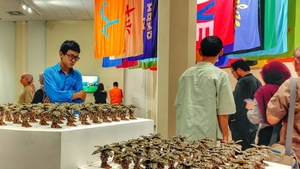
The trauma of the 1998 riots, targeting Chinese-Indonesians, is a central theme. Dita Gambiro’s installations – miniature shop-houses constructed with materials like plywood and iron wire – starkly depict the architecture of fear that emerged in the aftermath. Heavily barred and fortified, these structures reflect the lasting sense of vulnerability experienced by the community. Gambiro’s charcoal drawing further explores the isolating experience of living behind these barriers, a sentiment echoed by assistant curator Sukiato, who grew up in a similar shop-house in Pekanbaru. He recounts the painful reality of families trapped and lost in fires due to these very security measures, highlighting that the threat of violence remains a present concern.
The exhibition doesn’t shy away from examining how history is written. Maharani Mancanagara’s “Allegory of Cornucopia” offers a counterpoint to conventional European bas-reliefs that glorify war and conquest, instead celebrating natural abundance and everyday life, drawing inspiration from Indonesia’s own sculptural traditions. Sukiato points out this is about reclaiming the power to define heroism.
Ultimately, the exhibition looks towards healing and a more hopeful future. Arahmaiani’s “The Flag Project,” featuring 25 flags embroidered with values like “Community,” “Love,” and “Justice” in various languages, embodies this spirit. Originating after a devastating earthquake in Yogyakarta,the project has evolved into a global collaboration,emphasizing the importance of “local wisdom” – values that predate colonialism – as a foundation for reconciliation.
The exhibition’s impact extends beyond the art world. Rahardjo Djali, the Sultan of the Kasepuhan Palace in Cirebon, praised the show as “inspirational,” acknowledging the dual legacy of Dutch rule – beauty alongside pain. He even referenced the complex history within his own palace,including the controversial reign of a Dutch descendant as Sultan. However, he ultimately advocates for moving forward, stating, “It is now time to live in peace and harmony with everyone.”
This exhibition is not about dwelling on resentment, but about remembering, understanding, and ultimately, building a more inclusive and equitable Indonesia.
