
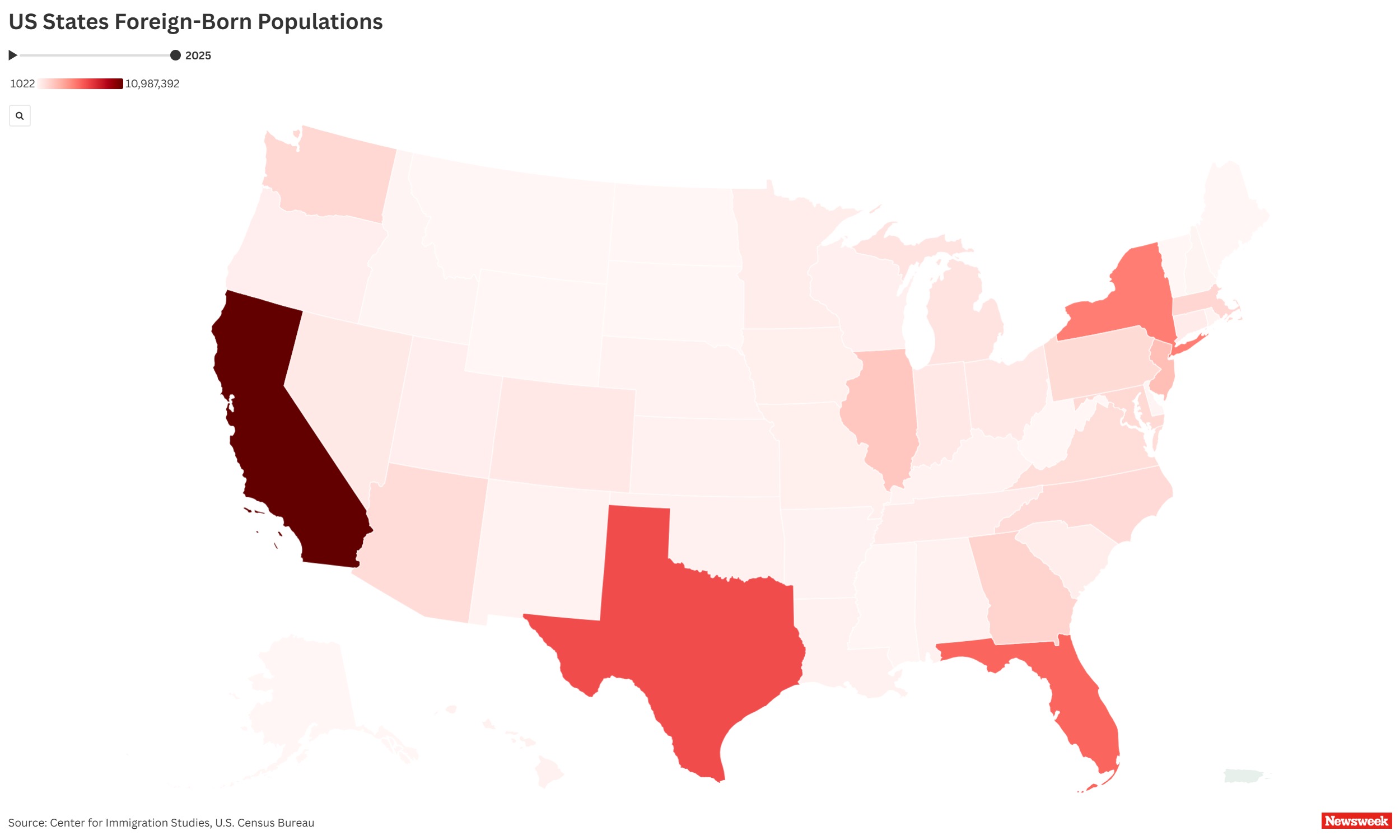
The United States is experiencing a demographic shift, with population gains turning negative as birth rates decline. This overall decline in children is largely attributed to a decrease in white children, according to demographer William Frey of the Brookings Institution. Though, this trend is being offset by the growth of minority populations, particularly Latinos.
Since 2021, coinciding with an increase in border crossings, states traditionally associated with immigrant communities – the Northeast, Southwest border states, and Florida – have seen changes in their population makeup. The foreign-born population has grown across the country, even in states with historically lower numbers, such as Alabama.
california leads with over 10 million foreign-born residents, followed by Texas (6.2 million), Florida (5.5 million), and New York (4.7 million). Frey highlights that this growth in younger foreign-born and minority populations is not confined to traditional immigrant-heavy states. He emphasizes that as white populations shrink, these new minority groups will become increasingly crucial for the labor force and overall population growth. The spread of this demographic trend across the nation is significant, as these states will rely on these younger populations to maintain or increase their growth.
Steven Camarota suggests that President Trump’s immigration policies, which have reduced arrivals at the southwest border and increased deportations, may lead to observable shifts in the coming years. Camarota notes that discussions ofen focus on specific cases of immigrants, sometimes overshadowing the broader demographic implications. He raises the question of whether current immigration levels are lasting,considering the “absorption capacity” of states like Texas and Florida,not just in terms of infrastructure like schools and hospitals,but also politically,socially,culturally,and economically. He questions whether public dissatisfaction with immigration stems from a perception of it being “too much.”
Frey concludes that for the U.S. to continue growing its population, immigration will be essential.
