
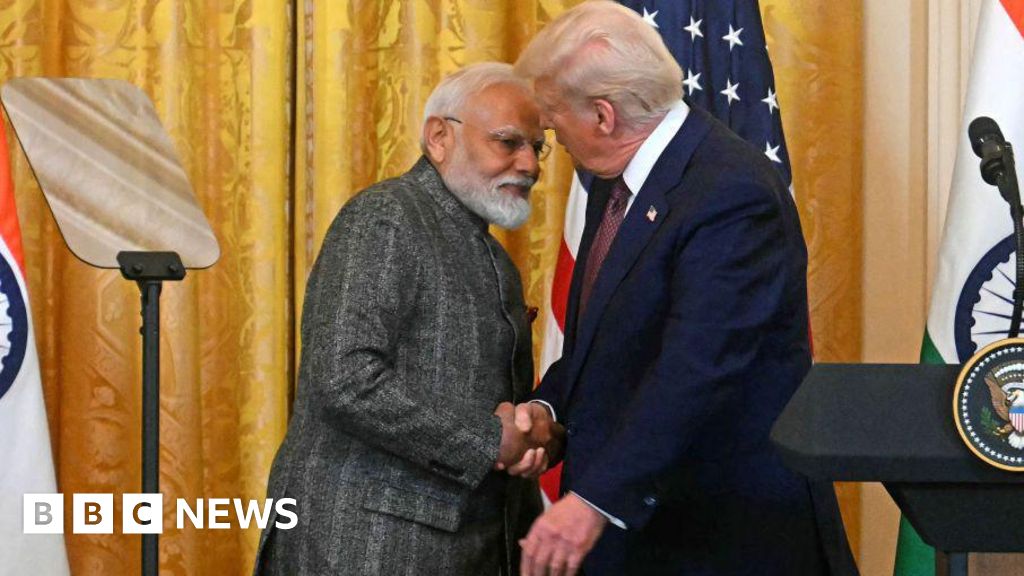
US Tariffs on India Spark Trade Fears
New Tariffs Could Blunt India’s Growth, Experts Warn
President Trump’s decision to impose a 25% tariff on Indian imports, coupled with an unspecified penalty, threatens to dampen India’s economic expansion prospects, according to market analysts.
Uncertain Penalties Erode Confidence
The precise economic fallout remains unclear, as the additional penalty for India’s continued purchase of Russian oil and weapons was not detailed. This move, announced on Trump’s Truth Social platform, targets India’s stance amid the conflict in Ukraine. Details on this penalty will be crucial for assessing the true impact.
“The tariff (and penalty) now proposed by the US is higher than what we had anticipated and is therefore likely to pose a headwind to India’s GDP growth. The extent of the downside will depend on the size of the penalties imposed.”
—Aditi Nayar, Chief Economist at Icra
Icra has already revised its GDP forecast for India downwards, from 6.5% to 6.2% for the current fiscal year, citing the adverse effects of anticipated tariff increases. Nomura estimates the tariffs could shave 0.2% off India’s GDP. Indian stock markets mirrored this concern, opening lower as trading commenced.
Trade Deal Hopes Dashed
Market sentiment soured as hopes for a trade agreement, driven by aligned long-term US-India strategic interests, appear to have been unmet. India had previously lowered tariffs on items like Bourbon whiskey and motorcycles as part of ongoing trade negotiations aimed at reducing the US trade deficit, which stands at $45 billion.
India Loses Competitive Edge
The new tariffs could disadvantage India compared to economic rivals like Vietnam and China. Previously, India benefited from lower tariffs, attracting potential export supply chain diversions, particularly in sectors such as textiles. However, with tariffs now higher, this advantage may diminish.
“If the tariff is sustained, this move may directly affect key sectors such as marine products, pharmaceuticals, textiles, leather and automobiles, where bilateral trade has been especially robust.”
—Agneshwar Sen, Trade Policy Expert at EY India
Industry bodies expressed disappointment, with FICCI President Harsha Vardhan Agarwal hoping the tariffs would be temporary and a comprehensive trade deal finalized soon. The Federation of Indian Export Organisations, led by Dr. Ajay Sahai, anticipates complex price negotiations between US buyers and Indian sellers to absorb the tariff costs.
India Defends Russian Ties Amidst Trade Dispute
India’s Commerce Ministry is reviewing the implications of the announcement, reaffirming its commitment to a beneficial trade agreement while emphasizing the protection of its farmers and small businesses. This stance suggests that sectors like agriculture remain key sticking points in the stalled negotiations. The Congress party criticized the government, calling the tariff imposition a “catastrophic failure of foreign policy,” especially after Prime Minister Narendra Modi‘s public support for President Trump.
In a particularly acerbic post on his Truth Social platform, he said: “I don’t care what India does with Russia. They can take their dead economies down together, for all I care. We have done very little business with India, their Tariffs are too high, among the highest in the World.”
— Donald J. Trump (@realDonaldTrump) April 9, 2024
Mark Linscott of the US India Strategic Partnership Forum noted that linking trade to India’s economic relationship with Russia complicates negotiations, adding a new dimension without a clear path for integration into a trade package.
Negotiations Continue Amidst Uncertainty
Despite the escalating tensions, bilateral trade talks are expected to continue throughout August, with a US team scheduled to visit India to discuss a comprehensive trade agreement. Experts suggest that even a best-case scenario might see tariffs in the 15-20% range, a disappointing outcome given the advanced stage of negotiations.
While India’s economy is largely domestically driven, softening the blow of reduced trade, Nomura posits that the tariffs could encourage monetary policy easing. This may prompt India’s central bank to implement further interest rate cuts to safeguard economic growth. As of mid-2024, India’s bilateral trade with the US reached $190 billion, with a stated goal to increase this to $500 billion.
