
Gaza Aid Airdrops Decried as “Grotesque Distraction” Amidst Worsening Starvation
Aid Leaders Argue Land Routes Remain the Only Viable Solution
International aid agencies have strongly criticized airdrops into Gaza, calling them a “grotesque distraction” that fails to address the territory’s escalating starvation crisis and highlighting the critical need for land-based aid delivery.
Air Drops Face Scrutiny
Israel’s military announced early Sunday that it had conducted humanitarian airdrops into the Gaza Strip, following earlier statements about establishing humanitarian corridors for UN aid convoys. The United Arab Emirates and Jordan are also expected to participate in airdrop operations soon, with UK Prime Minister Keir Starmer stating the British government is dedicating all possible efforts to deliver aid via air.
However, Ciarán Donnelly of the International Rescue Committee stated that airdrops “can never deliver the volume or the quality” of aid required. More than 100 international organizations and human rights groups have collectively warned of imminent mass starvation within the Strip.
Devastating Humanitarian Toll
The Hamas-run Gaza health ministry reported an additional five deaths attributed to malnutrition on Saturday, bringing the total to 127 since the conflict began, with 85 of those casualties being children. The World Food Programme has issued a dire warning, stating that one in three Gazans are enduring days without food, and that 90,000 women and children urgently need medical attention amidst what they describe as a “man-made mass starvation.”
Recent analysis by the BBC indicates that approximately 160 aircraft would be necessary to provide a single meal for every resident of Gaza. Data from US Central Command last year showed their C-130 cargo planes delivering roughly 12,650 meals per flight. This calculation suggests over 160 flights would be needed for a solitary meal for Gaza’s estimated 2.1 million inhabitants. Jordan reportedly operates around 10 C-130s, with the UAE possessing an additional eight.
Calls for Open Borders
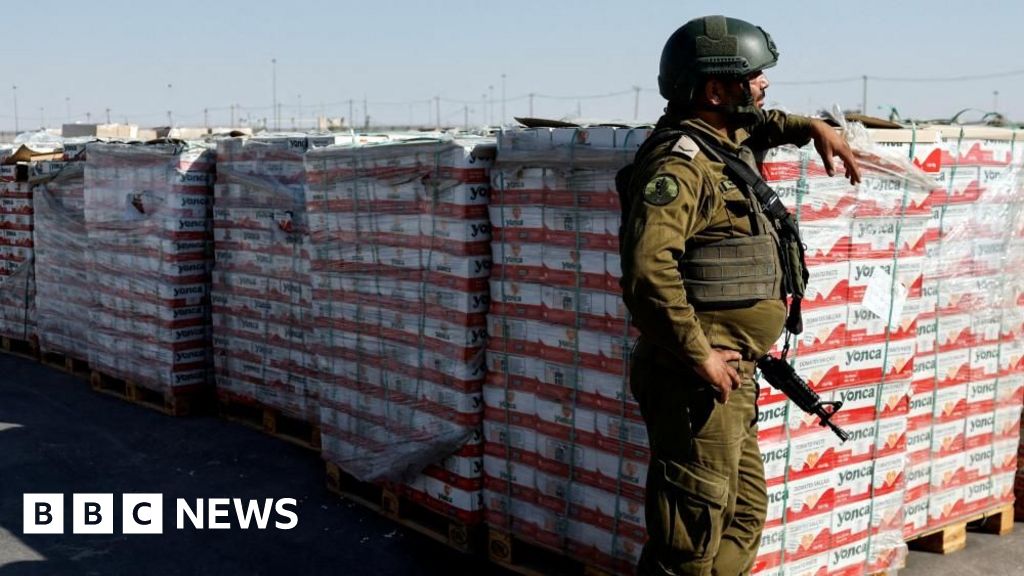
Philippe Lazzarini, head of the UN’s Palestinian refugee agency Unrwa, described airdrops as “expensive, inefficient, and can even kill starving civilians” if they go awry. He highlighted that his organization has the equivalent of 6,000 trucks filled with aid in Jordan and Egypt, awaiting clearance to enter Gaza.
“Driving aid through is much easier, more effective, faster, cheaper & safer. It’s more dignified for the people of Gaza.”
—Philippe Lazzarini, Head of UNRWA
Lazzarini emphasized that political will is essential to “lift the siege, open the gates and guarantee safe movements and dignified access to people in need.” His remarks preceded Israel’s announcement of “designated humanitarian corridors to enable the safe movement of UN convoys delivering food and medicine,” though specifics on their location or operation remain unclear.
Israel maintains that there are no restrictions on aid entering Gaza, with a government spokesperson suggesting the UN is colluding with Hamas to disrupt distribution. The UN refutes this, asserting that Israel impedes their aid collection efforts within Gaza through bureaucratic hurdles. Hamas denies stealing aid, and a recent USAID report found no evidence of systematic looting.
Dangers and Desperation
Aid groups have expressed grave concerns regarding the risks associated with dropping thousands of tons of food into densely populated Gaza. Shaina Low of the Norwegian Refugee Council described instances where people were “drowning” while trying to retrieve aid blown into the sea, and where falling boxes had “crushed people.” She also noted that even successful drops often resulted in chaos, injuries, and fights over the limited supplies.
Fears are prevalent among Gazans regarding the safety of airdrops. One resident in the north of the Strip told BBC Arabic that the process is “unsafe” and has “caused numerous tragedies,” warning that aid dropped from the sky risks landing directly on tents, potentially causing severe harm, including fatalities.
Many Palestinians are struggling not only with starvation but also severe dehydration. One mother shared her desperation, stating, “We’re living with no food or drink, no food, no bread, not even water. We’re craving even water.” This dire situation persists despite Israel’s assertion that it does not restrict aid, a claim contradicted by UN officials citing bureaucratic obstructions. The conflict, triggered by the October 7th Hamas attack, has devastated Gaza, with the health ministry reporting over 59,000 fatalities. A recent report from the BBC highlighted the immense logistical challenges of airdrops, suggesting over 160 flights would be needed to provide a single meal for Gaza’s population.
