
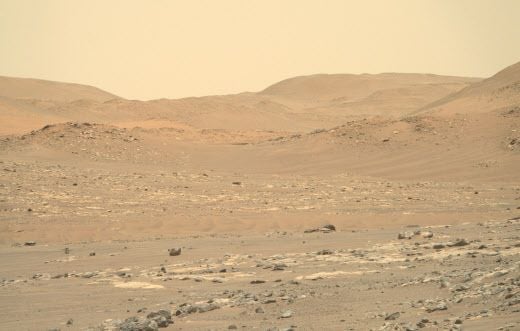
Mars Colonization: A Distant Dream Amidst Extreme Challenges
Table of Contents
Mars, with its frigid temperatures plummeting to -125° C and an atmosphere composed of 95% carbon dioxide, is far from being a hospitable planet. Despite these harsh realities, some envision Mars as a future “second Earth.” However, the question remains: can human life truly adapt to these extreme conditions? The colonization of the Red Planet presents colossal challenges.
Why Living on Mars Remains a Distant Dream
Experts agree that short-term survival on Mars is currently impractical. Humanity is not yet prepared to endure such a hostile environment. While NASA aims to send the first astronauts to Mars by 2040, establishing a truly sustainable colonization will require several decades at least.
Before embarking on Mars colonization, the immediate objective is to establish a human presence on the Moon. The creation of a thriving lunar colony will allow for the testing of technologies essential for life beyond Earth. The Moon will serve as a technological and logistical springboard before a permanent settlement on Mars can be pursued.
Crucially, humans cannot breathe on Mars. The planet has 99% less air than Earth. Mars is approximately half the size of Earth, and its lower gravity means it cannot effectively retain lighter gases, which escape into space.
The Martian Atmosphere is Incompatible with Life
Regarding the composition of Martian air, over 95% is carbon dioxide, with only trace amounts of oxygen, around 0.13% according to experts.In contrast, Earth’s atmosphere consists of 78% nitrogen, 21% oxygen, and the remaining 1% comprises other gases, including carbon dioxide.
It is indeed also critically important to remember that Mars is an extremely cold planet. The average surface temperature hovers around -63° C, with temperatures possibly dropping to -125° C at night or near the poles.
Furthermore,Mars lacks a global magnetic field or a thick atmosphere to shield against solar and cosmic radiation. Consequently, radiation levels are considerably higher than on Earth. To mitigate the effects of this radiation, living in underground or sufficiently isolated habitats would be necessary.
Evergreen Insights: Mars’s thin atmosphere, extreme cold, and high radiation levels are primary obstacles to human colonization. The planet’s lower gravity also poses long-term physiological challenges for humans. Establishing a sustainable presence requires overcoming these fundamental environmental hurdles, necessitating advanced life support systems, radiation shielding, and potentially terraforming technologies, which are currently in their nascent stages.
Frequently Asked Questions About Mars Colonization
Q: What are the biggest challenges to living on Mars?
A: The primary challenges include the thin, unbreathable atmosphere, extreme cold temperatures, high levels of radiation, and lower gravity.
Q: Can humans breathe on Mars?
A: No, the Martian atmosphere is composed of over 95% carbon dioxide and contains only trace amounts of oxygen, making it impossible for humans to breathe without specialized equipment.
Q: How cold is Mars?
A: The average surface temperature on Mars is around -63° C, with temperatures dropping significantly lower at night and near the poles.
Q: Will the Moon be a stepping stone for mars colonization?
A: Yes, many experts believe that establishing a presence on the Moon will allow for the testing of technologies and strategies necessary for eventual Mars colonization.
Disclaimer: This article provides general information about Mars colonization and does not constitute scientific or medical advice. Consult with qualified experts for any specific concerns.
What are your thoughts on the future of Mars colonization? Share your insights in the comments below and subscribe to World Today News for more groundbreaking space exploration updates!
