
Lunar Meteorite Revelation Reshapes Understanding of moon’s Volcanic Past
A lunar meteorite discovered in Africa in 2023 is providing groundbreaking insights into the Moon’s volcanic activity. The 2.35 billion-year-old sample, designated Northwest Africa 16286, possesses a unique chemical signature that scientists believe bridges a significant gap in our understanding of the Moon’s geological evolution. This discovery challenges previous assumptions about the duration of lunar volcanic activity, suggesting it persisted much longer than previously thought.
Research presented by a team from the University of Manchester at the Goldschmidt conference in Braga offers compelling evidence that the Moon remained volcanically active for a considerably longer period than scientists had anticipated. This finding is especially significant as it helps to fill a significant time gap, estimated at approximately one billion years, in the Moon’s geological record.This gap existed between the oldest rocks collected by the Apollo, Luna, and Chang’e missions and the most recent samples returned by the Chang’e 5 mission.
“We are looking at concrete evidence that the Moon remained an active volcano until very late in its history,” stated Dr. Joshua Sneib, a research scientist involved in the study. Microchemical analyses of the meteorite revealed unusual proportions of uranium to led. This suggests the presence of continuous heat-producing mechanisms within the Moon, possibly driven by the long-term decay of radioactive elements.
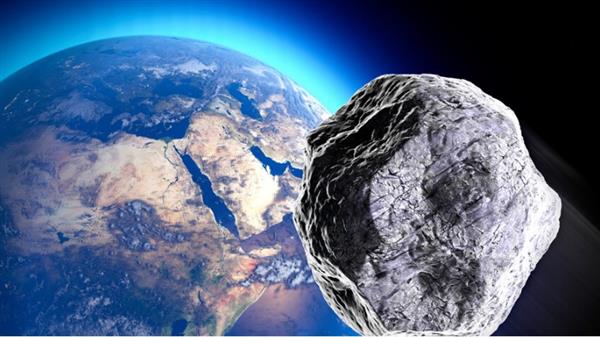
The meteorite, weighing just 311 grams, is among the rarest lunar samples found on Earth, with only 31 known lunar basalt samples in existence. Visible shock marks on its surface tell a story of a violent impact on the moon, which ejected the rock into space before it eventually landed on Earth. Despite the effects of this impact, scientists were able to accurately date the meteorite to within 80 million years.
The scientific importance of this discovery is immense. It opens a new avenue for understanding the deep geological processes of the Moon and provides valuable data to guide future sample collection missions. By analyzing its unique chemical composition and mineral properties, scientists can identify promising areas for further exploration.
This article provides scientific details and does not constitute health, financial, or legal advice.
What are your thoughts on this lunar discovery? Share your insights in the comments below and subscribe to World Today News for more groundbreaking science updates!
