
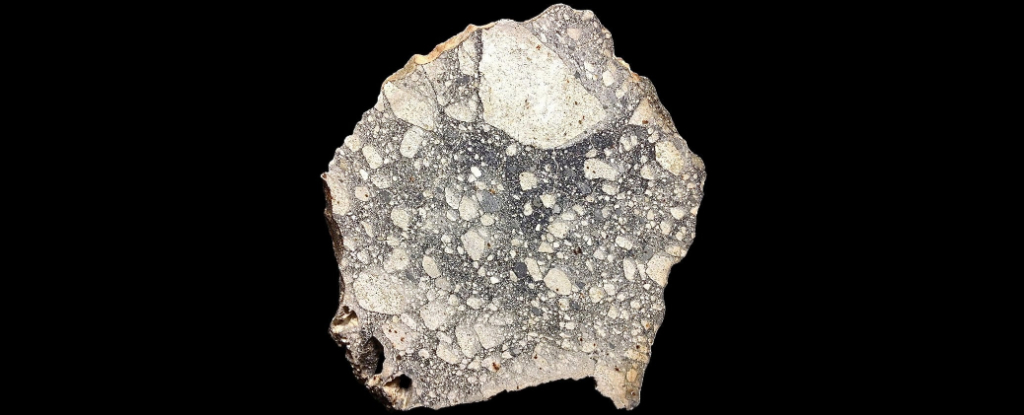
This article discusses the revelation of a lunar meteorite, Northwest Africa 16286, which is critically important for understanding the Moon’s volcanic history. Here’s a breakdown of the key points:
Filling a Gap: The meteorite helps fill a nearly billion-year gap in our knowledge of lunar volcanic activity.
Youngest Basaltic Lunar Meteorite: It’s the youngest basaltic lunar meteorite ever found on Earth.
Unique Geochemical Composition: Its chemical makeup suggests it formed from a lava flow originating deep within the Moon.
Evidence of Prolonged Volcanism: The meteorite’s age proves that volcanic activity on the Moon continued for much longer than previously understood from samples returned by missions like Apollo and chang’e.
Internal Heat Source: It provides evidence that the Moon retained internal heat-generating processes that powered volcanism across multiple phases of its history.
Physical Characteristics: The 311-gram meteorite is an olivine phyric basalt, containing large olivine crystals. It has moderate titanium, high potassium, and a high uranium to lead ratio, which acts as a unique identifier. Origin Deep Within the Moon: The chemical clues suggest its origin from deep within the Moon’s interior, where radioactive decay likely fueled volcanic activity.
Advantage of Meteorites: Unlike samples from specific mission landing sites, meteorites can be ejected from anywhere on the Moon, offering a broader perspective on lunar geology without the cost of space missions.
Impact History: the meteorite shows signs of being shocked by an impact event on the Moon, which ejected it into space.This impact makes precise dating challenging, but an estimate with a margin of error has been made.
Serendipitous Discovery: The discovery highlights how significant scientific insights can come from unexpected sources like meteorites that fall to Earth.
