
Poland Deports 40 Foreign Nationals
Joint Operation Targets Security Threats
Poland forcibly removed 40 foreign nationals on Tuesday in a coordinated effort between its Border Guard and the EU’s Frontex agency. The individuals, comprising 27 Georgian and 13 Moldovan citizens, were on a flight departing from Radom.
“Return Operation” Targets Security Risks
Government spokesman Adam Szłapka described the deportation as another “return operation,” aimed at individuals who pose a risk to public order and security. He explained that these deportations are for those who have received return orders due to defense or public safety concerns.
Szłapka indicated that further such operations are planned, as the process is ongoing. The Border Guard reported that since the beginning of the year, over 4,600 foreigners have left Poland, either voluntarily or through forced removal.
Reasons for Deportation Cited
Of the 27 Georgians expelled, 20 had received mandatory return decisions citing defense, state security, or public order concerns. Similarly, nine Moldovan men were issued such orders. The Border Guard detailed specific offenses, noting one Georgian national had 12 court judgments for theft.
Other grounds for deportation included driving under the influence and illegal residency in Poland. The group also contained individuals involved in facilitating illegal border crossings for others and those who had altered their personal data to enter the country.
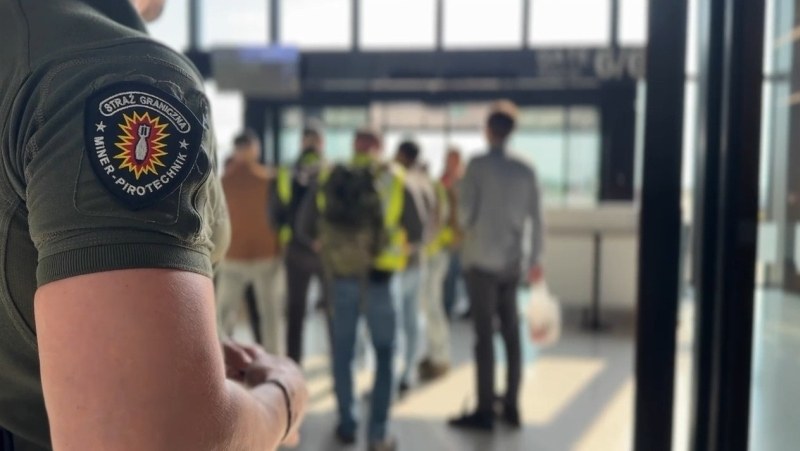
Officers from the Border Guard’s Action Division provided escorts for the deported individuals from the Radom airport.
Border Controls Remain in Effect
Adam Szłapka also provided an update on border security, noting the temporary controls at entrances from Lithuania and Germany that have been in place for over a week. Between July 7 and July 14, approximately 127,200 people were checked at these borders.
“The situation is under control. If the situation requires refusal, the border guard refuses entry. On the border with Germany, 24 people were refused entry into the territory of the Republic of Poland.”
—Adam Szłapka, Government Spokesman
He assured that the situation at both borders is managed effectively through the cooperation of Border Guard officers, territorial defense forces, and the police. The Polish border with Belarus is described as secure, while the situation on the Lithuanian and German borders is fully controlled.
These temporary controls, implemented on July 7, allow for random vehicle checks to curb irregular migration. This measure has been deemed necessary to manage migrant flows, with 24 individuals being denied entry into Poland at the German border alone.
The Border Guard recently apprehended a suspected smuggler, an Estonian citizen, who was transporting four Afghan nationals across the Polish-Lithuanian border. In 2023, the European Union saw a total of 1,132,600 attempted irregular crossings at its external borders, according to Frontex data.
