
US Funding Cuts Halt Crucial HIV Vaccine Trials in South Africa
Generous Aid Withdrawal Jeopardizes Research in Pandemic Epicenter
An abrupt halt to vital US funding has thrown critical HIV vaccine research in South Africa into disarray, just as clinical trials were set to begin.
Research Ground to a Standstill
Scientists in Johannesburg were days away from launching clinical trials for a promising HIV vaccine, a significant stride against a devastating pandemic. However, an email directive from the United States administration under Donald Trump mandated an immediate cessation of all work.
The decision meant the withdrawal of $46 million in funding for the Brilliant project. Researchers were left reeling, as this funding loss strikes a region shouldering the heaviest burden of HIV globally. The project aimed to leverage South Africa’s unique genetic diversity and deep scientific expertise for worldwide benefit.
South Africa has been particularly impacted, with the US redirecting foreign aid as a priority shift. Prior to these cuts, the nation received approximately $400 million annually through USAID and the HIV-focused PEPFAR program.
Impact on Global Health Efforts
Glenda Gray, who leads the Brilliant program, highlighted the continent’s indispensable role in advancing HIV treatment. She warned that these US funding cuts severely undermine future research capabilities.
“We do the trials better, faster and cheaper than anywhere else in the world, and so, without South Africa as part of these programs, the world, in my opinion, is much poorer.”
—Glenda Gray, Head of the Brilliant program
Recent breakthroughs, such as the twice-yearly HIV preventative shot lenacapavir, recently approved by the US FDA, owe much to South African clinical trials, including those involving young South Africans.
Devastation for Researchers and the Unemployed
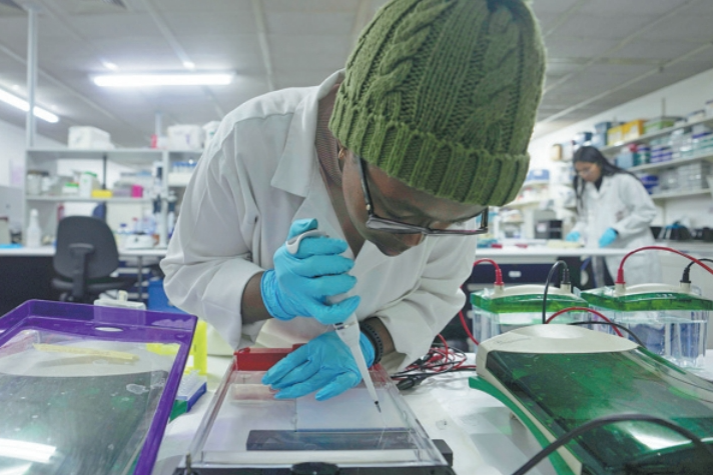
At the University of Witwatersrand, a dedicated team, including technician Nozipho Mlotshwa, faces an uncertain future. Her position is contingent on grant funding, and the cuts threaten her livelihood and ability to support her family and studies in a country where youth unemployment is alarmingly high at 46%.
“It’s very sad and devastating, honestly,” Mlotshwa commented on the uncertain employment landscape caused by the US funding withdrawal.
Professor Abdullah Ely, leading the research team, noted the promising immune responses observed in vaccine candidates. However, he stated that the momentum of their work has been significantly disrupted.
Scramble for Survival and Layoffs
The Brilliant program is now urgently seeking alternative funding to salvage its research. Procurement of essential equipment has been halted, and South Africa’s health department confirmed approximately 100 researchers involved in HIV-related programs have been laid off.
The South African government estimates that universities and science councils could collectively lose around $107 million in US research funding over the next five years. These cuts extend beyond HIV research, also impacting critical work on tuberculosis, another disease prevalent in the country.
