
James Webb Telescope Reveals New Insights into Galaxy formation
Table of Contents
- James Webb Telescope Reveals New Insights into Galaxy formation
- Unveiling the secrets of Galactic Disks
- JWST’s Sharp Vision: A Cosmic Time Machine
- The Evolutionary Timeline of Galaxy Formation
- Gas Dynamics and Disk Stabilization
- Was the Milky Way Typical?
- Key Stages of Galaxy Disk Formation
- Evergreen Insights: Understanding galaxy Formation
- Frequently Asked Questions About Galaxy Formation
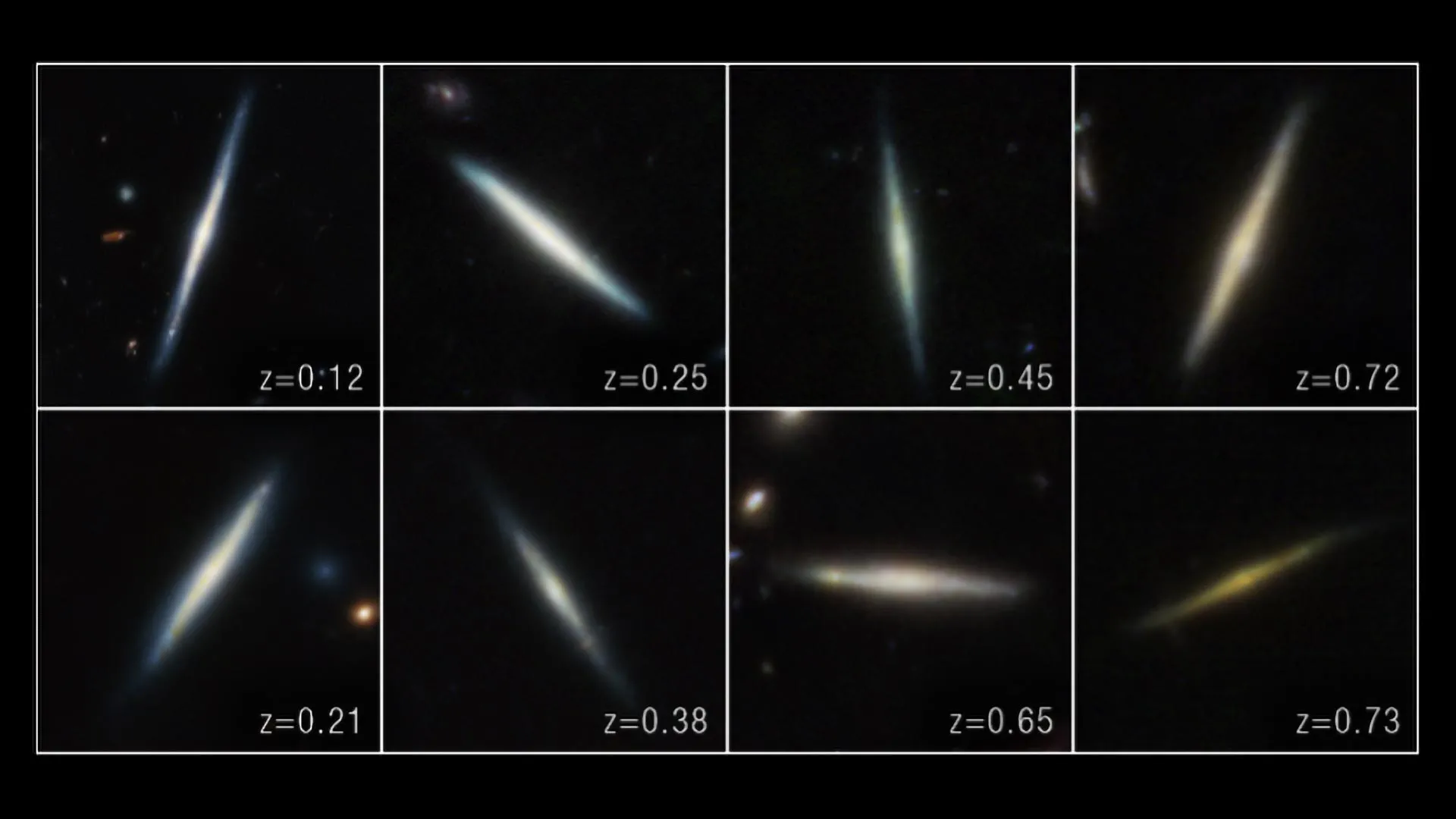
The James Webb Space Telescope (JWST) has peered across vast cosmic distances, providing unprecedented insights into how galaxies, including our own Milky Way, assemble their structures. By observing distant edge-on galaxies, astronomers have identified the distinct thin and thick disks that characterize these celestial bodies, shedding light on the timeline of galaxy formation. This groundbreaking research,published in the journal *Monthly Notices of the Royal Astronomical Society* on June 26,2025,is reshaping our understanding of galactic evolution.
Unveiling the secrets of Galactic Disks
Many galaxies, including the Milky Way, exhibit a flattened, rotating stellar disk. These disk galaxies are composed of two primary components: a thin disk and a thick disk. The thin disk is populated by younger,metal-rich stars,while the thick disk contains older,metal-poor stars. These components act as fossil records, providing crucial details about how galaxies form stars, accumulate essential elements like oxygen and carbon, and evolve into their current shapes.
Until recently, identifying these thin and thick disks was limited to the Milky Way and it’s neighboring galaxies. The challenge lay in distinguishing the delicate edge of a distant galaxy when viewed from the side. Though, the launch of the JWST in 2021, the most powerful space telescope ever built, has revolutionized this field.
Did You know? The James Webb Space Telescope is capable of detecting infrared light, allowing it to see through cosmic dust and observe objects that are too faint or distant for other telescopes.
JWST’s Sharp Vision: A Cosmic Time Machine
An international team of researchers,led by Takafumi Tsukui of Tohoku university,analyzed 111 JWST images of distant edge-on galaxies. This unique alignment allowed them to observe the vertical disk structures of these galaxies. Tsukui notes that observing distant galaxies is akin to using a time machine, enabling us to witness how galaxies built their disks throughout cosmic history.
“Thanks to the JWST’s sharp vision, we were able to identify thin and thick disks in galaxies beyond our local universe, some going as far back as 10 billion years ago,” Tsukui stated.
The Evolutionary Timeline of Galaxy Formation
The study revealed a consistent pattern: in the early universe, most galaxies appeared to have a single thick disk. As time progressed, more galaxies displayed a two-layered structure, with a thin disk forming within the existing thick disk. This suggests that galaxies initially formed a thick disk, followed by the advancement of a thin disk inside it. In larger galaxies, the thin disk seems to have formed earlier in the universe.
The research team estimated that thin disks began forming in Milky Way-sized galaxies approximately 8 billion years ago. This timeline aligns with the formation history of the Milky Way,where stellar ages can be directly measured.
Pro Tip: Astronomers use the colour and composition of stars to estimate their age. Blue stars are typically younger and hotter, while red stars are older and cooler.
Gas Dynamics and Disk Stabilization
To understand the sequential formation of thick and thin disks, the team examined not only the stellar structure but also the motion of gas, the raw material for star formation. Data from the Atacama Large Millimeter/submillimeter Array (ALMA) and ground-based surveys supported a coherent formation scenario:
- In the early universe, galactic disks were rich in gas and highly turbulent.
- Intense star formation within these turbulent disks gave rise to thick stellar disks.
- As stellar disks evolved, they helped stabilize the gas disks and reduce turbulence.
- As the disk calmed, a thin stellar disk formed inside the pre-developed thick stellar disks.
- Larger galaxies, with their greater gravitational pull, could efficiently convert gas into stars, leading to earlier thin disk formation.
Was the Milky Way Typical?
Tsukui emphasizes that the images captured by JWST are helping to answer a fundamental question in astronomy: was the formation of our galaxy typical or unique? “The JWST images provided a window into galaxies that resemble the Milky way’s early state, bringing us valuable insights from galaxies far away.”
The team hopes that their study will bridge the gap between studies of nearby and distant galaxies, refining our understanding of disk formation. The research highlights the power of the JWST to unravel the mysteries of the universe and provide new perspectives on our place within it.
Key Stages of Galaxy Disk Formation
| Stage | Characteristics | Time Period (Approximate) |
|---|---|---|
| Early universe | Galactic disks rich in gas, high turbulence | 10+ Billion Years Ago |
| Thick Disk Formation | Intense star formation in turbulent disks | 8-10 Billion Years Ago |
| Disk Stabilization | stellar disks stabilize gas disks, reduce turbulence | 6-8 Billion Years Ago |
| Thin Disk formation | Thin stellar disk forms inside thick disk | Present Day |
This table summarizes the key stages in the formation of galaxy disks, highlighting the transition from turbulent, gas-rich environments to more stable, structured systems.
Evergreen Insights: Understanding galaxy Formation
The study of galaxy formation is a cornerstone of modern astrophysics. Understanding how galaxies like our Milky Way came to be helps us understand the distribution of matter in the universe, the formation of stars and planetary systems, and ultimately, the conditions necessary for life to arise. The JWST’s ability to peer into the distant past provides invaluable data for refining our models of galaxy evolution.
Historically, astronomers have relied on observations of nearby galaxies to infer the processes that shaped the universe. Though, these observations provide only a snapshot of the current state of galaxies. By observing galaxies at different stages of their evolution, the JWST allows us to create a more complete picture of how galaxies change over time.
Frequently Asked Questions About Galaxy Formation
- What are thin and thick disks in galaxies?
- Disk galaxies, like our Milky Way, often have two main parts: a thin disk and a thick disk.The thin disk contains younger stars with more metals, while the thick disk contains older stars with fewer metals.
- How did the James Webb Space Telescope (JWST) contribute to this discovery?
- The JWST’s powerful vision allowed astronomers to observe distant galaxies and distinguish the thin and thick disks, which was previously impossible with older telescopes.
- What did the study of distant galaxies reveal about galaxy formation?
- The study showed that galaxies in the early universe primarily had a single thick disk. Over time, a thin disk formed within the thick disk, creating a two-layered structure.
- When did thin disks start forming in Milky way-sized galaxies?
- The study estimates that thin disks began forming in galaxies similar to the milky Way around 8 billion years ago, aligning with the Milky Way’s own formation timeline.
- What role does gas turbulence play in galaxy disk formation?
- In the early universe,galactic disks were rich in gas and highly turbulent. Intense star formation in these turbulent disks led to the creation of thick stellar disks. As the disks stabilized, thin stellar disks formed within the pre-existing thick disks.
- How does the size of a galaxy affect the formation of thin disks?
- Larger galaxies can convert gas into stars more efficiently, leading to the earlier formation of thin disks compared to smaller galaxies.
- Why is studying distant galaxies important for understanding our own?
- Observing distant galaxies is like looking back in time, allowing us to see galaxies in their early stages.This helps astronomers understand if the Milky Way’s formation was typical or unique.
Do these new findings about galaxy formation change how you view the universe? What other mysteries do you hope the James Webb Space Telescope will help us solve?
Share your thoughts in the comments below and subscribe to World Today News for more updates on the latest scientific discoveries!
