
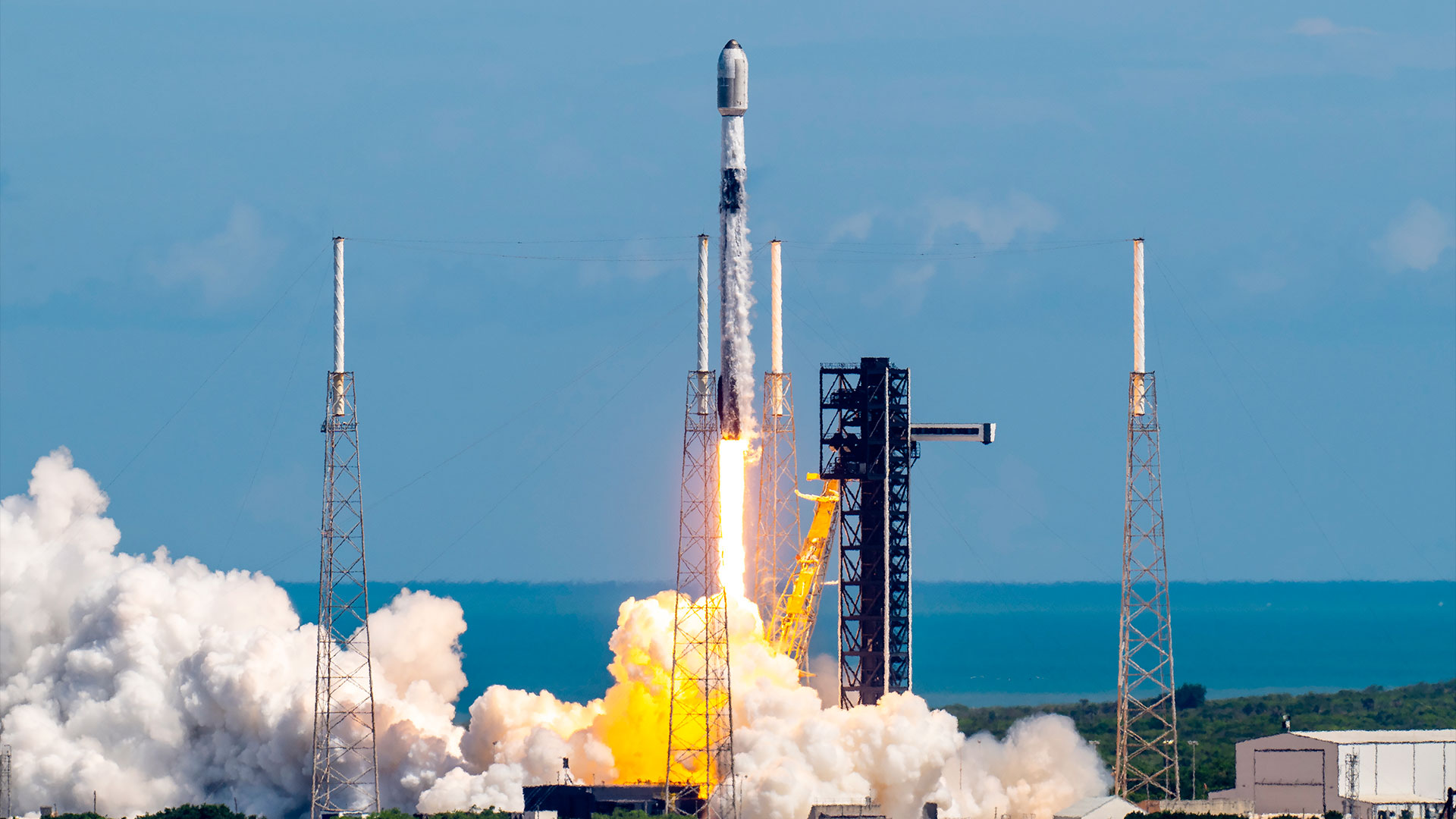
SpaceX Launches More Starlink Satellites After Crewed Mission
Rapid-Fire Launches Mark a Busy Day for the Space Company
In a stunning display of spacefaring efficiency, SpaceX launched a new batch of Starlink satellites into low Earth orbit on Wednesday. This deployment came just hours after the company dispatched a crew to the International Space Station from a nearby launch site in Florida. This double launch highlights SpaceX’s growing dominance in the space industry.
Starlink Satellites Deployed Successfully
The latest Starlink group, designated 10-16, comprised 27 satellites. These separated from their Falcon 9 rocket roughly an hour after lifting off at 3:54 p.m. EDT from Cape Canaveral Space Force Station. SpaceX confirmed the successful deployment via social media. This launch further expands the Starlink constellation, which aims to provide global internet coverage.
Simultaneous Missions Demonstrate SpaceX’s Capabilities
The Falcon 9 rocket’s first stage touched down on the “Just Read The Instructions” droneship in the Atlantic Ocean. This marked the 20th recovery for this particular booster, demonstrating SpaceX’s commitment to reusable rockets. Notably, this was the second Falcon 9 first stage recovered within approximately seven hours.
The Starlink launch followed the launch of the Axiom Mission 4 (Ax-4) crew, which took flight from the Kennedy Space Center earlier that same day. This mission, carrying a new crew to the ISS, further showed SpaceX’s prowess in both cargo and crewed spaceflight.
As the newly-named Crew Dragon “Grace” arrived, the ISS’s total crew complement increased from seven to eleven astronauts and cosmonauts. The Starlink launch grew the broadband internet megaconstellation to more than 7,800 active relays. SpaceX plans to launch a total of 12,000 Starlink satellites, with the potential to deploy four times that amount if approved.
With the increasing number of satellites being launched, there is growing concern about space debris, with over 30,000 pieces of space debris currently tracked by the U.S. Space Surveillance Network (NASA, 2024).
