
“`html
Unsupervised Learning: how Zoning Out Can Sharpen Your Brain
Table of Contents
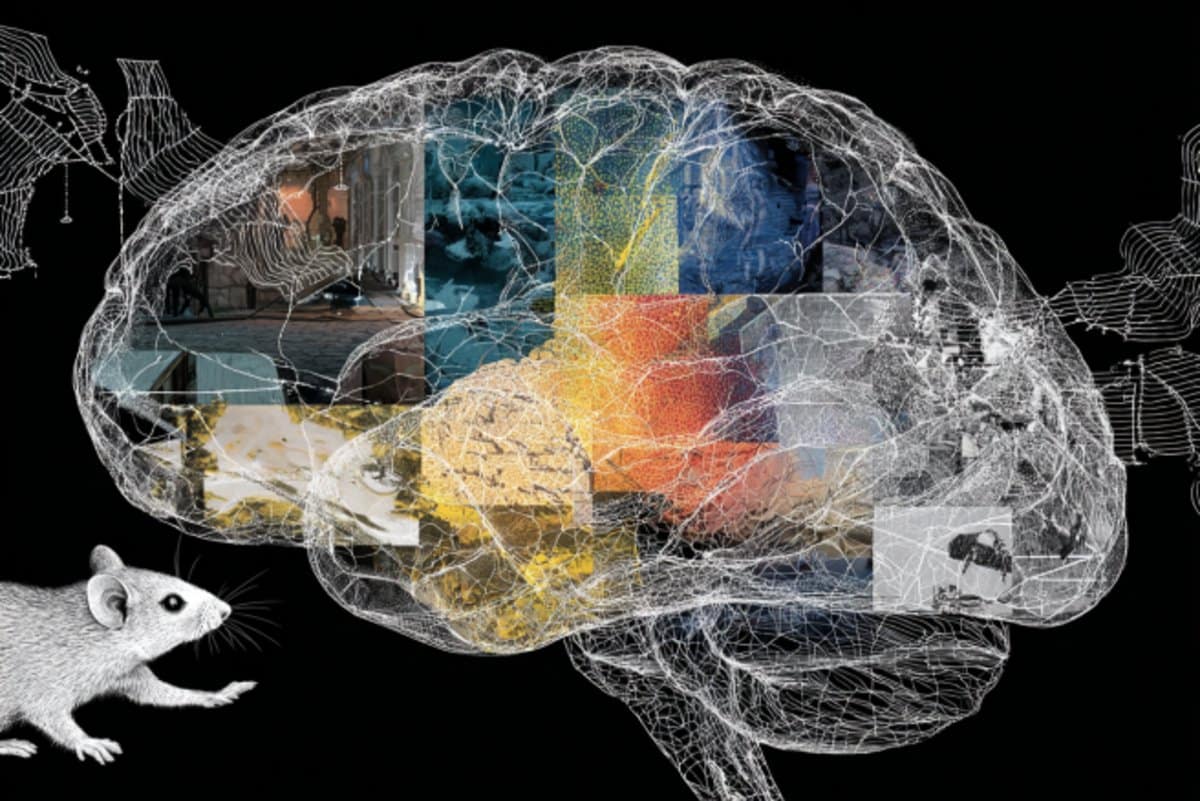
Turns out, those moments of seemingly unproductive wandering might be crucial for your brain. A new study reveals that the brain actively learns even during unstructured exploration, building internal models of the environment that can accelerate future learning [[1]]. This unsupervised learning process, occurring without specific instruction, highlights the brain’s remarkable ability to prepare itself for goal-oriented tasks.
The Science of “Zoning In” While Zoning Out
Researchers at HHMI’s Janelia Research Campus discovered that as animals explore their surroundings, neurons in the visual cortex-the brain region responsible for processing visual information-encode visual features to construct an internal representation of the world. This internal model acts as a foundation, enabling faster learning when a concrete task emerges.
did You Know? The human brain contains approximately 86 billion neurons, each capable of forming thousands of connections, making it one of the most complex structures in the known universe [[https://www.brainfacts.org/3D-Brain]].
Experiment Details: Virtual Reality Corridors
The research team, led by postdoc Lin Zhong, conducted experiments using mice in virtual reality corridors with varying visual textures. Some textures where associated with rewards, while others were not. After the mice learned the experimental rules, subtle adjustments were made to the textures and reward placements.
By monitoring the activity of tens of thousands of neurons simultaneously, the scientists observed changes in the animals’ visual cortex. These changes indicated that the brain was encoding visual features even without explicit task training.
Unsupervised vs.Supervised Learning in the Brain
The findings suggest that distinct areas within the visual cortex are responsible for different types of learning: unstructured, exploration-based unsupervised learning and instructed, goal-oriented supervised learning. When an animal learns a task, the brain appears to utilize both algorithms simultaneously-an unsupervised component to extract features and a supervised component to assign meaning to those features.
Pro Tip: Engaging in diverse experiences,such as exploring new places or trying new hobbies,can stimulate unsupervised learning and enhance your brain’s ability to adapt to new challenges.
The Role of Hebb’s Rule
The concept of unsupervised learning is deeply rooted in Hebb’s rule, which explains how synaptic connections are modified in the brain. Spike-timing-dependent plasticity (STDP) is a specific form of Hebbian learning that incorporates temporal dynamics, further influencing the development of unsupervised learning methods in neural networks [[2]].
Implications for Learning and education
These insights could revolutionize our understanding of how learning occurs. While previous research on the visual cortex primarily focused on supervised learning, this new work opens avenues for
