
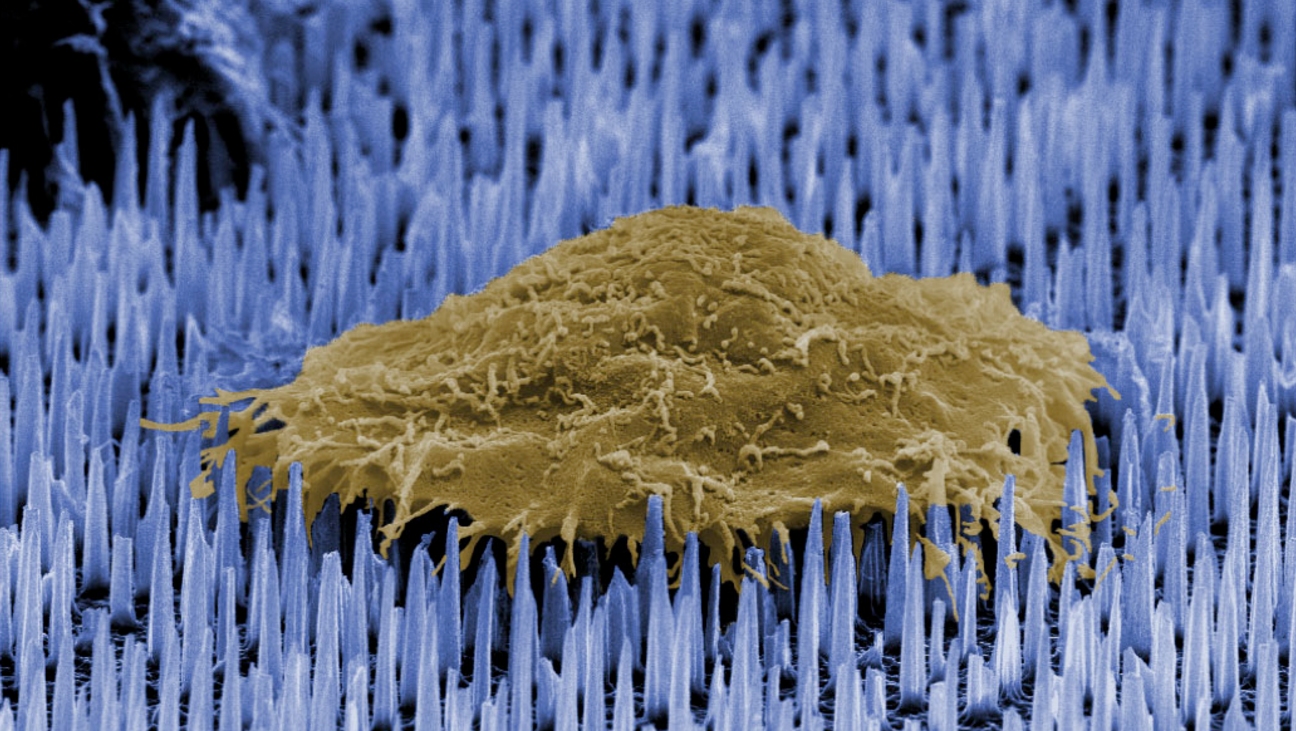
Painless Cancer Detection: Nanoneedle Plaster Offers Biopsy Alternative
Table of Contents
- Painless Cancer Detection: Nanoneedle Plaster Offers Biopsy Alternative
A Revolutionary diagnostic tool using microscopic needles embedded in a simple plaster coudl soon replace painful biopsies for cancer detection.Scientists at King’s College London have engineered this innovative cancer detection method, offering a less invasive way to identify tumors and monitor their molecular characteristics.
The Problem with Traditional Biopsies
Traditional biopsies, which involve removing a tissue sample for analysis, can be painful and carry risks of complications. This often leads to patients delaying or avoiding the procedure, potentially hindering early diagnosis and treatment. According to the American Cancer Society, early detection is crucial for improving cancer survival rates 1.
Nanoneedle Plaster: A New Approach
The nanoneedle plaster offers a promising alternative.This innovative device contains millions of microscopic needles designed to painlessly penetrate the skin and collect molecular information. The plaster captures the “molecular fingerprint” of fats,proteins,and messenger RNA (mRNA) from the tissue.
Did You Know? mRNA carries genetic code from DNA to ribosomes, serving as a template for protein synthesis.
How the Nanoneedle Plaster Works
Led by Ciro Chiappini, the team at King’s College London has spent 12 years developing this technology. The plaster is applied to the skin over the area of concern, where the nanoneedles collect samples of the underlying tissue. These samples are then analyzed to identify molecular markers associated with diseases like cancer.
Pro Tip: The molecular fingerprint obtained from the nanoneedle plaster can provide valuable insights into the specific type and stage of cancer, guiding treatment decisions.
Benefits of the nanoneedle Plaster
The nanoneedle plaster offers several advantages over traditional biopsies:
- less invasive and potentially painless
- Reduced risk of complications
- Faster diagnosis
- Potential for continuous monitoring of treatment effectiveness
Applications Beyond Cancer
While initially developed for cancer detection, the nanoneedle plaster has the potential to be adapted for diagnosing other diseases, such as Alzheimer’s, by analyzing specific molecular markers present in the tissue. This versatility makes it a valuable tool for a wide range of diagnostic applications.
Nanoneedle Plaster: Key Metrics
Here’s a summary of the key aspects of the nanoneedle plaster:
| Feature | Description |
|---|---|
| Technology | Millions of microscopic needles |
| Sample Type | Fats, proteins, mRNA |
| Application | Tumor detection and monitoring |
| Advantages | Less invasive, faster diagnosis |
Future Implications
The growth of the nanoneedle plaster represents a important step forward in diagnostic medicine.By offering a less invasive and more convenient way to detect and monitor diseases,this technology has the potential to improve patient outcomes and transform healthcare.
What impact could this have on cancer survival rates?
How might this technology change the way we approach disease diagnosis in the future?
Evergreen Insights: Background, Context, Ancient Trends
The quest for less invasive diagnostic methods has been ongoing for decades. Traditional biopsies, while effective, have inherent limitations in terms of patient comfort and potential complications. The development of nanotechnologies has opened new avenues for minimally invasive diagnostics, with the nanoneedle plaster representing a significant milestone in this field.
The use of nanoneedles for drug delivery and diagnostics has been explored since the early 2000s. Recent advances in materials science and microfabrication have made it possible to create nanoneedles that are both strong and biocompatible, paving the way for their use in clinical applications.
FAQ
- How does the nanoneedle plaster work?
- The plaster contains millions of microscopic needles that painlessly penetrate the skin to collect molecular information.
- What are the advantages of using a nanoneedle plaster over a traditional biopsy?
- The nanoneedle plaster is less invasive, potentially painless, and reduces the risk of complications.
- What types of diseases can be detected using this technology?
- While initially developed for cancer detection, it can be adapted for other diseases like Alzheimer’s.
- Where was the nanoneedle plaster developed?
- The nanoneedle plaster was developed by scientists at King’s College London.
- How accurate is the nanoneedle plaster in detecting cancerous tissues?
- Early results are promising, but further studies are needed to determine its sensitivity and specificity.
- Can the nanoneedle plaster be used for monitoring treatment effectiveness?
- Yes, it can be used to track changes in the molecular fingerprints of the tumor over time.
share your thoughts on this breakthrough! Leave a comment below and subscribe for more updates on medical innovations.
