
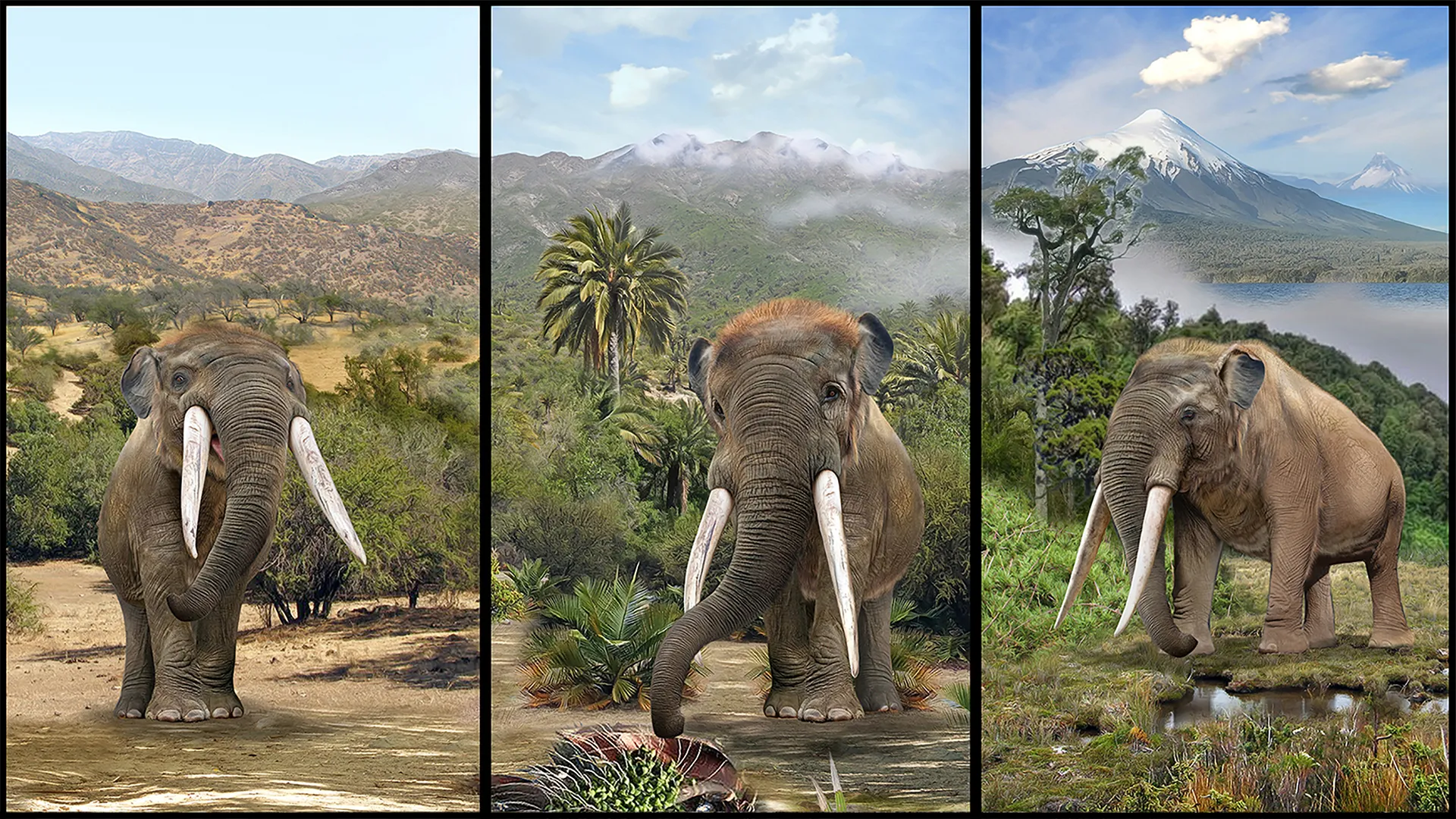
Extinct Mastodons‘ Role in Seed Dispersal Had Lasting Impact
Table of Contents
- Extinct Mastodons’ Role in Seed Dispersal Had Lasting Impact
- Fossil Evidence Reveals Mastodons’ Frugivorous Diet
- The Looming Threat to Megafauna-Dependent Plants
- What Can Be done to Protect Endangered Plant Species?
- How Can Understanding Past Ecosystems Inform Future Conservation strategies?
- Evergreen Insights: The importance of Megafauna in Ecosystems
- Frequently Asked questions About Mastodons and Seed Dispersal
The disappearance of mastodons from South America approximately 10,000 years ago had far-reaching ecological consequences, particularly impacting the dispersal of seeds from large-fruited plants. A groundbreaking study spearheaded by the University of O’Higgins in Chile, with meaningful contributions from IPHES-CERCA, has unveiled direct fossil evidence confirming that these extinct elephant relatives regularly consumed fruit and were essential partners to numerous tree species.The loss of mastodons was not merely a zoological event but also a botanical, ecological, and evolutionary one, leaving some plant species that depended on them for seed dispersal critically endangered.
Fossil Evidence Reveals Mastodons’ Frugivorous Diet
The research, published in Nature Ecology & Evolution, presents the first concrete evidence of frugivory in Notiomastodon platensis, a South American Pleistocene mastodon. The conclusions are drawn from a comprehensive analysis of 96 fossil teeth gathered across a 1,500-kilometer stretch, from Los Vilos to Chiloé Island in southern Chile.Nearly half of the specimens originated from the renowned Lake Tagua Tagua site, an ancient lake basin abundant in Pleistocene fauna, situated in the present-day O’Higgins Region.
The study was a collaborative effort led by Dr. Erwin González-Guarda from the University of O’Higgins and IPHES-CERCA,along with an international team including paleodiet specialist Dr. Florent Rivals, stable isotopes and paleoenvironmental reconstruction experts Dr. Carlos Tornero and Dr. Iván Ramírez-Pedraza, and Alia Petermann-Pichincura.The Universitat Rovira i Virgili (URV) and the Universitat autònoma de Barcelona (UAB) also contributed to the research.
Validating the “Neotropical Anachronisms Hypothesis”
In 1982, biologist Daniel Janzen and paleontologist Paul Martin proposed the “neotropical anachronisms hypothesis,” suggesting that many tropical plants evolved large, sweet, and colorful fruits to attract large animals like mastodons, native horses, or giant ground sloths for seed dispersal. This theory remained largely unconfirmed for over four decades. Though, the recent study led by González-Guarda provides direct fossil evidence that supports this hypothesis. the team employed isotopic analysis, microscopic dental wear studies, and fossil calculus analysis to understand the mastodon’s lifestyle. According to florent Rivals, ICREA research professor at IPHES-CERCA, the discovery of starch residues and plant tissues typical of fleshy fruits, such as those of the Chilean palm (Jubaea chilensis), directly confirms that these animals frequently consumed fruit and played a significant role in forest regeneration.
Did You Know? The Chilean Palm, Jubaea chilensis, is now endangered, partly due to the loss of its primary seed disperser, the mastodon.
the Unreplaced Ecological Function of Mastodons
Iván Ramírez-Pedraza noted that stable isotope analysis allowed the team to reconstruct the animals’ environment and diet with remarkable precision. The data indicates a forested ecosystem rich in fruit resources, where mastodons traveled extensively, dispersing seeds along their journeys. This ecological function remains unreplaced, leading to challenges for the survival of certain plant species.
Carlos Tornero emphasized that dental chemistry provides a direct window into the past. By combining different lines of evidence, the researchers were able to robustly confirm the mastodons’ frugivory and their crucial role in these ecosystems.
The Looming Threat to Megafauna-Dependent Plants
The extinction of mastodons severed a co-evolutionary alliance that had persisted for millennia. Researchers utilized a machine learning model to assess the current conservation status of megafauna-dependent plants across various South American regions. The findings are concerning: in central Chile, 40% of these species are now threatened, a rate four times higher than in tropical regions where animals like tapirs or monkeys still serve as alternative seed dispersers. According to the IUCN Red List, habitat loss and climate change are also major threats to plant biodiversity worldwide [[1]].
Pro Tip: Supporting local conservation efforts can help protect endangered plant species and restore vital ecological relationships.
Study co-author Andrea P. Loayza stated that the consequences of severing the ecological relationship between plants and animals remain visible even thousands of years later.
Species such as the gomortega (Gomortega keule),the Chilean palm,and the monkey puzzle tree (Araucaria araucana) now persist in small,fragmented populations with limited genetic diversity,serving as living remnants of an extinct interaction.
Paleontology’s Role in Modern Conservation
Beyond its fossil discoveries, the study underscores a crucial message: understanding the past is essential for addressing contemporary ecological crises. Florent Rivals concludes that paleontology is not merely about recounting old stories but helps us recognize what has been lost and what can still be saved.
| Plant Species | Conservation Status | Primary Threat |
|---|---|---|
| Gomortega (Gomortega keule) | Endangered | Habitat Loss, Seed Dispersal Disruption |
| Chilean Palm (Jubaea chilensis) | Endangered | Habitat Loss, Overexploitation |
| Monkey puzzle Tree (Araucaria araucana) | Endangered | Habitat Loss, Climate Change |
What Can Be done to Protect Endangered Plant Species?
Supporting conservation organizations, promoting enduring land management practices, and raising awareness about the importance of biodiversity are crucial steps in protecting endangered plant species.Additionally, research into alternative seed dispersal methods can help mitigate the impact of megafauna extinctions.
How Can Understanding Past Ecosystems Inform Future Conservation strategies?
By studying past ecological relationships, we can gain valuable insights into the long-term consequences of species extinctions and develop more effective strategies for preserving biodiversity and restoring damaged ecosystems. Paleontological research provides a critical past outlook that is essential for informed conservation decision-making.
Evergreen Insights: The importance of Megafauna in Ecosystems
Megafauna, or large animals, play a critical role in shaping ecosystems through various processes, including seed dispersal, nutrient cycling, and vegetation management. Their extinction can trigger cascading effects that disrupt ecological balance and reduce biodiversity. Understanding these roles is crucial for effective conservation efforts.
The loss of megafauna is not a new phenomenon. throughout history, human activities and climate change have driven numerous megafauna extinctions, leading to significant alterations in ecosystems worldwide. Studying these past events can provide valuable lessons for mitigating the impact of current and future extinctions.
Frequently Asked questions About Mastodons and Seed Dispersal
What is a mastodon?
Mastodons were large, elephant-like mammals that roamed the Earth during the Pleistocene epoch. They were herbivores and played a significant role in shaping ecosystems through their feeding habits and seed dispersal activities.
How did mastodons disperse seeds?
Mastodons consumed fruits and other plant materials,and as they moved across the landscape,they dispersed seeds through their droppings. This process helped plants colonize new areas and maintain genetic diversity.
Why are large seeds important for plant survival?
Large seeds often contain more nutrients and energy reserves, giving seedlings a better chance of survival in competitive environments. Megafauna like mastodons were particularly important for dispersing these large seeds.
What are the long-term consequences of losing megafauna seed dispersers?
The loss of megafauna seed dispersers can lead to reduced plant diversity, altered forest structure, and increased vulnerability to environmental changes. these effects can have cascading impacts on entire ecosystems.
Share this article and join the conversation! What other extinct animals might have played crucial ecological roles? Subscribe to World Today News for more insights into the past and future of our planet.
