
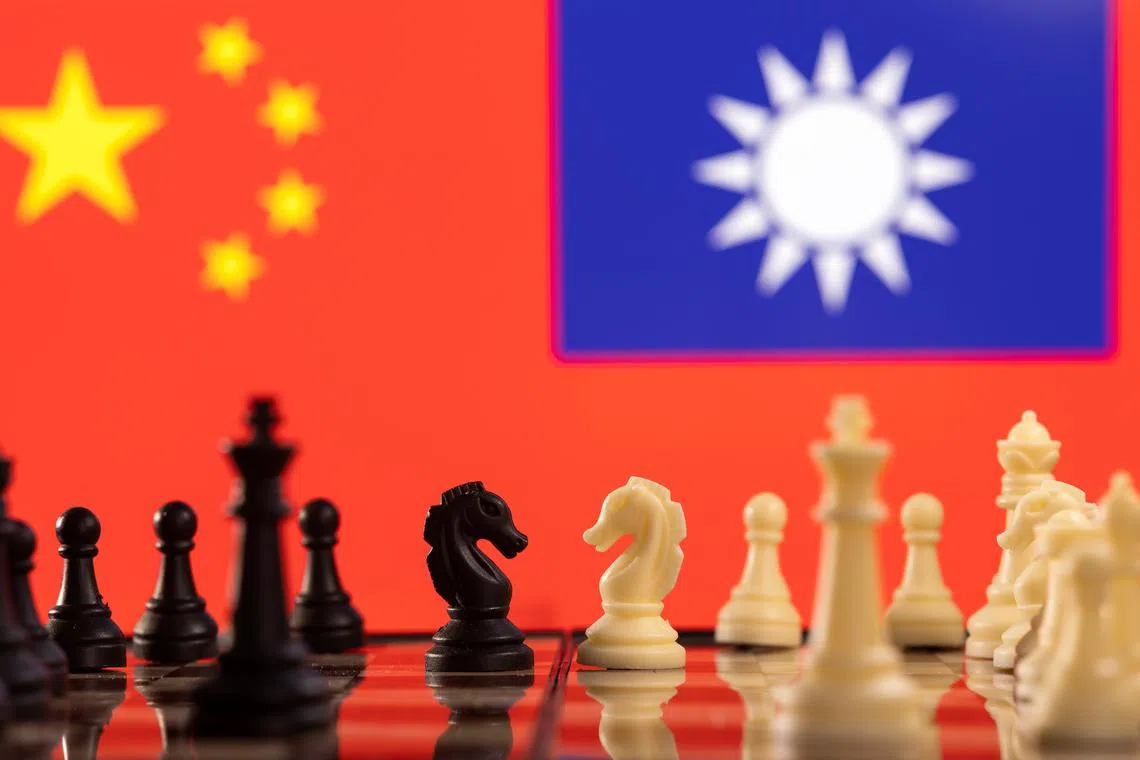
Taiwan Rejects China’s Bounty on Alleged Military Hackers
Table of Contents
- Taiwan Rejects China’s Bounty on Alleged Military Hackers
- Taiwan’s Firm stance Against China’s Claims
- Legal and Constitutional Grounds
- Accusations of Cyber Warfare and Disinformation
- Impact on Cross-Strait relations
- What’s Next?
- Evergreen Insights: Background, Context, historical Trends
- Frequently Asked Questions
- Why is China offering a bounty for Taiwanese ‘hackers’?
- What is Taiwan’s response to China’s bounty offer?
- What is the current state of cybersecurity relations between Taiwan and China?
- how does this bounty offer affect cross-strait relations?
- What legal basis does China claim for pursuing these ‘hackers’?
- What actions can Taiwan take to protect its citizens from China’s bounty?
China's bounty on alleged military hackers, asserting Beijing's legal system holds no authority over the island.">
Taipei – Taiwan’s ministry of National Defense has firmly rejected Beijing’s recent offer of a bounty for the arrest of 20 individuals it claims are Taiwanese military hackers. The ministry asserted that china’s legal system holds no jurisdiction over Taiwan, effectively dismissing the threat. This latest move escalates tensions amid ongoing disputes over sovereignty and cybersecurity.
Taiwan’s Firm stance Against China’s Claims
The dispute arose after the Public Security Bureau in Guangzhou, China, publicized the names, photos, and identification numbers of individuals they allege are part of Taiwan’s Information, Communications and Electronic Force Command. They offered rewards exceeding US$1,000 for information leading to their arrest. China’s Taiwan Affairs Office reinforced this stance, vowing to pursue the matter thru legal channels.
In response, Taiwan’s Electronic Force Command condemned China’s actions as a continuation of “fictitious cyber hacking incidents” designed to distort facts and exert undue influence. The ministry emphasized that, according to Taiwan’s Constitution, Chinese Communist Party laws have no legal authority over the island or its people.
Did You Know? Taiwan has consistently ranked among the top targets for cyberattacks globally, with a notable portion originating from China. In 2023, Taiwan experienced an average of nearly 5 million cyber attacks per day, according to a report by iThome.
Legal and Constitutional Grounds
Taiwan’s defense rests on its assertion that China’s legal framework does not extend to the island. The ministry stated that China is attempting to manipulate public opinion and undermine military morale through what it describes as “long-arm jurisdiction.” This principle, which refers to a court’s ability to exercise authority over someone outside its territorial boundaries, is at the heart of the dispute. Taiwan insists that its personnel will remain steadfast in defending the nation’s digital security.
The ministry further stated, “the officers and soldiers of the Information, Communications and Electronic Force Command will not be affected by this and will continue to defend the digital frontier and ensure national security through the solid defence of information.”
Accusations of Cyber Warfare and Disinformation
Taiwan has long accused China of engaging in widespread cyberattacks and spreading disinformation campaigns to erode public trust in the government. These accusations are part of a broader pattern of political and military pressure exerted by Beijing, which views Taiwan as a renegade province to be reunified, by force if necessary. The Taiwanese government, though, firmly rejects these claims of sovereignty.
Pro Tip: Staying informed about cybersecurity threats and practicing safe online habits can substantially reduce your risk of becoming a victim of cybercrime. Regularly update your software, use strong passwords, and be cautious of suspicious emails and links.
Impact on Cross-Strait relations
This latest incident further strains the already tense relationship between Taiwan and China. The offer of a bounty is seen as an escalatory tactic that undermines diplomatic efforts and increases the risk of miscalculation. The situation highlights the ongoing challenges in cross-strait relations and the importance of maintaining open lines of interaction to prevent further escalation.
The incident underscores the complex dynamics of cybersecurity and international law in the context of the Taiwan-China relationship. As tensions persist, the need for clear communication and adherence to international norms becomes increasingly critical.
| Country | Global Cybersecurity Index (GCI) Rank | Cybersecurity Budget (Estimated) |
|---|---|---|
| Taiwan | 41 (2021) ITU | ~$650 million (USD) |
| China | 3 (2021) ITU | ~$2.5 billion (USD) |
The disparity in cybersecurity capabilities, as indicated by the Global Cybersecurity Index and estimated budgets, highlights the challenges taiwan faces in defending against cyber threats from China.
What’s Next?
The situation remains fluid, with potential for further escalation or de-escalation depending on the actions of both sides. Diplomatic efforts and international pressure may play a role in shaping future developments. The international community is closely watching the situation, as it has implications for regional stability and cybersecurity norms.
How do you think this bounty offer will affect future relations between Taiwan and China? What steps should international organizations take to address cybersecurity concerns in the region?
Evergreen Insights: Background, Context, historical Trends
The tensions between Taiwan and China are rooted in the Chinese Civil War, which ended in 1949 with the Communist victory on the mainland and the Nationalist retreat to Taiwan.Since then, China has maintained its claim over Taiwan, while Taiwan has developed its own democratic government and distinct identity. Cybersecurity has become an increasingly crucial aspect of this ongoing conflict, with both sides engaging in cyber espionage and attacks.
The rise of cyber warfare as a tool of statecraft has added a new dimension to the Taiwan-China relationship. Both sides have invested heavily in developing their cyber capabilities, leading to a constant state of digital competition. this competition is likely to continue, with potential implications for regional and global security.
Frequently Asked Questions
Why is China offering a bounty for Taiwanese ‘hackers’?
china claims the individuals are military hackers and part of Taiwan’s Information, Communications and Electronic Force Command. They accuse them of cybercrimes, though Taiwan denies these allegations.
What is Taiwan’s response to China’s bounty offer?
Taiwan’s defense ministry has dismissed the bounty offer, stating that China’s legal system has no jurisdiction over Taiwan and its citizens. They view it as a form of psychological warfare.
What is the current state of cybersecurity relations between Taiwan and China?
Cybersecurity relations are tense, with Taiwan frequently accusing China of launching cyberattacks and spreading disinformation campaigns. China denies these accusations.
how does this bounty offer affect cross-strait relations?
The bounty offer further strains already tense relations between Taiwan and China,adding another layer of conflict to their ongoing political and military disputes. It is seen as an escalatory tactic by Beijing.
What legal basis does China claim for pursuing these ‘hackers’?
China is invoking its domestic laws and regulations, claiming jurisdiction over the alleged cyber activities. However, Taiwan argues that these laws have no binding force on Taiwanese citizens or within Taiwanese territory.
What actions can Taiwan take to protect its citizens from China’s bounty?
Taiwan is likely to increase its cybersecurity defenses, issue warnings to its citizens, and potentially pursue diplomatic channels to protest China’s actions. They may also work with international partners to address the issue.
Share this article and join the discussion! what are your thoughts on the escalating cyber tensions between Taiwan and China?
