
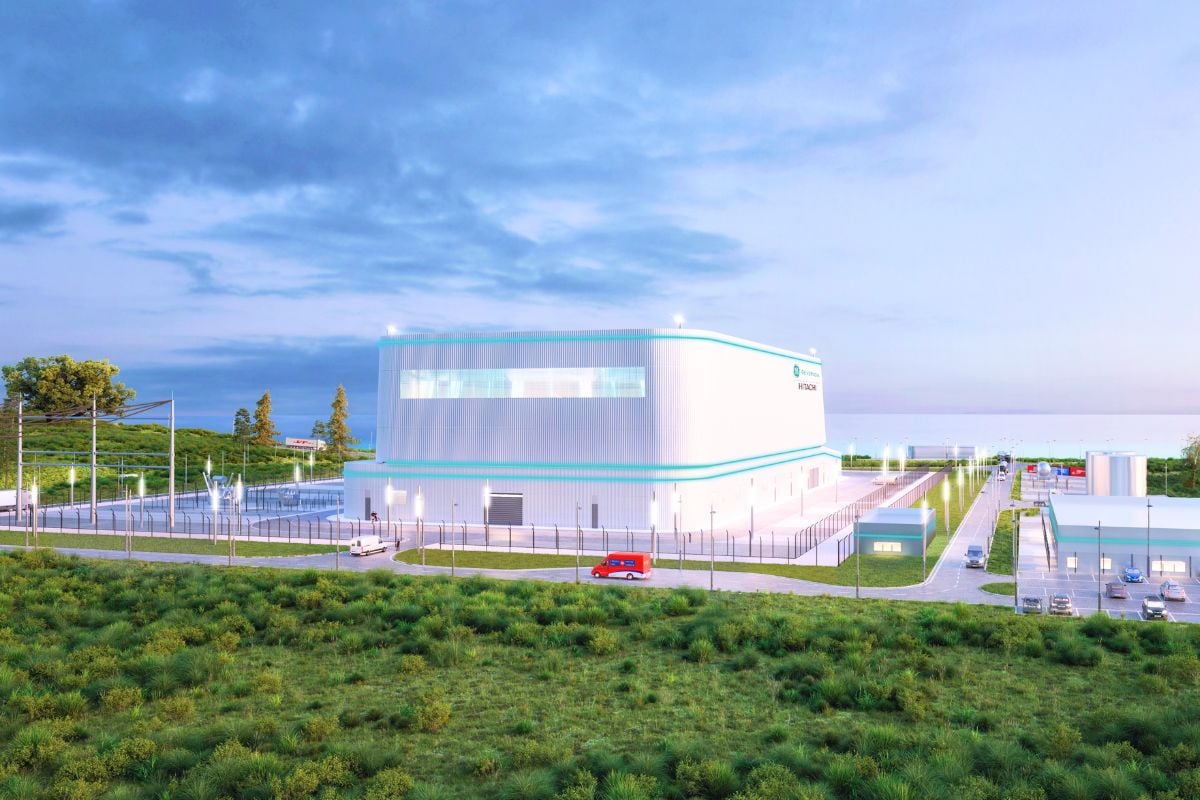
Canada Advances Nuclear Energy with Small Modular Reactors
Canada is embarking on an ambitious project to construct a series of small modular reactors (SMRs) in Darlington, Ontario. This initiative aims to power approximately 1.2 million homes and position Canada as a leader in innovative nuclear technology.
Did You Know?
Small modular reactors offer a smaller footprint and increased versatility compared to traditional nuclear power plants, making them suitable for diverse energy needs.
The BWRX-300: A New Generation Reactor
The project centers around the BWRX-300, a “technological toy” capable of supplying electricity to 300,000 homes. Ontario Power Generation (OPG) and GE Vernova Hitachi Nuclear Energy (GVH) are collaborating on this venture, which has already garnered international attention from countries like the United Kingdom, the united States, Poland, and Sweden.
Four of these units are planned for the Darlington site, with a combined generating capacity of 1,200 megawatts. This output is sufficient to power 1.2 million Canadian households.
Reviving Proven Technology
The BWRX-300 leverages the well-established boiling water reactor (BWR) technology, refined since the 1950s. The key innovation lies in its size and standardization. By miniaturizing components and adopting a reproducible design, engineers aim to accelerate construction and reduce costs.
The BWRX-300 is designed to produce 300 megawatts of electricity, about one-third of the power generated by conventional reactors. It utilizes readily available commercial uranium and can be installed in parallel to meet varying energy demands.
Advantages of Small Modular Reactors
SMRs offer several key advantages due to their industrial modularity:
- Accelerated delivery times, potentially reducing construction from a decade to just a few years.
- Reduced costs through economies of scale.
- Controlled technical risks by focusing on proven technology.
Craig Ranson, president of GE Vernova Hitachi Nuclear Energy, emphasized this point: Thanks to the standardization of the BWRX-300, each additional reactor becomes easier to build, faster to connect to the network, and therefore more profitable.
Addressing Future Energy Needs
Ontario anticipates a surge in energy demand by the early 2030s, driven by the closure of coal power plants and the electrification of transportation and industrial processes. OPG’s plan aims to ensure a reliable supply of low-carbon electricity that is not dependent on intermittent sources like solar or wind. Compact nuclear power is seen as a transitional solution, bridging the gap between fossil fuels and renewable energy.
A Global Showcase
Canada intends to export its SMR technology, aiming to become a global leader in compact reactors as europe and North America seek to reduce their reliance on Russian or Chinese imports.
Scott Strazik,CEO of GE Vernova,stated: This project proves that nuclear can still innovate,produce carbon -free and meet the expectations of tomorrow.
If the Darlington project proves triumphant, other countries may adopt the model.
canada vs. France: A Technological Divergence
While Canada focuses on SMRs, France is also developing its own SMR projects through companies like EDF’s Nuward. However, the key difference lies in the reactor generation. The BWRX-300 is based on technology mastered since the 1950s, while France is investing in Generation IV reactors, which are still in the developmental phase.
The Future of Nuclear Energy
SMRs are not intended to replace large power plants entirely.Instead, they offer a valuable alternative for isolated regions, rapidly urbanizing areas, and supporting the grid during peak consumption periods. Canada’s initiative marks a new era in nuclear production, emphasizing easily replicable and quickly constructed SMRs.
Miniaturization is poised to be a central theme in the future of nuclear energy.
BWRX-300 Project Summary
| Setting | Value |
|---|---|
| Reactor name | BWRX-300 |
| Type | Boiling water reactor (modular) |
| Unit power | 300 megawatts |
| Number of reactors planned | 4 |
| Total power | 1,200 megawatts |
| Number of hearths fed | 1,200,000 |
| Combustible | Commercial Uranium |
| Observers | United States, United Kingdom, Poland, Sweden |
Source: GE Vernova Press Release
Image credit: GE Vernova
