
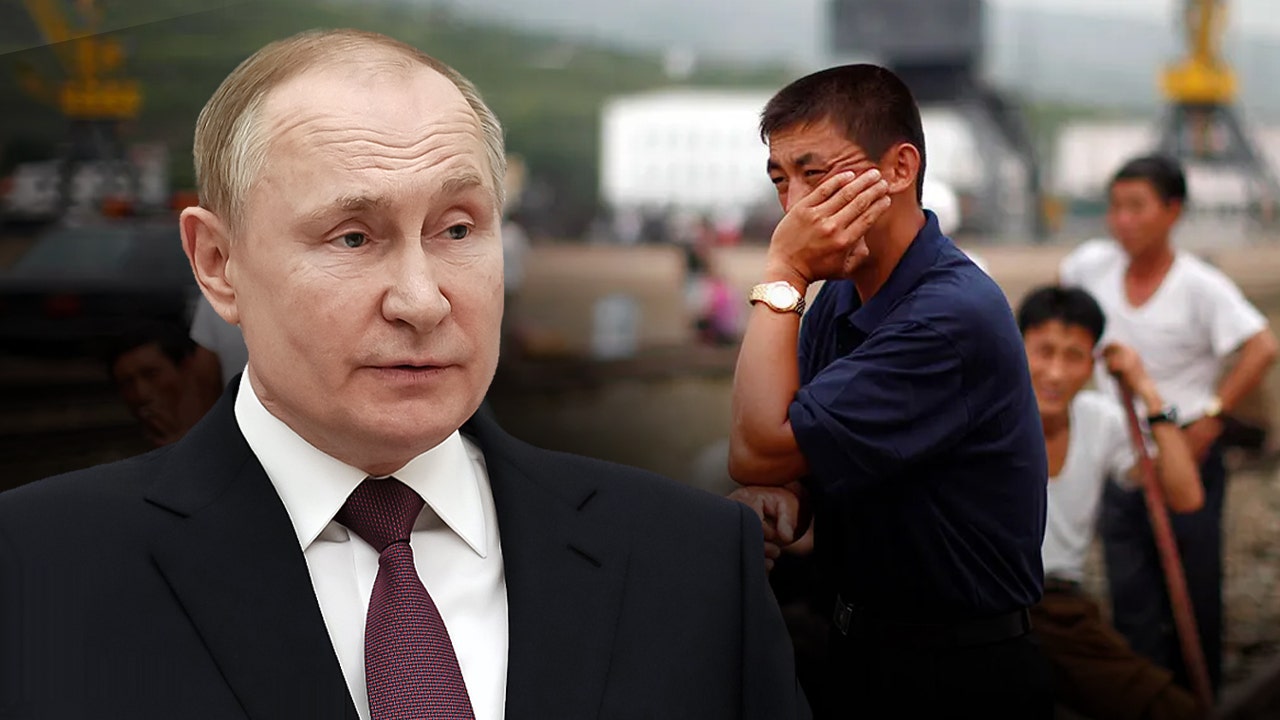
A new report by Global Rights Compliance reveals that North Korean workers in Russia are earning approximately $10 a month after state deductions, a direct violation of U.N. Sanctions requiring repatriation. The findings expose a state-sponsored labor export scheme generating an estimated $500 million annually for the regime, creating severe compliance risks for international businesses and raising urgent ethical questions for the global media supply chain.
The global appetite for Korean content has never been hotter. From the Parasite sweep at the Academy Awards to the record-breaking SVOD numbers for Squid Game, the “Hallyu” wave is a financial juggernaut. But while Western audiences binge-watch high-production thrillers about economic disparity, a grim, real-world parallel is unfolding in the construction sites of the Russian Far East. It’s a stark reminder that in the globalized media economy, the line between cultural export and geopolitical liability is thinner than a film reel.
A harrowing new investigation by Global Rights Compliance has pulled back the curtain on North Korea’s overseas labor program, specifically focusing on workers deployed to Russia. The data is not just a humanitarian crisis; it is a massive regulatory red flag for any multinational corporation with footprints in the region. According to the report, workers like “RT,” a survivor who spoke on condition of anonymity, are subjected to a modern indentured servitude model. They work up to 420 hours a month—essentially non-stop—only to see the vast majority of their wages siphoned off by the state.
The math is brutal. A worker might gross $800, but after the mandatory gukga gyehoekbun (state loyalty fund) and living deductions, they are left with roughly $10. This isn’t just exploitation; it is a sanctioned revenue stream that the U.N. Has explicitly tried to choke off. Yet, the pipeline remains open, fueled by the deepening alliance between Moscow and Pyongyang.
The Compliance Nightmare for Global Studios
Why should a Hollywood studio or a London-based production house care about construction workers in Vladivostok? Because the entertainment industry is increasingly reliant on global infrastructure. Whether it’s VFX houses, location scouting, or co-production financing, the web of international business is tangled. If a media conglomerate is found to be indirectly funding a regime through sanctioned labor channels—even via a third-party vendor—the reputational damage is instantaneous and catastrophic.
We are seeing a shift where brand equity is tied directly to supply chain ethics. Audiences today are hyper-literate; they know where their clothes are made, and they are beginning to ask where their content is funded. When a brand deals with this level of public fallout, standard statements don’t work. The studio’s immediate move is to deploy elite crisis communication firms and reputation managers to stop the bleeding before the narrative solidifies.
The irony is palpable. The source material notes that North Korean teens have been executed for watching Squid Game, a show critiquing the very capitalist desperation that drives their own labor export program. This dissonance creates a volatile cultural environment. For media executives, navigating this requires more than just good intentions; it requires forensic legal oversight.
“The intersection of sanctions law and entertainment finance is a minefield. If a production company is utilizing services in a jurisdiction where sanctioned labor is prevalent, they aren’t just facing bad press; they are facing OFAC violations that can freeze assets globally. Due diligence is no longer optional; it is the primary defense.”
This sentiment echoes the warnings of top-tier entertainment attorneys who specialize in international trade compliance. The risk isn’t theoretical. With the U.N. Panel of Experts estimating the labor program generates $500 million annually for the North Korean elite, the financial stakes are high enough to attract scrutiny from every major regulatory body.
The Logistics of Silence
The report details a system designed to erase individual identity. Passports are confiscated upon arrival. Movement is restricted. Workers live in containers infested with pests, severed from the outside world. This level of logistical control mirrors the most restrictive production environments, but without the union protections or the craft services. It is a closed loop of extraction.

For the entertainment directory and the professionals within it, this highlights a critical service gap. As productions expand into Eastern Europe and Asia for tax incentives and lower costs, the need for specialized international labor lawyers and compliance auditors has skyrocketed. You cannot simply hire a local fixer and hope for the best. The “local fixer” might be the very node connecting your production budget to a sanctioned entity.
The physical reality for these workers stands in stark contrast to the glossy images of Pyongyang often curated for state media. There is no glamour here. There is only the “quota,” a lump on the back that dictates survival. As one worker told investigators, “You came to earn and you leave with nothing.” This narrative of total extraction is the antithesis of the creative industry’s stated values of empowerment and expression.
Future-Proofing the Industry
As we move further into 2026, the fragmentation of the global order means that “neutral” business is becoming impossible. Every dollar spent has a geopolitical trajectory. For the media sector, this means that intellectual property and syndication deals must now include rigorous human rights clauses. It is no longer enough to ask if the content is good; we must ask if the ecosystem supporting it is clean.

The report from Global Rights Compliance serves as a wake-up call. It is not just a story about human rights; it is a story about risk management. The workers described in the report are invisible to the naked eye, hidden behind fences and nondisclosure agreements, much like the darker corners of the entertainment industry itself. But in the age of social media sentiment analysis, nothing stays hidden forever.
For the savvy industry insider, the lesson is clear: vet your partners, audit your supply chains, and understand that in a connected world, a violation in a Russian construction site can derail a premiere in Los Angeles. The cost of ignorance is no longer just moral; it is financial. And for those looking to navigate these treacherous waters, the directory is the first line of defense, connecting studios with the compliance and risk management experts who can ensure the show goes on without the curtain falling on a scandal.
*Disclaimer: The views and cultural analyses presented in this article are for informational and entertainment purposes only. Information regarding legal disputes or financial data is based on available public records.*