
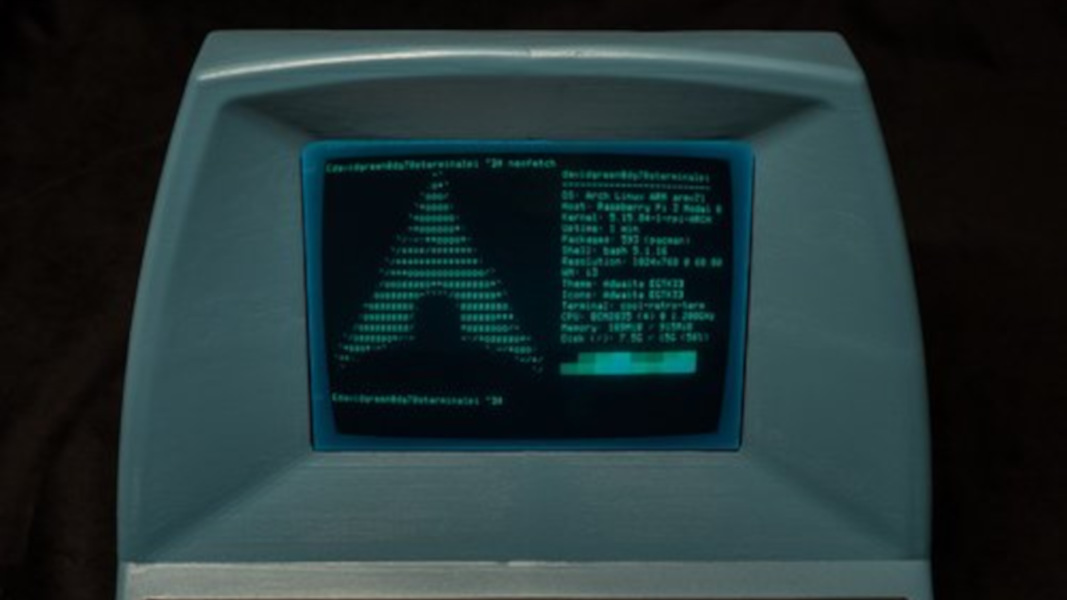
A maker in the United States has recreated a 1970s-era computer terminal, the Lear Siegler ADM-3A, using modern components including a Raspberry Pi and 3D-printed casing. The project, undertaken by David Green, aims to recapture the experience of interacting with computers before the widespread availability of personal computers.
In the 1970s, access to computing power was largely confined to institutions and large organizations. Users typically interacted with mainframe computers through “dumb terminals” like the ADM-3A, which lacked independent processing capabilities and served solely as input/output devices. These terminals connected to a central computer via a serial connection, transmitting data back and forth. According to retrotechnology.com, the ADM-3A was a popular model, often found in blue or tan casings.
Green’s replica diverges from the original in several key aspects. Whereas maintaining the aesthetic of the ADM-3A, the project utilizes a flat LCD panel instead of the original’s cathode ray tube (CRT) display. The core processing is handled by a Raspberry Pi 3, a single-board computer that offers significantly more computing power than the systems available to users in the 1970s. Green discovered plans for a similar project, the “Callisto II”, on Thingiverse.com, which served as a foundation for his build.
The physical enclosure of the replica was created using a 3D printer, requiring multiple attempts to achieve the desired finish. Green used an Ender 3 S1 Pro 3D printer to create the seven segments of the terminal’s housing, sanding and applying epoxy resin to smooth the surfaces. The project involved a substantial time commitment, with each 3D-printed part taking between 12 and 24 hours to complete.
Software modifications were also necessary to emulate the experience of using a 1970s terminal. Green implemented changes to the Raspberry Pi’s software to simulate a CRT display and chose the i3 window manager to replicate the feel of an older terminal interface without relying on a command-line only system. The increased processing power of the Raspberry Pi also allows for the emulation of older computer systems, offering a way to experience computing as it was decades ago.
The inspiration for the project came from Green’s experience at the Vintage Computer Festival East, where he encountered an original ADM-3A terminal. He noted the rarity, size, and cost of acquiring a genuine ADM-3A as the impetus for creating a functional replica. The project reflects a growing interest in preserving and recreating vintage computing technology, as noted by Hackaday.com.
