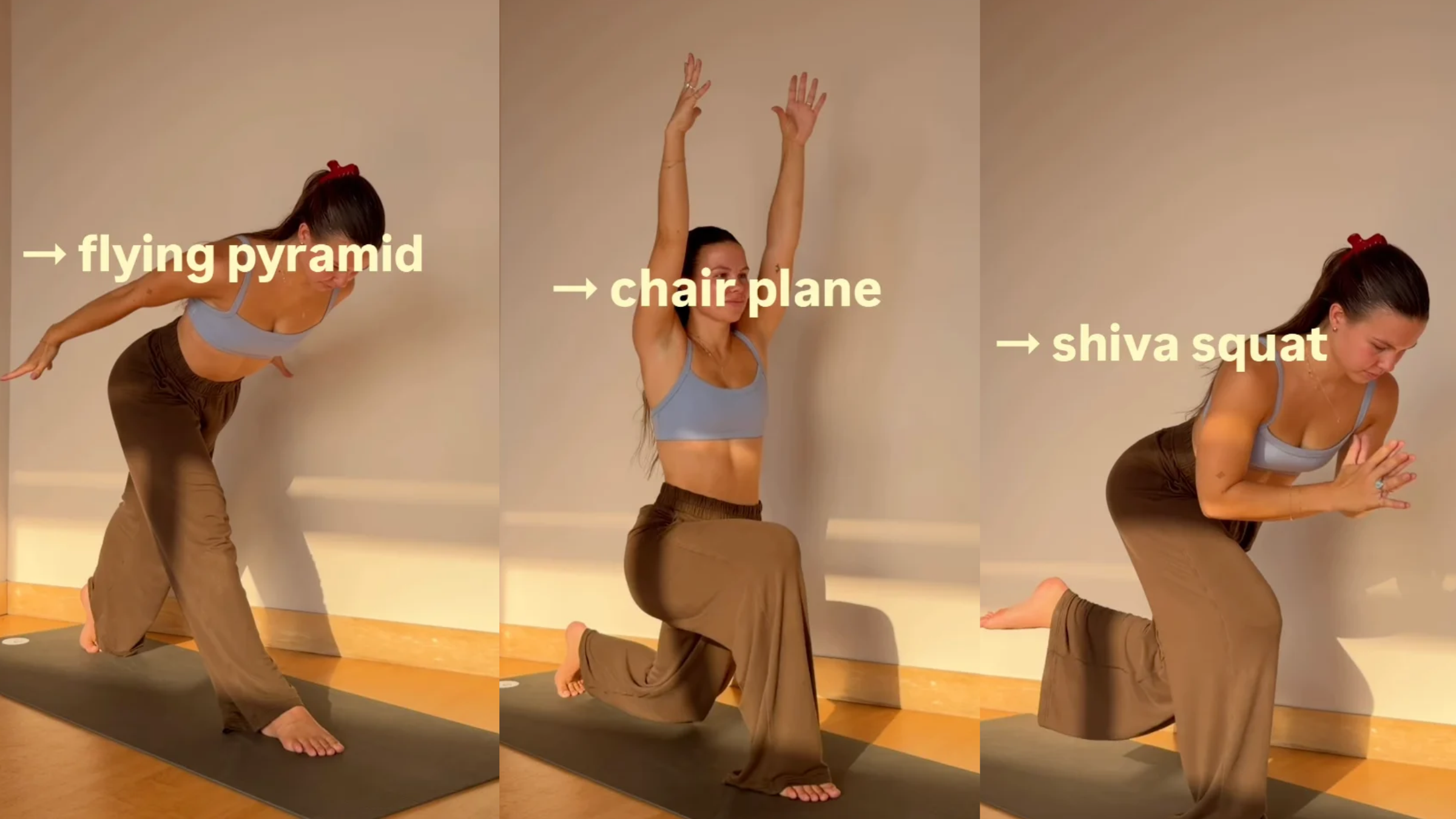
7 Surprising Transitions From Low Lunge
Low lunge, known in Sanskrit as Ashwa Sanchalanasana, serves as a fundamental lower-body strengthening posture in contemporary movement practices, yet its biomechanical utility extends far beyond standard yoga sequencing.
Key Clinical Takeaways:
- Low lunge provides a versatile foundation for improving hip flexor mobility and ankle dorsiflexion range of motion.
- Unconventional postural transitions from low lunge challenge neuromuscular coordination and balance across multiple planes of motion.
- Integrating targeted stability work requires careful attention to joint alignment to prevent excessive lumbar hyperextension during transitions.
Recent programming analyses published via fitness and movement platforms highlight how standard foundational shapes can be systematically adapted. While traditional flows often move directly from low lunge to high plank or downward-facing dog, movement specialists regularly evaluate alternative exits to maximize functional range of motion and joint stability. According to alignment-focused movement practitioners, introducing lateral, rotational, or balance-oriented shifts out of a deep lunge challenges the neuromuscular system by altering the base of support and shifting the body’s center of gravity.
For individuals managing chronic hip tightness or postural imbalances stemming from sedentary routines, modifying standard movement pathways offers a practical path toward improved functional mobility. Consulting with vetted physical therapists or rehabilitation specialists can help patients safely incorporate these advanced variations into an existing routine. To properly assess individual movement deficits and build a customized plan, it is highly recommended to schedule an evaluation with [Relevant Clinic/Professional/Service].
When executing non-traditional exits from a low lunge, the primary physiological objective remains the maintenance of pelvic neutrality and spinal elongation. Practitioners pivoting into lateral variations or balancing transitions must engage core stabilizers to protect the lumbar spine. Addressing these biomechanical nuances often requires direct oversight from qualified movement educators or orthopedic specialists. Patients seeking specialized guidance on joint health and flexibility protocols can connect directly with board-certified practitioners via our directory of [Relevant Clinic/Professional/Service].
Future iterations of clinical movement analysis will likely continue to evaluate how multi-planar transitions influence connective tissue remodeling and joint proprioception. As exercise scientists map these pathways, utilizing professional oversight ensures that movement modifications support long-term musculoskeletal health rather than introducing unnecessary injury risk. To find experienced clinicians equipped to guide functional movement assessments, consult our comprehensive directory of [Relevant Clinic/Professional/Service].
Disclaimer: The information provided in this article is for educational and scientific communication purposes only and does not constitute medical advice. Always consult with a qualified healthcare provider regarding any medical condition, diagnosis, or treatment plan.