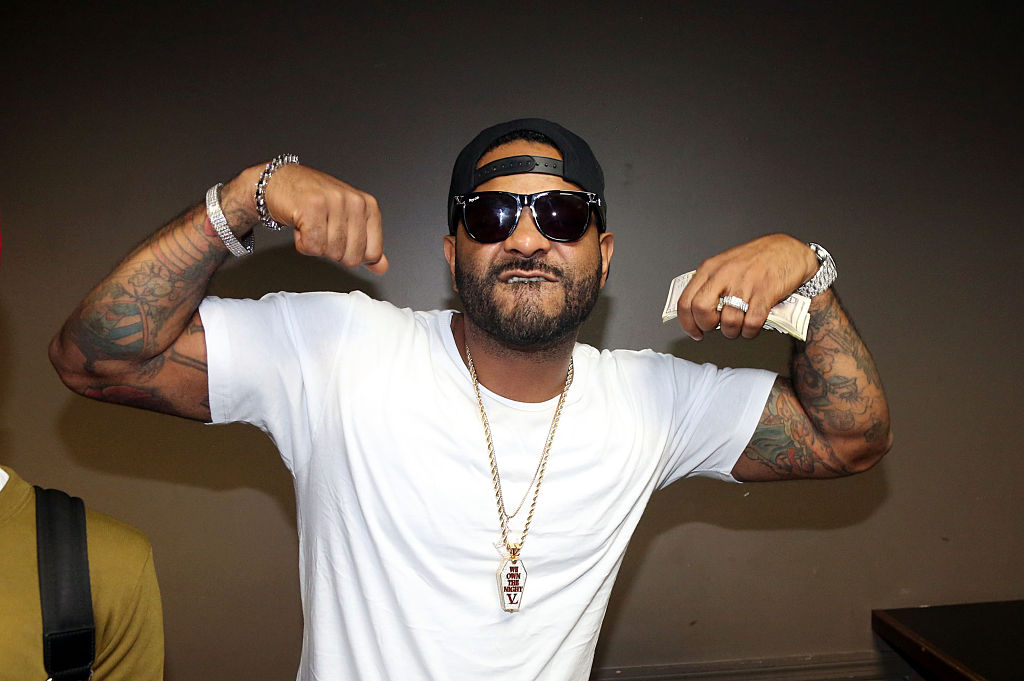
50 Cent-Jim Jones Feud Escalates After Viral Gas Station Walk Sparks Online Debate
When Jim Jones ran out of gas on a Queens highway in April 2026, the viral moment sparked jokes from collaborators Fabolous and Maino, reigniting online chatter about his long-running feud with 50 Cent over unpaid studio rent and social media snipes, highlighting how mundane mishaps can amplify existing industry tensions in the hip-hop ecosystem.
The Viral Breakdown That Wasn’t Just About Gas
What began as a relatable roadside inconvenience quickly became a Rorschach test for hip-hop’s perpetual drama machine. Jones’s candid Instagram post—detailing his mile-long walk to a gas station with the self-deprecating caption “I just walked about a mile to the gas station. That can’t be good”—was met not with sympathy alone, but with the kind of playful ribbing that only close collaborators can deliver. Fabolous’s quip, “Never slow down. But sometimes you moving too fast. Dont Let That Go Over Ya Head,” and Maino’s terse “Less Gas About It” landed as inside jokes, yet their public nature reignited scrutiny of Jones’s broader narrative: the artist perpetually teetering between revered veteran and meme-ready punchline. In an era where authenticity is currency, the incident offered a rare, unfiltered glimpse—though one quickly weaponized in the ongoing narrative wars surrounding his feud with 50 Cent.

Fueling an Old Fire: The 50 Cent–Jones Conflict Reignited
The timing was no accident. Just weeks prior, 50 Cent had reignited their dispute by alleging involvement with a landlord tied to Jones’s podcast studio, claiming Jones had caused property damage during a lockout incident. “Sam is my partner I own the joint, now your gonna fix every door you kick or I’m gonna kick ya a*s jimmy,” 50 Cent wrote in a now-deleted Instagram post, accompanied by surveillance footage purporting to demonstrate Jones struggling to access the space. Though 50 Cent remained silent on the gas-station incident, the silence itself spoke volumes—a calculated contrast to his usual barrage. Industry observers note that such asymmetrical engagement often serves to amplify the perceived imbalance in the feud, positioning one party as the aggrieved businessman and the other as the careless creative. According to a recent MRC Data report, Jones’s podcast “Unit” saw a 14% spike in downloads the week following the gas-station post, suggesting the controversy, however trivial, still moves the needle in attention economics.
Why This Matters Beyond the Meme
Beyond the laughs, the incident underscores a structural vulnerability in how hip-hop artists manage their public personas amid simmering conflicts. When a veteran like Jones shares a moment of vulnerability, it invites not just empathy but opportunistic reinterpretation—especially when layered atop unresolved legal and financial disputes. Entertainment attorneys specializing in artist brand management warn that such moments can become inflection points in IP negotiations, endorsement deals, or even divorce proceedings where public conduct is scrutinized. “In the current climate, a 30-second clip can trigger a cascade of legal and financial repercussions,” says Lina Park, senior partner at Frankfurt Kurnit Klein & Selz, who advises hip-hop artists on reputation risk. “Artists need crisis protocols not just for scandals, but for the mundane moments that acquire blown out of proportion by algorithmic amplification.” This represents where proactive engagement with crisis communication firms and reputation managers becomes less about damage control and more about narrative sovereignty—ensuring that a flat tire doesn’t become a referendum on an artist’s reliability.
The Business of Being Relatable
What makes this episode particularly telling is how it reflects the evolving economics of hip-hop authenticity. Artists today are expected to maintain a delicate balance: polished enough for brand deals, raw enough to retain street credibility. Jones’s gas-station walk, while unplanned, fit the latter criterion—yet its viral spread also exposed the former’s fragility. Brand safety teams at agencies like United Talent Agency now monitor not just for overt controversy, but for “relatability risk”—the chance that a candid moment could be misconstrued as irresponsibility or financial mismanagement. As one anonymous A&R executive at a major label put it off the record: “We love when our artists seem human. We panic when that humanity looks like instability.” This tension drives demand for specialized talent management firms who understand that guiding an artist’s public image isn’t about sanitization, but about strategic vulnerability—knowing when to lean into the joke and when to shut it down.
Where the Rubber Meets the Road: Logistics and Liability
The incident also raises practical questions about artist mobility and liability—especially for those who frequently travel between cities for performances, podcast recordings, or business meetings. A blown tire or empty tank isn’t just an inconvenience. it’s a potential disruption to scheduled events, with cascading costs for promoters, venues, and crew. Touring artists increasingly rely on event logistics and ground transportation providers who offer real-time vehicle monitoring and roadside assistance as part of their retention packages. For artists operating outside the traditional tour infrastructure—like Jones, whose movements are often tied to podcast shoots or studio sessions—such services are less luxury, more necessity. In the post-pandemic era, where last-minute cancellations carry steep penalties due to venue rescheduling complexities, even a minor logistical hiccup can escalate into a breach of contract discussion. Smart artists now treat mobility as a line item in their risk mitigation budget, not an afterthought.

Jones’s highway hiccup was never really about gas. It was a reminder that in the attention economy, every public moment—no matter how small—exists in a gravitational field of existing narratives, legal entanglements, and brand calculations. For artists navigating the tightrope between authenticity and marketability, the ability to reframe a stumble as a story—not a liability—isn’t just savvy; it’s survival. As the summer festival circuit approaches and artists hit the road in earnest, the smartest among them will already have their crisis comms, legal counsel, and logistics partners on speed dial.
*Disclaimer: The views and cultural analyses presented in this article are for informational and entertainment purposes only. Information regarding legal disputes or financial data is based on available public records.*