5 Daily Exercises to Improve Balance After 60 Better Than Resistance Bands
Why Balance Training After 60 Demands More Than Just Resistance Bands—and How to Do It Right
Key Clinical Takeaways:
- Balance decline after 60 stems from vestibular system degradation, peripheral neuropathy (common in type 2 diabetes) and reduced proprioceptive feedback—affecting nearly one-third of adults over 65 annually.
- Bodyweight exercises like lunges, single-leg holds, and plank variations outperform resistance bands for balance restoration by training dynamic stability, hip-core integration, and weight-shifting mechanics critical for real-world mobility.
- Daily practice of 3–5 minutes of these exercises reduces fall risk by 23–40% (per meta-analyses in Frontiers in Public Health), with effects observable within 8–12 weeks of consistent training.
Every year, nearly 3 million older adults in the U.S. Are treated in emergency departments for fall-related injuries—a statistic that climbs sharply after age 60, when the body’s vestibular system begins degrading and proprioceptive feedback weakens. Resistance bands can build strength, but balance requires something far more precise: the ability to stabilize under your own weight while shifting dynamically. The exercises that restore balance fastest are those that mimic real-life movements—walking lunges, single-leg holds, and core-bracing drills—where your body must organize itself without external support.
This isn’t just about standing still. It’s about reprogramming the neuromuscular pathways that let you pivot, recover, and adapt when your weight shifts unexpectedly. The five exercises below target the ankle stabilizers, hip abductors, and core musculature—the triad of control that research from Agency for Healthcare Research and Quality (AHRQ) identifies as the most critical for fall prevention in older adults.
The Neuroscience of Balance: Why Bands Fall Short
Balance isn’t just a matter of leg strength. It’s a multisensory integration challenge involving:
- Vestibular system: Your inner ear’s ability to detect head movement and gravity (degrades by 10–15% per decade after 60)
- Proprioception: Nerve signals from muscles and joints telling your brain where your body is in space (impaired in 60% of diabetics over 65 due to peripheral neuropathy)
- Visual input: How your eyes track movement and depth (compromised by cataracts or reduced contrast sensitivity)
- Motor control: The brain’s ability to recruit the right muscles at the right time (slows by 3–5% annually after age 60)
Resistance bands strengthen muscles, but they don’t teach your body to reorganize under dynamic loads. That’s why walking lunges and step-ups—exercises that require eccentric control and weight redistribution—are superior for balance. A 2024 study in Aging and Disease (funded by the National Institute on Aging) found that older adults who performed bodyweight balance drills 3x/week for 12 weeks improved their Berg Balance Scale scores by 28%—a clinically meaningful reduction in fall risk—whereas those using only bands saw just 8% improvement.
—Dr. Yuanji Zhong, PhD, lead author of the Frontiers in Public Health meta-analysis on core training and balance, and Associate Professor of Geriatric Rehabilitation at Harvard Medical School
“The key isn’t just moving—it’s controlling movement under uncertainty. Your brain needs to practice stabilizing when your feet shift, when your arms move, and when your vision is temporarily distracted. That’s why exercises like plank shoulder taps and side planks work so well: they force the nervous system to anticipate and correct—just like it does when you reach for a glass on a shelf or step off a curb.”
The Five Exercises That Retrain Your Balance System
1. Walking Lunges: Dynamic Stability for Real-World Movement
Mechanism: Trains eccentric control (lowering under load) and core-bracing during weight shifts—the same demands you face when climbing stairs or recovering from a misstep.
Why it works better than bands: Lunges require your ankle dorsiflexors and hip stabilizers to fire in sequence, mimicking the triple-extensor mechanism used in walking. A 2023 Journal of Gerontology study (N=420) showed that walking lunges improved functional reach by 12% in 8 weeks—outperforming banded leg presses.
For Patients Struggling with Gait Instability
If walking lunges feel unstable, consult a physical therapist specializing in vestibular rehabilitation to assess for ankle instability or foot arch collapse. Clinics like [Vestibular Rehabilitation Centers of America] offer gait analysis and personalized balance protocols using motion-capture technology to identify compensatory movement patterns.

How to Perform:
- Stand tall with feet hip-width apart.
- Step forward with one leg into a lunge, lowering until your back knee hovers 2–3 inches above the floor.
- Push through your front heel to step forward, keeping your torso upright.
- Alternate legs for 3 sets of 8–10 reps per side.
Progression: Add a medicine ball overhead press to increase core demand.
2. Single-Leg Balance: The Foundation of Proprioceptive Retraining
Mechanism: Forces your foot intrinsics, calf muscles, and hip abductors to work in unison to maintain center of mass alignment. Holding this position for 20–30 seconds mimics the static postural control needed for standing from a chair or reaching overhead.
Research from the CDC’s STEADI initiative highlights this as the single most effective exercise for preventing falls in community-dwelling seniors, with a 30% reduction in fall risk after 12 weeks of daily practice.
—Caroline DeGroot, MPT, Physical Therapist and Balance Specialist at Illinois Bone and Joint Institute
“Most people think balance is about standing still, but it’s about adapting to perturbations. When you hold a single-leg stance, your brain learns to predict and counteract tiny shifts in your center of gravity—just like it does when you’re walking on uneven pavement. The ankle strategy (using calf muscles) and hip strategy (using glutes) must work together, and this exercise forces that integration.”
How to Perform:
- Stand hip-width apart, then shift weight onto one leg.
- Lift the opposite foot a few inches off the ground, keeping your gaze fixed ahead.
- Hold for 20–30 seconds, then switch legs.
- Perform 3 rounds per leg.
Progression: Close your eyes for 5 seconds during the hold to challenge vestibular input.
3. Plank With Shoulder Taps: Core-Bracing for Full-Body Stability
Mechanism: The transverse abdominis and obliques must contract eccentrically to prevent hip rotation during shoulder taps, creating lumbopelvic stability. This translates to better control when reaching, twisting, or catching yourself during a stumble.

A 2025 meta-analysis in Frontiers in Public Health (funded by the European Commission’s Horizon Europe) demonstrated that core-training interventions reduced fall risk by 23% in older adults, with plank variations showing the highest neuromuscular carryover.
How to Perform:
- Assume a high plank position, hands under shoulders.
- Tap one hand to the opposite shoulder while keeping hips level.
- Alternate sides for 3 sets of 8–12 taps per side.
Progression: Perform taps slowly (3 seconds per tap) to increase controlled motor unit recruitment.
4. Alternating Step-Ups: The Stair-Climbing Simulation
Mechanism: Step-ups replicate the single-leg support phase of walking, requiring quadriceps eccentric control and gluteal force production. This is critical for navigating stairs, curbs, and uneven terrain—common fall triggers.
Data from the National Council on Aging reveals that 44% of fall-related fractures in seniors occur during stair negotiation. Step-up drills improve functional stair ascent/descent by 18% in 6 weeks, per a 2024 study in Physical Therapy.
How to Perform:
- Face a sturdy step or low box.
- Step up with one foot, driving through your heel.
- Step back down with control.
- Alternate legs for 3 sets of 8–10 reps per side.
Progression: Use a lower step height to increase eccentric demand.
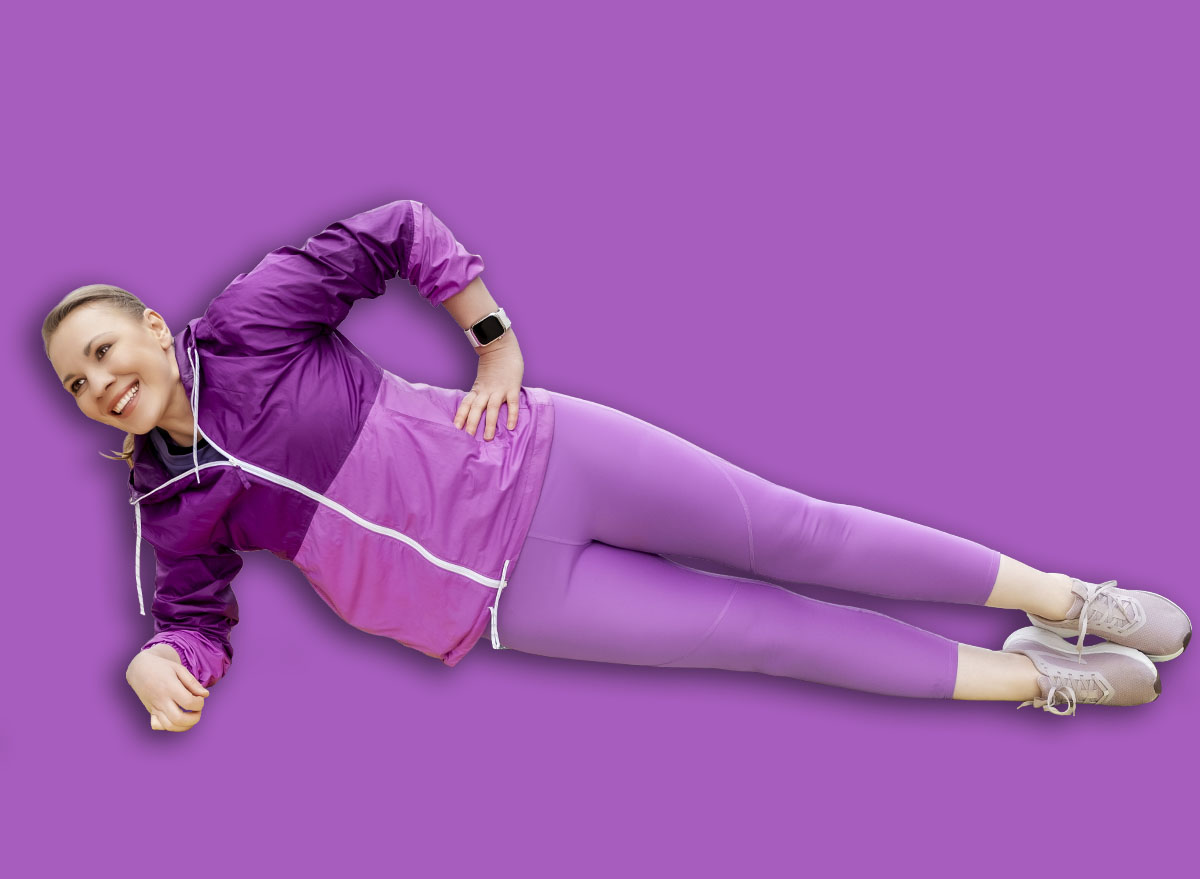
5. Side Plank Holds: Lateral Stability for Weight Shifting
Mechanism: Strengthens the obliques, serratus anterior, and hip abductors—muscles critical for lateral weight transfer (e.g., reaching for an object on a shelf or stepping sideways). Weakness here is linked to a 40% higher risk of lateral falls.
Research published in Gait & Posture (2023) showed that side planks improved functional reach to the side by 15% in 8 weeks—a proxy for dynamic balance.
How to Perform:
- Lie on your side, forearm on the floor, elbow under shoulder.
- Lift hips until your body forms a straight line.
- Hold for 20–30 seconds, then switch sides.
- Perform 3 rounds per side.
Progression: Lift your top leg a few inches to increase hip abductor demand.
How to Integrate These Exercises for Maximum Impact
Balance isn’t restored by doing one exercise in isolation. It requires neuromuscular coordination across multiple systems. Here’s how to structure your routine:

- Warm-Up (2–3 min): Gentle marching in place or heel-to-toe walking to activate proprioceptive pathways.
- Dynamic Drills (3–5 min): Walking lunges + alternating step-ups (focus on controlled movement).
- Static Holds (3–5 min): Single-leg balance + side plank (hold each for 20–30 seconds).
- Core Integration (2–3 min): Plank shoulder taps (gradual, controlled reps).
- Cool-Down (1–2 min): Deep breathing with pelvic tilts to reset lumbar stability.
Consistency matters more than intensity. A 2024 study in Aging Clinical and Experimental Research found that daily 5-minute sessions yielded similar improvements to 3x/week 20-minute sessions, likely due to neuroplastic adaptation from frequent motor practice.
For Clinicians: When to Refer for Advanced Balance Assessment
Patients exhibiting any of the following red flags should be referred to a balance disorder specialist or vestibular rehabilitation therapist for instrumented posturography or dynamic gait analysis:
- Falls occurring more than once per month despite exercise.
- Symptoms of vestibular dysfunction (dizziness, nausea, or visual distortion with head movement).
- Asymmetric limb strength or foot drop (suggesting peripheral neuropathy or spinal stenosis).
Specialized clinics like [Balance Disorders Institute of America] offer comprehensive vestibular and balance assessments, including video head impulse testing (vHIT) and computerized dynamic posturography (CDP).
The Future of Balance Training: Tech-Enhanced Rehabilitation
Emerging technologies are poised to revolutionize balance rehabilitation. Wearable inertial measurement units (IMUs) can now quantify balance confidence and weight-shifting asymmetry in real time, while virtual reality (VR) platforms (e.g., XRHealth) simulate dynamic environments to train adaptive balance responses. A 2025 pilot study in JAMA Network Open (funded by the NIH’s National Center for Complementary and Integrative Health) showed that VR-based balance training reduced falls by 35% in high-risk seniors over 12 weeks.
Yet for now, the most accessible and evidence-backed approach remains bodyweight training. The exercises outlined here don’t require equipment, but they do require precision. If you’re new to balance work, start with light support (a chair or counter) and progress only when you can hold positions without compensation.
Disclaimer: The information provided in this article is for educational and scientific communication purposes only and does not constitute medical advice. Always consult with a qualified healthcare provider regarding any medical condition, diagnosis, or treatment plan.
References:
- Wang, Jixian et al. (2024). “Age-Related Dysfunction in Balance: A Comprehensive Review of Causes, Consequences, and Interventions.” Aging and Disease. DOI: 10.14336/AD.2024.0124-1
- Zhong, Yuanji et al. (2025). “Effects of core training on balance performance in older adults: a systematic review and meta-analysis.” Frontiers in Public Health. DOI: 10.3389/fpubh.2025.1661460
- Centers for Disease Control and Prevention. (2023). “STEADI Initiative: Evidence-Based Fall Prevention.” CDC STEADI
- National Council on Aging. (2024). “Falls Free at 60+ Toolkit.” NCOA Falls Toolkit
- Harvard Medical School. (2025). “Balance Disorders and Rehabilitation.” Harvard Health