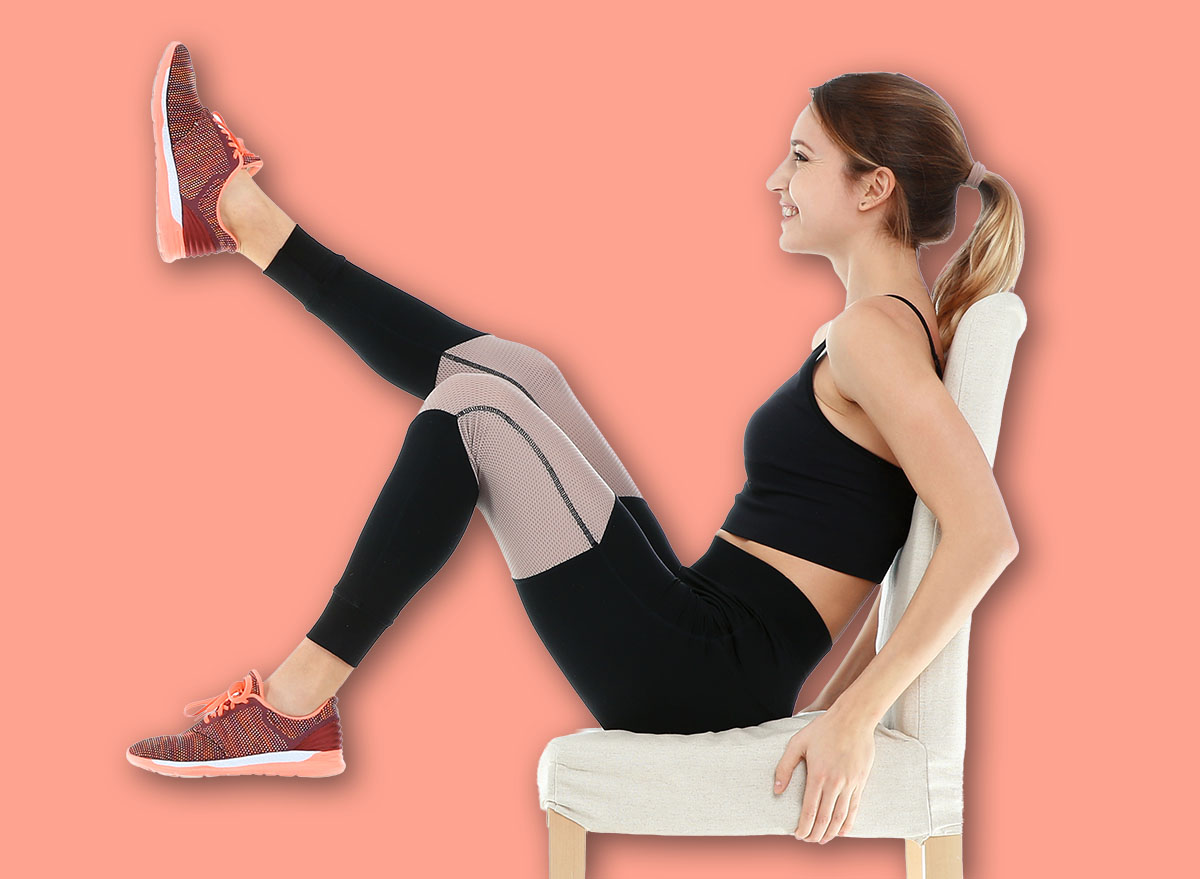
5 Chair Exercises for Stronger Thighs After 60
For adults over 60, rebuilding thigh strength isn’t just about lifting heavier weights—it’s about restoring functional movement that supports independence and reduces fall risk. As muscle mass naturally declines with age, targeted exercises that emphasize control, joint alignment, and neuromuscular re-education become critical. Chair-based movements offer a safe, accessible entry point for those managing arthritis, balance concerns, or deconditioning, allowing precise focus on quadriceps engagement without compromising spinal stability.
Key Clinical Takeaways:
- Chair-based exercises improve thigh strength and functional mobility in older adults by enhancing neuromuscular control and time under tension.
- Seated leg extensions and heel-elevated variations preferentially activate the quadriceps through isolated, controlled contractions, reducing compensatory movement patterns.
- Consistent practice of sit-to-stand movements translates directly to improved performance in activities of daily living, such as rising from a toilet or getting in and out of a car.
Age-related sarcopenia disproportionately affects the lower extremities, with studies showing up to 30% loss of quadriceps cross-sectional area between ages 60 and 80. This decline correlates strongly with reduced gait speed, increased hospitalization risk, and loss of independence. A 2021 meta-analysis published in the International Journal of Environmental Research and Public Health analyzed 12 randomized controlled trials involving 842 adults over 60 and found that chair-based exercise programs significantly improved lower limb strength (standardized mean difference = 0.62, p<0.001) and timed up-and-go performance compared to control groups. The intervention, funded by the European Union’s Horizon 2020 program, emphasized progressive resistance using body weight and elastic bands, with sessions conducted three times weekly over 12 weeks.
Dr. Elena Rodriguez, PhD, lead author of the meta-analysis and researcher at the University of Granada’s Department of Physiology, explains:
“What makes chair-based training uniquely effective for older adults is its ability to minimize joint loading while maximizing muscle activation. By removing the balance challenge, we allow participants to focus on intentional contraction—particularly during the eccentric phase—which is where most strength gains occur.”
This mechanistic insight aligns with electromyography data showing that seated leg extensions produce 23% greater quadriceps activation than bodyweight squats in individuals over 65, likely due to reduced hip extensor contribution and improved isolation of the rectus femoris and vastus lateralis.
The sit-to-stand movement, a cornerstone of functional rehabilitation, serves as both assessment and intervention. Research from the Boston University School of Medicine indicates that adults who can complete five repetitions in under 12 seconds have a 40% lower risk of falling over the next year. When performed with a 3-second eccentric lowering phase, this exercise increases time under tension by 50% compared to uncontrolled repetitions, stimulating greater myofibrillar protein synthesis. Physical therapists at certified geriatric PT clinics often leverage this metric to track progress and adjust resistance via armrest support or added torso lean.
For individuals with osteoarthritis or patellofemoral pain, seated heel-elevated extensions shift biomechanical load anteriorly, increasing quadriceps demand while reducing tibiofemoral compression. A 2023 biomechanical study in Gait & Posture (N=41, mean age 68) found that a 2-centimeter heel lift increased vastus medialis obliquus activation by 18% during knee extension, potentially improving patellar tracking. This subtle adjustment addresses a common deficit in older adults—lateral hip weakness contributing to knee valgus—making it a valuable precursor to standing abduction function.
Seated band hip abduction targets the gluteus medius and minimus, stabilizers critical for pelvic control during single-leg stance. Weakness in these muscles is associated with a 2.3-fold increased risk of lateral falls in adults over 65, according to data from the Osteoporotic Fractures in Men (MrOS) study. By performing this exercise seated, participants eliminate trunk sway and focus exclusively on hip abductor endurance—a key factor in maintaining pelvic level during walking. Clinicians at orthopedic outpatient centers frequently prescribe this movement post-hip arthroplasty to rebuild dynamic stability without compromising prosthetic precautions.
Progression in chair-based training should follow the principle of gradual overload: increasing resistance via bands, slowing tempo, or adding isometric holds before advancing to standing variations. The American College of Sports Medicine recommends 2–3 sessions per week, with 1–3 minutes of rest between sets to allow for phosphagen system recovery. Importantly, these exercises are not replacements for comprehensive strength training but serve as foundational drills to rebuild confidence and movement quality. As Dr. Marcus Chen, MD, board-certified geriatrician at Johns Hopkins Medicine, notes:
“We see patients who’ve avoided exercise for years due to fear of injury. Chair-based routines give them a safe way to reconnect with their bodies. The goal isn’t to lift the most weight—it’s to stand up from a chair without using your hands, walk to the mailbox without stopping, and feel steady on uneven ground.”
For older adults seeking to rebuild thigh strength, consistency and intentionality outweigh intensity. These chair-based movements, grounded in geriatric exercise science and supported by NIH-funded research on functional aging, provide a scalable pathway to improved mobility. When pain or uncertainty arises, consulting with a board-certified geriatrician or licensed physical therapist ensures exercises are tailored to individual comorbidities and goals. The ultimate measure of success isn’t muscle size—it’s the ability to move through daily life with assurance.
*Disclaimer: The information provided in this article is for educational and scientific communication purposes only and does not constitute medical advice. Always consult with a qualified healthcare provider regarding any medical condition, diagnosis, or treatment plan.*