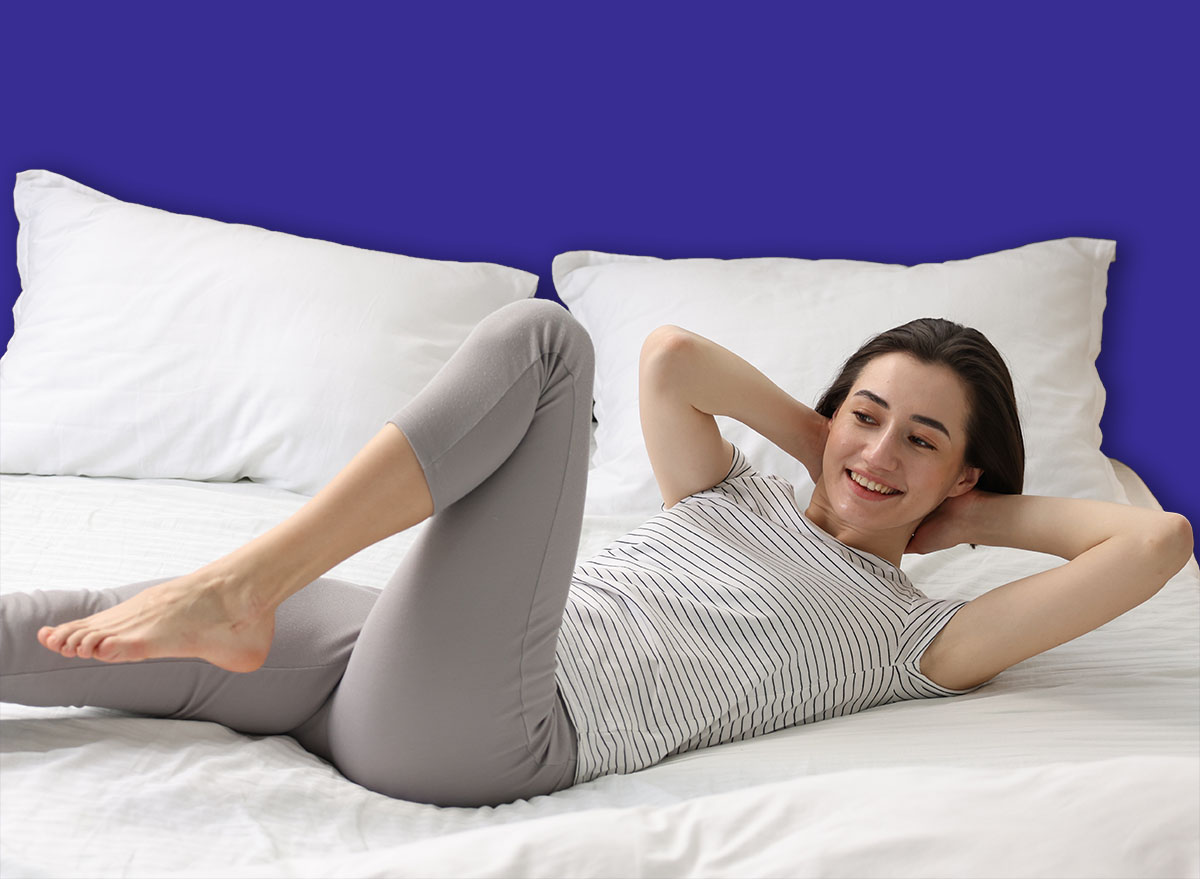
4 Bed Exercises to Restore Deep Core Strength Faster Than Planks After 60
<>
Restoring deep core stability after age 60 requires a shift from high-intensity, load-bearing movements like planks toward low-impact, neuromuscular coordination exercises performed on stable surfaces. Research indicates that the transverse abdominis, diaphragm, and pelvic floor function as an integrated unit to support the spine, and training this system in a supine position—such as on a firm mattress—allows for precise motor control without the excessive strain on the shoulder girdle and wrists often associated with traditional floor-based abdominal routines.
- Deep core engagement is achieved through controlled breathing and pelvic stabilization rather than high-repetition spinal flexion.
- Supine exercises performed on a firm mattress minimize musculoskeletal stress on the upper body, making them ideal for seniors managing joint sensitivity.
According to a study published in Medicina (Lee, 2025), targeted core stability training significantly improves the functional capacity of deep stabilizing muscles, which directly correlates to better postural control in older adults. This research, which emphasizes the necessity of maintaining a "neutral spine" during exercise, highlights that traditional high-load movements may inadvertently lead to compensation by secondary muscle groups if the primary stabilizers are not adequately conditioned.
If you are experiencing persistent lower back discomfort or difficulty with daily movement, it is essential to seek a professional assessment. Patients should consult with a [qualified clinician] to develop a personalized, evidence-based training protocol that mitigates injury risk.
Supine Heel Taps and Bent-Knee Fallouts: Neuromuscular Mechanics
Supine heel taps serve as a foundational movement to teach the transverse abdominis to resist anterior pelvic tilt. By keeping the lumbar spine in a neutral position while lowering one heel, the practitioner forces the deep core to maintain intra-abdominal pressure. This is a critical departure from standard gym crunches, which often rely on momentum and hip flexor dominance. Similarly, bent-knee fallouts isolate the obliques and deep hip stabilizers. By moving one leg away from the midline while keeping the pelvis perfectly still, the individual trains the trunk to remain “organized” against rotational forces.
A systematic review published in Frontiers in Public Health (Zhong et al., 2025) confirms that these types of stability-focused interventions are superior for balance performance in older populations compared to generalized resistance training. The study, which analyzed meta-data on core training efficacy, underscores that balance is not merely a function of leg strength but of the trunk’s ability to maintain a stable center of mass.
Dead Bug Marches and Reverse Crunches
For those seeking to progress beyond basic stabilization, the dead bug march and the bent-knee reverse crunch provide a higher level of challenge. The dead bug march mimics the reciprocal movement patterns required for walking, forcing the core to stabilize the spine against the weight of the legs. The reverse crunch, when performed with a small tuck of the tailbone, effectively targets the rectus abdominis and lower stabilizers without the cervical spine strain often caused by traditional sit-ups.
These movements are most effective when executed with a “bracing” technique: a gentle, controlled exhale during the exertion phase. This helps maintain the necessary tension to support the spine. If you find that these movements trigger sharp pain or radiculopathy, it is imperative to halt the exercise and consult with a [qualified clinician] to rule out underlying structural issues such as degenerative disc disease or spinal stenosis.
Clinical Considerations for Implementation
The efficacy of these exercises is contingent upon the surface and the intensity of the execution. A firm mattress provides the necessary tactile feedback for the spine, though individuals with significant balance deficits or those who find a mattress too unstable should transition these routines to a floor mat. Progressive overload should be managed by slowing the tempo of the movement or increasing the duration of the hold, rather than increasing the speed or volume of repetitions.
For healthcare providers and clinical facilities looking to integrate these protocols into patient care plans, ensuring proper patient education is a priority. Many patients require a supervised initial session to ensure the correct activation of the pelvic floor and transverse abdominis. Clinics interested in implementing these evidence-based geriatric stability programs can connect with [qualified clinician] to ensure their training materials meet the latest clinical standards for safety and efficacy.
As the field of geriatric health continues to evolve, the focus remains on preventing the loss of functional independence. By prioritizing deep-core integrity through these controlled, low-impact movements, adults over 60 can build a resilient foundation for daily activity, effectively reversing the trends of muscle loss and instability that often precede more serious health declines.
Disclaimer: The information provided in this article is for educational and scientific communication purposes only and does not constitute medical advice. Always consult with a qualified healthcare provider regarding any medical condition, diagnosis, or treatment plan.