3D Movement Without Muscles: New Hope for Paralysis
In a development that could reshape neurorehabilitation, researchers have demonstrated that rhesus macaques with spinal cord injuries can navigate three-dimensional virtual environments using only brain signals, without moving a single muscle. This breakthrough, reported by Numerama and rooted in recent advances in brain-computer interface (BCI) technology, offers a compelling glimpse into future therapies for individuals living with paralysis due to traumatic spinal cord injury or neurodegenerative disease. While still in preclinical stages, the study underscores the potential of decoding motor intention directly from cortical activity to restore functional independence, even when peripheral motor pathways are severed.
Key Clinical Takeaways:
- Rhesus macaques successfully controlled 3D movement in a virtual space using implanted neural interfaces that decoded motor cortex signals associated with imagined movement.
- The study, conducted at Stanford University and published in Nature, represents a critical step toward restoring mobility for the estimated 17,730 new spinal cord injury cases occurring annually in the United States.
- Although human trials remain years away, this work informs ongoing Phase I/II feasibility studies of cortical BCIs for communication and motor restoration in paralyzed patients.
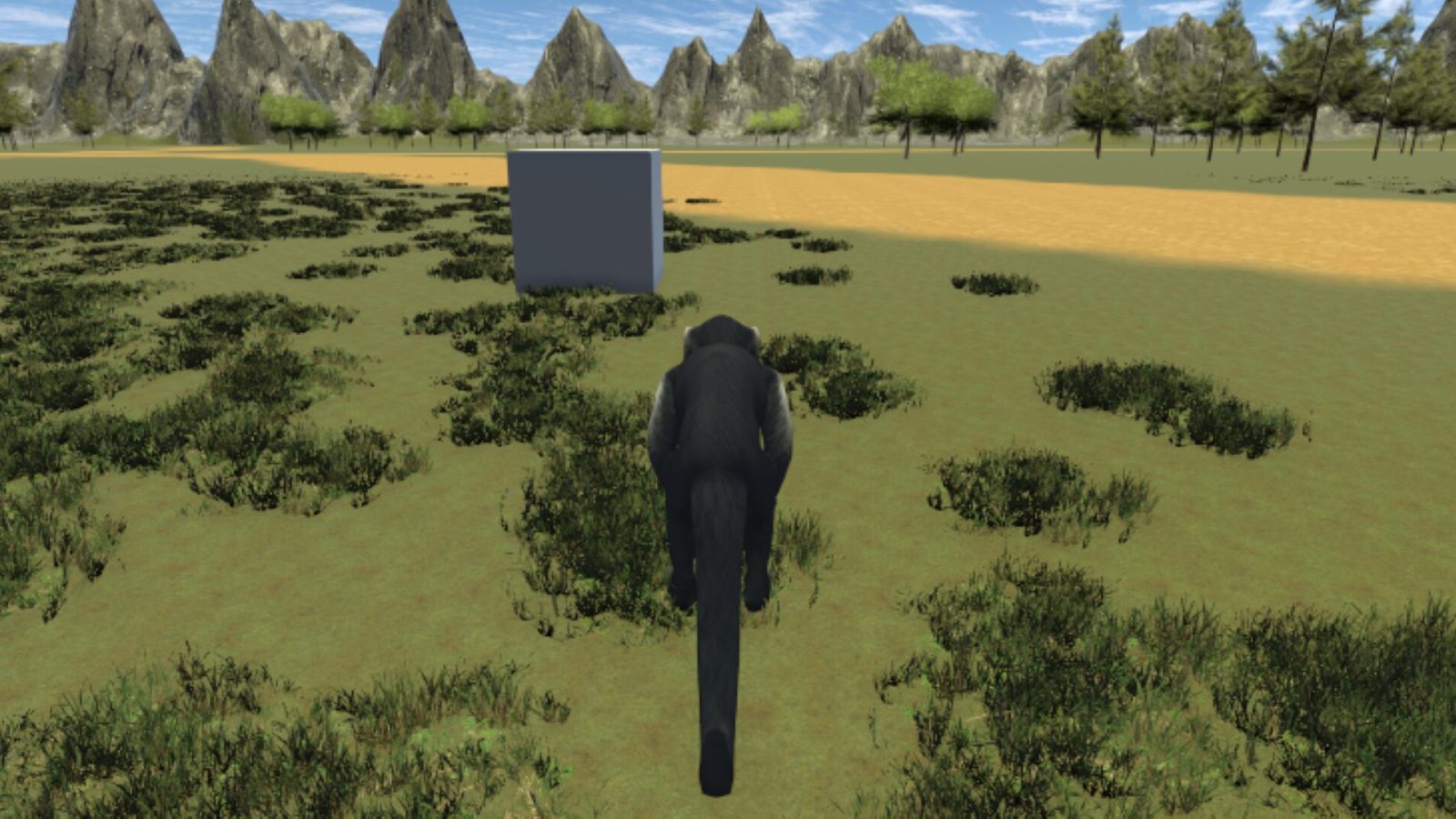
The core innovation lies in a high-density microelectrode array implanted in the premotor and primary motor cortex, capable of detecting ensemble neural firing patterns during attempted or imagined reaching and grasping motions. Unlike earlier BCIs limited to cursor control on a two-dimensional screen, this system enabled the animals to manipulate a virtual avatar through complex, naturalistic 3D trajectories—approaching objects, avoiding obstacles, and adjusting grip force in real time—based solely on spiking activity translated via machine learning algorithms. Importantly, no actual limb movement occurred. the behavior was driven entirely by decoded neural intent, confirming that motor cortex signals retain the richness of movement encoding even after spinal disconnection.
According to the longitudinal study published in Nature by Shenoy, Kao, and colleagues (2023), two rhesus macaques with chronic cervical spinal cord injuries achieved average success rates of 78% and 82% across 3D virtual navigation tasks over six months of training, with signal stability maintained throughout. The primates were rewarded for successfully guiding a virtual limb to touch targets in space, a paradigm designed to mimic activities of daily living such as reaching for a cup or turning a doorknob. Control experiments confirmed that performance dropped to chance levels when neural decoding was disrupted, validating that the behavior was driven by intentional brain signals rather than residual muscle activity or learning artifacts.
“What’s remarkable here is not just that the brain can learn to control an external device, but that it can do so with the flexibility and adaptability we see in natural movement—even when the body is paralyzed. This tells us the motor cortex retains a detailed map of intended action, which One can harness.”
The research was primarily funded by the National Institutes of Health (NIH) through the BRAIN Initiative (Grant U01NS098975) and the Department of Defense’s Spinal Cord Injury Research Program, reflecting federal investment in neurotechnology as a pathway to restore function after neurological trauma. Additional support came from the Simons Foundation and the Wu Tsai Neurosciences Institute at Stanford. Industry collaboration included Blackrock Neurotech, which provided the Cerebus® neural recording system used in the study, though the academic team retained full control over data analysis, and interpretation.
These findings have direct relevance to ongoing human feasibility trials. For instance, the BrainGate2 consortium—an interdisciplinary effort involving Brown University, Massachusetts General Hospital, and the Providence VA Medical Center—has previously demonstrated that individuals with tetraplegia can use intracortical BCIs to control robotic arms and type on virtual keyboards. Building on this, a 2024 pilot study published in JAMA Neurology showed that two participants with chronic spinal cord injury could achieve point-and-click control of a tablet device with accuracies exceeding 90% after minimal training. While still focused on communication and basic motor substitution, such work lays the groundwork for more complex applications like the 3D navigation seen in the primate model.
“We’re moving from proving that BCIs can work to refining how they integrate into real-world function. The next frontier is not just controlling a cursor, but enabling natural, multidimensional interaction with the environment—something this monkey study brings significantly closer.”
From a public health perspective, spinal cord injury remains a leading cause of long-term disability, with lifetime costs exceeding $1.5 million per individual in high-income countries and limited access to rehabilitation in low-resource settings. Current standards of care emphasize acute stabilization, preventive complication management, and intensive physical therapy, yet fewer than 1% of individuals with complete paraplegia regain ambulatory function. Neuroprosthetic approaches like cortical BCIs offer a potential complement to these strategies—not as a replacement for biological repair, but as a means to bypass damaged pathways and restore agency over movement, communication, and environmental control.
For patients navigating the aftermath of spinal cord injury, access to specialized neurorehabilitation programs remains critical. Institutions equipped to evaluate emerging neurotechnologies—such as those participating in NIH-sponsored clinical trials networks—can provide informed guidance on eligibility for investigational device trials. It is advisable to consult with vetted board-certified neurologists or physiatrists with expertise in neurorehabilitation to discuss the potential role of assistive technologies in long-term care planning. Similarly, developers and researchers advancing BCI systems must engage with healthcare compliance attorneys early in the design process to ensure alignment with FDA investigational device exemptions (IDEs), IRB protocols, and HIPAA-compliant data governance frameworks—particularly as these systems evolve to handle increasingly sensitive neural data.
Looking ahead, the convergence of microelectrode innovation, machine learning decoding, and implanted wireless systems suggests that human trials of 3D-capable cortical BCIs could begin within the next five years, initially targeting individuals with locked-in syndrome or high-level tetraplegia. Success will depend not only on technical performance but also on demonstrable improvements in quality of life, independence, and reduction in caregiver burden—outcomes that must be rigorously measured in controlled trials. Until then, the primate model serves as a vital proof of principle: that even without moving a muscle, the brain retains the capacity to act.
*Disclaimer: The information provided in this article is for educational and scientific communication purposes only and does not constitute medical advice. Always consult with a qualified healthcare provider regarding any medical condition, diagnosis, or treatment plan.*