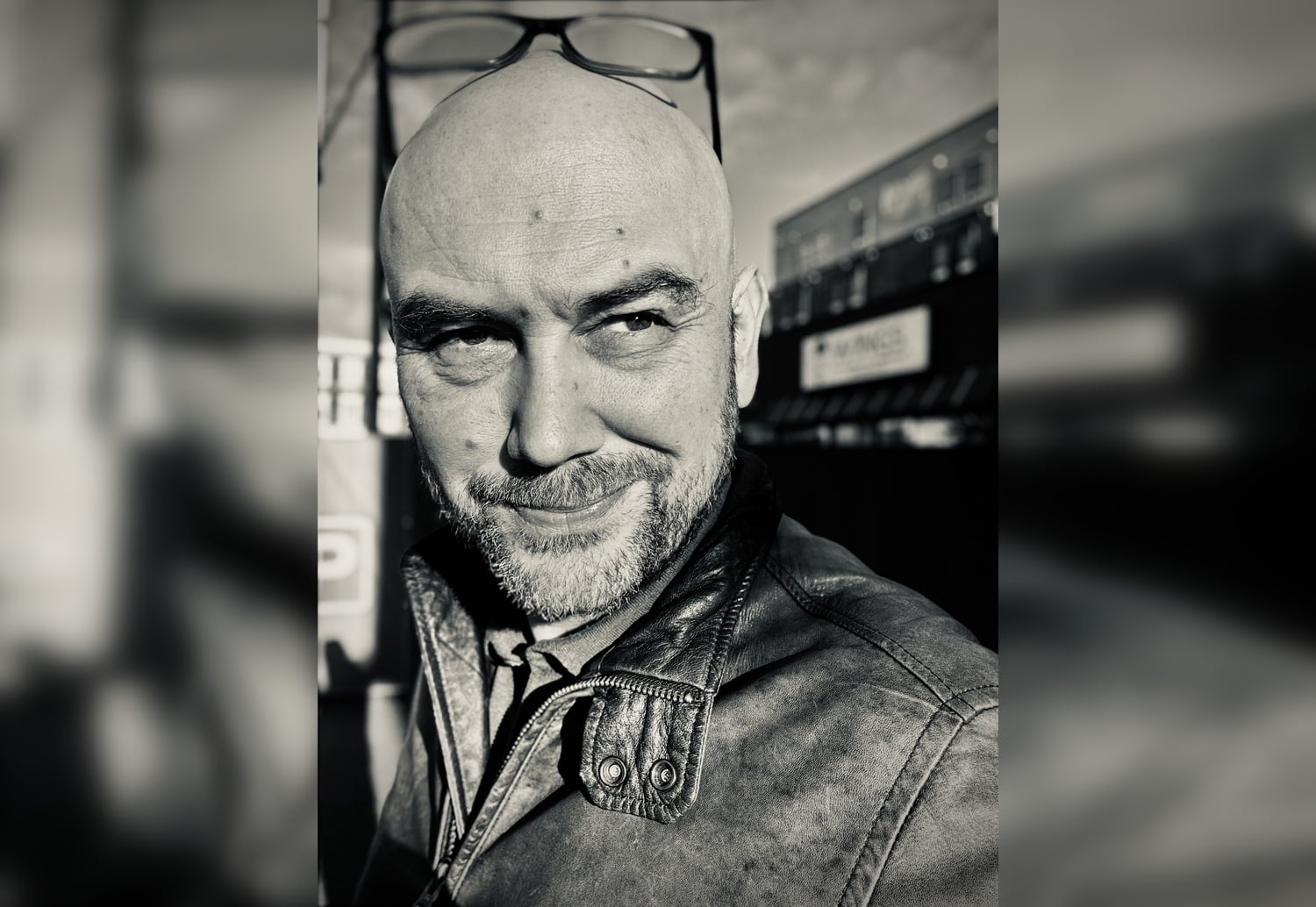
Ziyah Gafić documents post-violence communities and recovered identities
Documentary photographer Ziyah Gafić views his camera as a permanent invitation into the private experiences of people living through the aftermath of conflict, building a decades-long career that spans from the Bosnian War to global post-conflict societies, the Crimson reported.
From Sarajevo to the Kosovo Crisis
Gafić began taking pictures as a youth, serving as an intern at a community publication near the close of the Bosnian War. Having grown up in Sarajevo where the conflict began when he was 12, he later studied comparative literature, an education that provided a framework for constructing stories across a different medium. In 1999, at age 19, he traveled to Kosovo as the Kosovo War escalated into a humanitarian crisis. Serving as an assignment abroad for the independent Bosnian news magazine where he worked at the time, the trip clarified his ambition to pursue visual journalism despite resulting in an illness that took months to recover from.
That early ambition developed into long-term projects documenting post-violence communities. Over roughly a decade in the post-9/11 world, his series “Troubled Islam: Short Stories from Troubled Societies” reached across Bosnia, Palestine, Kurdistan, Iraq, North Ossetia, Chechnya, Lebanon, Afghanistan, and Pakistan. The final project was shown at War Photo Limited in Dubrovnik in 2010 and also released in book form. In 2010, Gafić initiated “Quest for Identity,” turning from faces to objects by creating a visual archive of personal effects recovered with human remains from Bosnia’s mass graves. The project aimed to account for the roughly 30,000 people who went missing during the 1992–1995 Bosnian War, bringing the conversation down to universal symbols that level the field and cause an emotional response.
Directing Education and Exhibiting Reflections on Peace
Gafić currently directs the VII Foundation’s work in Sarajevo, offering tuition-free courses and workshops to cultivate new and underrepresented perspectives in visual journalism, addressing an industry imbalance where the world is largely represented by a narrow group. This concern with who represents conflict also informs a multimedia project co-curated by Gafić alongside Knight and Turner. The exhibition, which focuses on Bosnia and Herzegovina, Cambodia, Colombia, and Lebanon, asks why peace is often defined merely as the absence of violence. The exhibition remains on view at the Weatherhead Center for International Affairs.