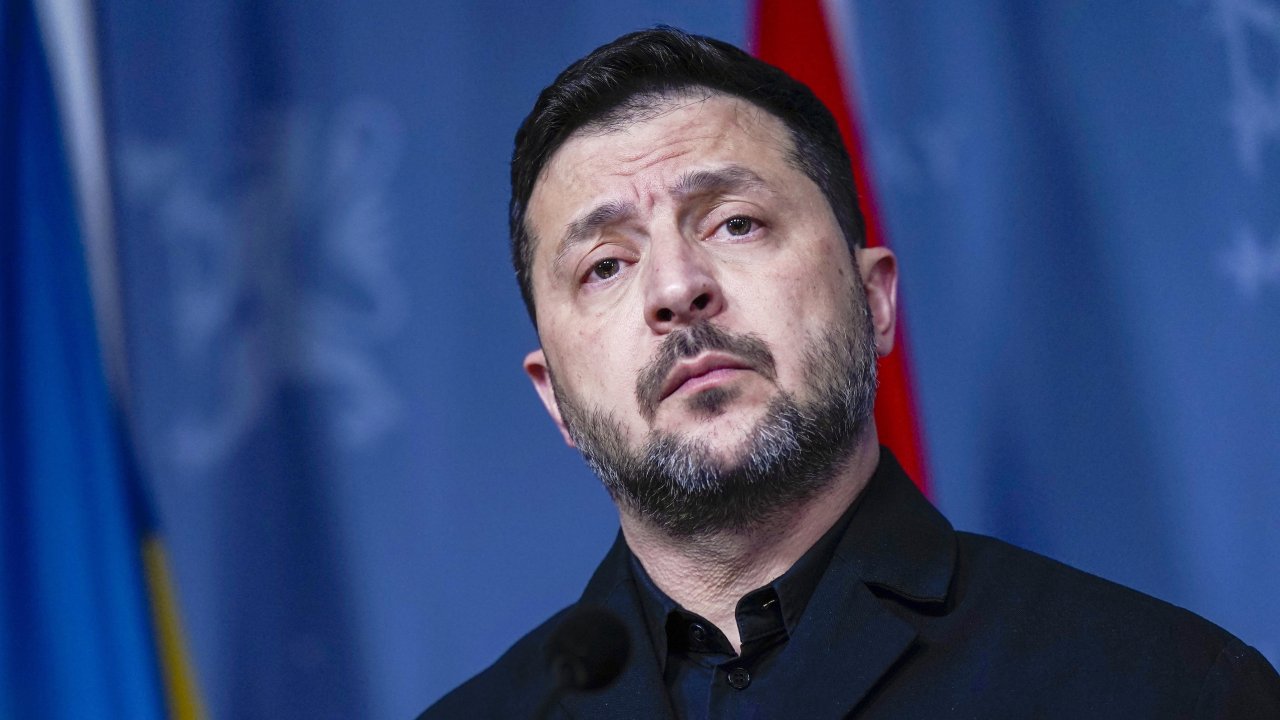
Zelensky: Territorial Questions Only for National Leaders
Ukrainian President Volodymyr Zelensky stated on October 25 that territorial questions remain a red line that can only be discussed at the level of national leaders, setting those limits ahead of planned trilateral peace talks involving Ukraine, Russia, and the United States in early November,今日.bg reported.
Negotiation Red Lines Set Against Technical Agendas
Zelensky outlined expectations for the upcoming diplomatic track in an exclusive interview with Alla Mazur on TSN The Week, drawing a sharp distinction between high-level political decisions and technical working groups. While territorial integrity is reserved exclusively for a summit between himself, Vladimir Putin, and Donald Trump, other concrete topics can be handled by technical teams.
According to today.bg, those secondary negotiating tracks include an energy truce, a renewed Black Sea grain transit protection agreement, and prisoner exchanges. Zelensky emphasized that offering these specific agenda points serves as a test of whether the Kremlin harbors genuine intentions for peace or is simply engaging in political maneuvers.

Zelensky revealed that the negotiating teams of Ukraine, the United States, and Russia could meet in Abu Dhabi in early or mid-November, although the realization of the meeting depends on Moscow’s position, adding that they are ready to meet every day, even tomorrow, but everything depends on the Russians. Before a meeting between Zelensky, Russian President Vladimir Putin, and US President Donald Trump can take place, technical talks must first be held between the negotiating teams of the three states, Zelensky pointed out. Zelensky expressed the opinion that the G-20 summit could serve as a platform for a productive trilateral meeting between Ukraine, the US, and Russia, if he is invited, though he has not yet received an invitation to the forum.
A high-level security meeting is scheduled in Brussels involving representatives from the United States, Ukraine, the European Union, and NATO to evaluate initiatives aimed at ending the conflict. On October 20 in Oslo, Zelensky held talks with US Special Envoy Steve Witkoff, with the participation of Norwegian Prime Minister Jonas Gahr Støre and Finnish President Alexander Stubb, while on October 21 Witkoff met with Putin in St. Petersburg.
Demands for Security Guarantees Versus Partial Sanctions Relief
Security arrangements and allied support formed a central pillar of Zelensky’s weekend remarks. Dnes.bg reported that the Ukrainian president insisted security guarantees cannot be dictated by Moscow, rejecting any enforced neutrality or military limitations on Kyiv. Zelensky suggested that if full NATO membership remains out of reach, European nations and the United States could extend the collective defense provisions of Article 5 to cover Ukraine.
Investor.bg added that Zelensky is pushing for long-term backing, calling for at least ten years of international financing to sustain a large national army of approximately 800,000 personnel. He cautioned against softening economic pressure prematurely, warning that easing sanctions against Russia before negotiations would strip Kyiv of critical bargaining power ahead of any summit with Putin.
During the meeting with Witkoff, the restrictions on Starlink military systems used by Ukraine, the limitations on intelligence sharing by the US with Kyiv, and the shortage of air defense funding were also discussed, according to Zelensky.

Focus-news.net reported that the wider geopolitical friction extends beyond the immediate front lines, with Zelensky warning that Moscow is intensifying hybrid operations across Europe through drone incursions and attacks on agricultural shipping in the Black Sea.
The Evacuation Crisis in Occupied Oleshky
Eurocom.bg noted that Zelensky expressed concern over potential Russian attempts to direct evacuees toward Russian territory, emphasizing that secure humanitarian corridors allowing civilians to reach Ukrainian-administered regions remain an absolute priority.